



Many spoilers ahead10 Jun 20264 MIN

Your society WhatsApp group needs to watch ‘Maa Behen’

The new Netflix movie turns a housing society’s favourite pastime into a dark comedy about reputation, rumours, and three women trying to escape the stories written about them

Image

Every Indian housing society has at least one CBI branch. It doesn’t have a badge, a budget or any legal authority, but it does have balcony access, unlimited free time, and a frightening commitment to gathering intelligence. Who came home late? Who is fighting with whom? Why was there a strange car parked outside? Why is that widow wearing sleeveless blouses again?

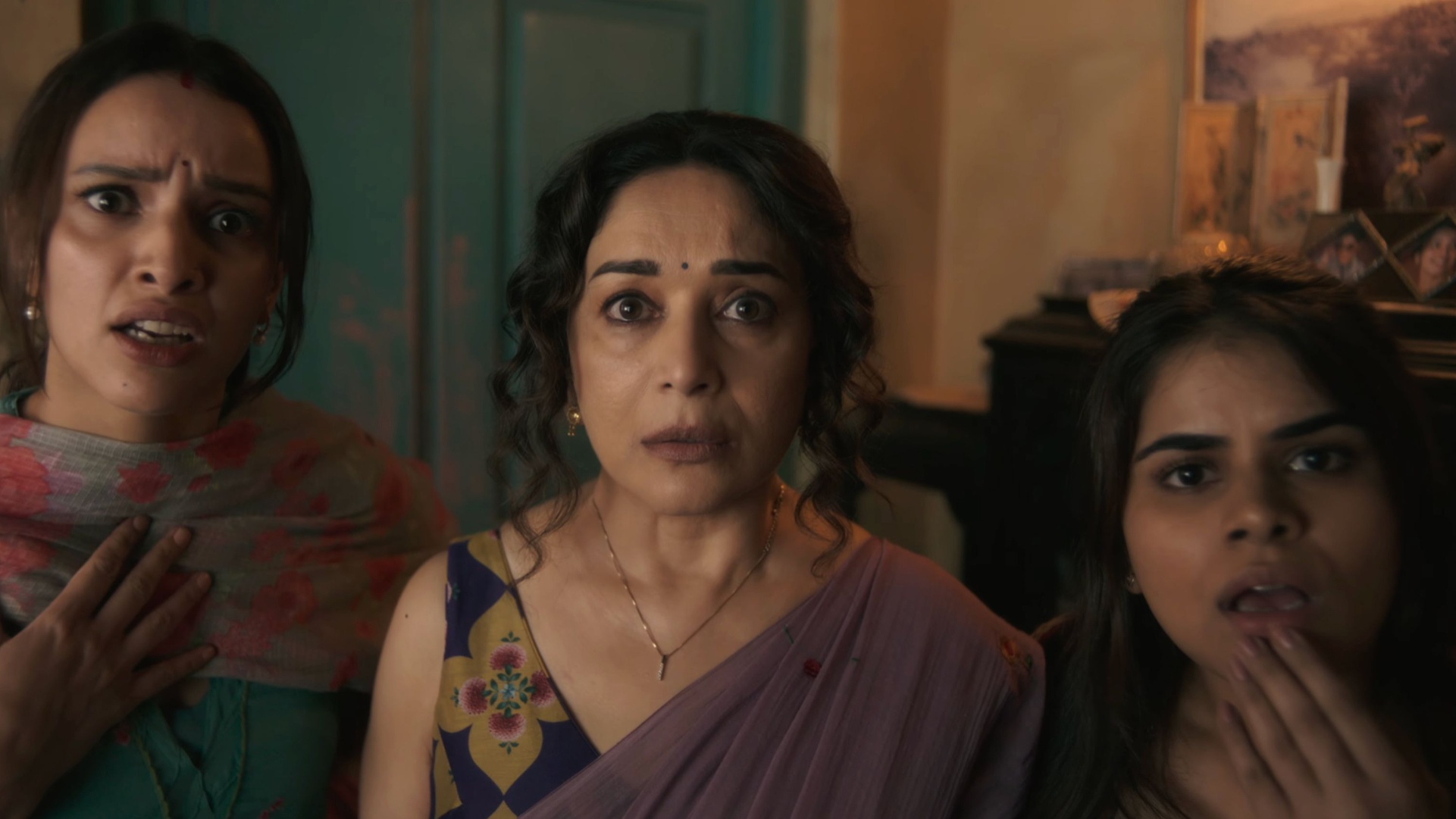
Netflix’s Maa Behen, directed by Suresh Triveni, takes that familiar ecosystem of gossip, judgment, and unsolicited surveillance and turns it into a dark comedy. When Rekha (Madhuri Dixit Nene) discovers her neighbour Charitra Kumar Gupta (Ravi Kishan) dead in her kitchen, her first instinct is not to call the police but her daughters. Triptii Dimri plays Jaya, a deeply unhappy housewife whose life seems to revolve around feeding the men in her family. Dharna Durga, a content creator in real life, is well cast in the role of Sushma, an aspiring influencer who has already been tried and convicted in the court of colony opinion. Together, the three women spend the film trying to deal with a corpse while dodging suspicious neighbours, awkward questions, and increasingly ridiculous situations.

What I enjoyed most about Maa Behen, however, is that it treats the murder mystery almost like a distraction. The film is far more interested in the stories that have been built around these women over the years. The first half largely introduces us to the women through the colony’s gaze. Rekha is the widow who smiles too much and wears sleeveless blouses for all the wrong reasons. Jaya is the woman who supposedly stole her husband from her best friend. Sushma is the shameless girl from the viral kissing video. The colony has already written their stories and filed them away as fact.

The second half slowly begins to fact-check those assumptions. Rekha wasn’t a temptress so much as a young widow who spent years dealing with unwanted attention and the suspicion that followed it. Jaya’s marriage emerges from circumstances far more complicated than the gossip suggests, while Sushma ends up carrying the blame for a video she didn’t even upload. What’s interesting is that it’s not just the neighbours who buy into these narratives. The women have internalised parts of them too, judging one another through the same lens society uses. As those versions begin to unravel, Maa Behen reveals three women are sometimes impulsive, occasionally frustrating, and entirely human, but far removed from the villains they’ve been made out to be.

The film’s sense of humour extends well beyond the dialogue. Rekha’s nemesis is named Charitra (character) Gupta. Her boss is Sanskaar (moral values) bhaiyya. The colony they reside in is called Adarsh Colony despite housing some seriously committed practitioners of character assassination and moral policing. Add the dramatic narration of Shrivardhan Trivedi (of Sansani fame)—which turns every neighbourhood misunderstanding into a national crisis—and Maa Behen often feels like it’s one step away from looking into the camera and saying: “You see what we did there, right?”
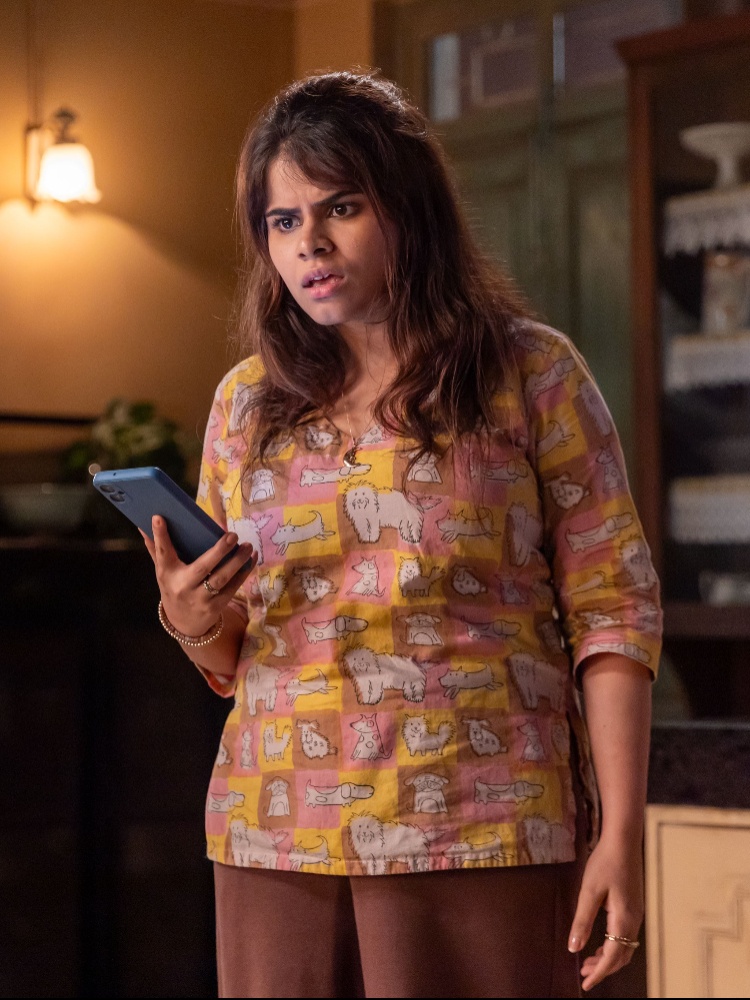

What I enjoyed even more were the little visual details scattered throughout the film. Jaya’s roti clock is a perfect example. On the surface, it may just look like a clock with a roti as its background. But it neatly sums up Jaya’s life. Her days revolve around cooking for everyone. It’s funny when you first notice it, and then slightly heartbreaking once you think about it. Then there’s the recurring black cat slinking in and out of scenes like a furry embodiment of every superstition and bad omen the colony desperately wants to believe in. And there are the marigolds. By the end of the film, rumours about Rekha have escalated to include whispers that she has buried her lovers beneath beds of marigolds. So, when she, Jaya, and Sushma show up with marigolds tucked into their hair in the final act, the gesture feels cheeky. It’s all a bit on the nose, but not every film needs a Reddit thread and three YouTube explainers to make its point.

However, that lack of subtlety is also where some of the film’s weaknesses begin to show. Maa Behen is excellent at revealing how these women have been misunderstood but not as interested in exploring the emotional fallout. Rekha, in particular, deserved more depth, while some of the film’s more interesting revelations, such as Sushma’s admission that she’s only using her brother-in-law for social media engagement, are resolved a little too quickly. The logic of Adarsh Colony can also feel selective. This is a neighbourhood where a sleeveless blouse becomes breaking news, yet three women can scream, fight, and behave suspiciously with remarkably little scrutiny. And the character Maheshwari (Arunoday Singh) repeatedly seems important before fading into the background, though his irrelevance is oddly refreshing because it means the women are left to save themselves.

Still, the performances carry a lot of the film’s weaker moments. Dimri continues to prove that reducing her to “Bhabhi No 2” does her a tremendous disservice. Durga is a delight and makes the leap from content creator to actor look entirely natural. And Dixit remains impossible to look away from. Watching her glide through the film in gorgeous, printed chiffon saris had me seriously consider raiding my mother’s wardrobe.

Is Maa Behen perfect? Not even close. But give me a clever idea, a cast this good, and a film that isn’t afraid to be a little silly, and I’m already halfway won over. Like Darlings before it, Maa Behen proves that a strong female ensemble can carry an entire comedy without needing a hero to swoop in and save the day. More importantly, it’s one of the few recent Hindi films that feels genuinely fun. And, after a steady stream of forgettable releases, that counts for a lot.

The Nod Newsletter

We're making your inbox interesting. Enter your email to get our best reads and exclusive insights from our editors delivered directly to you.