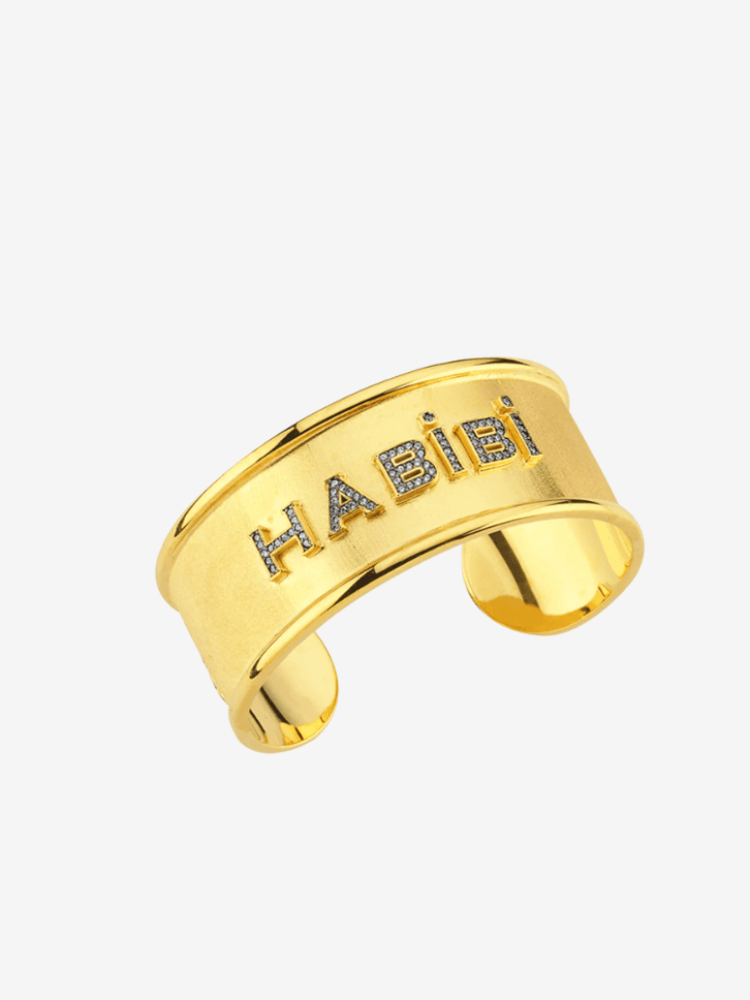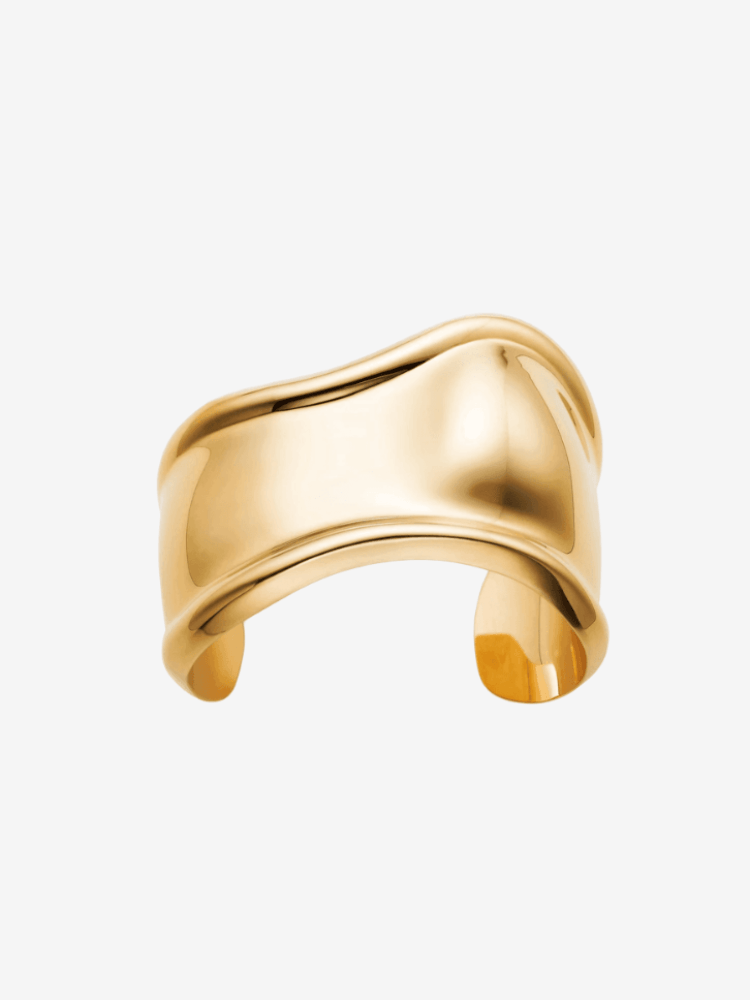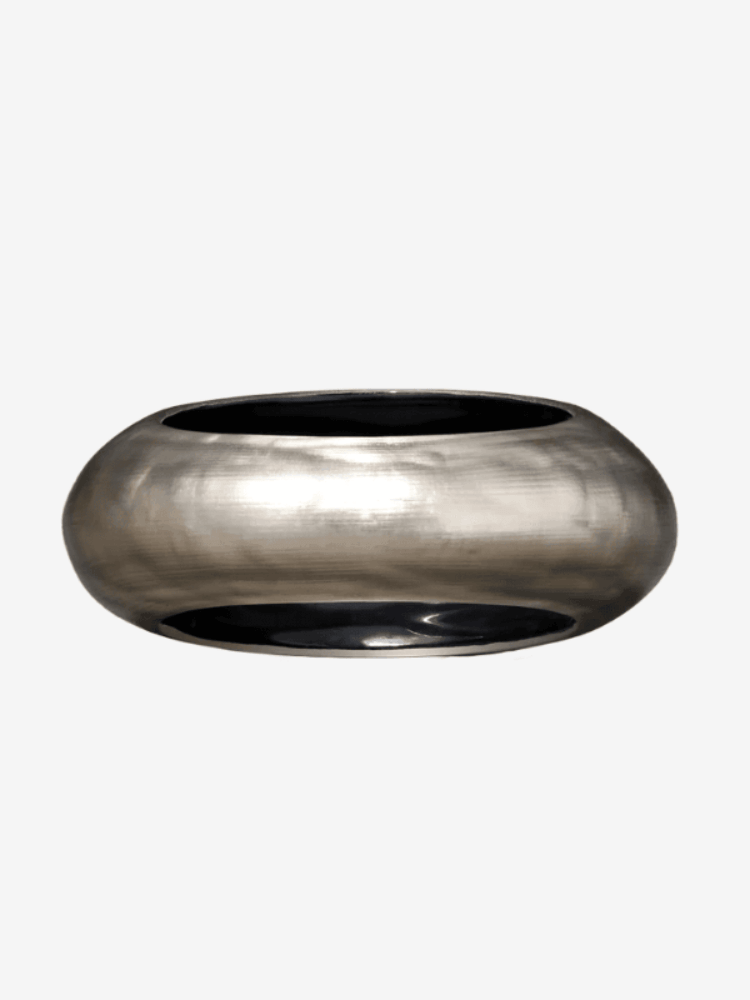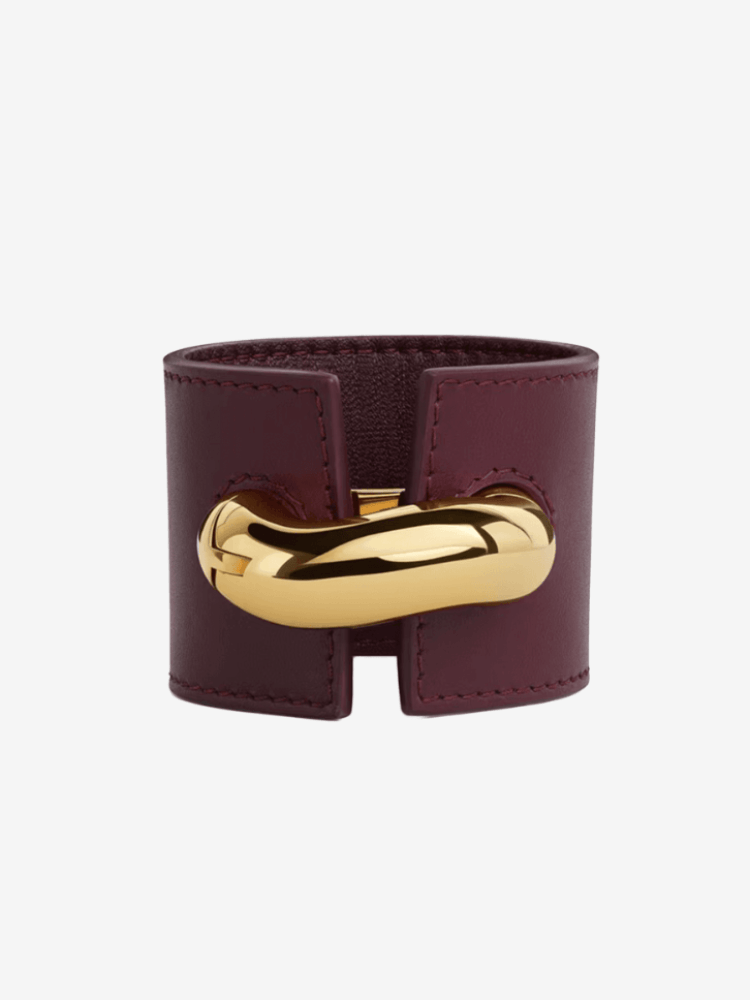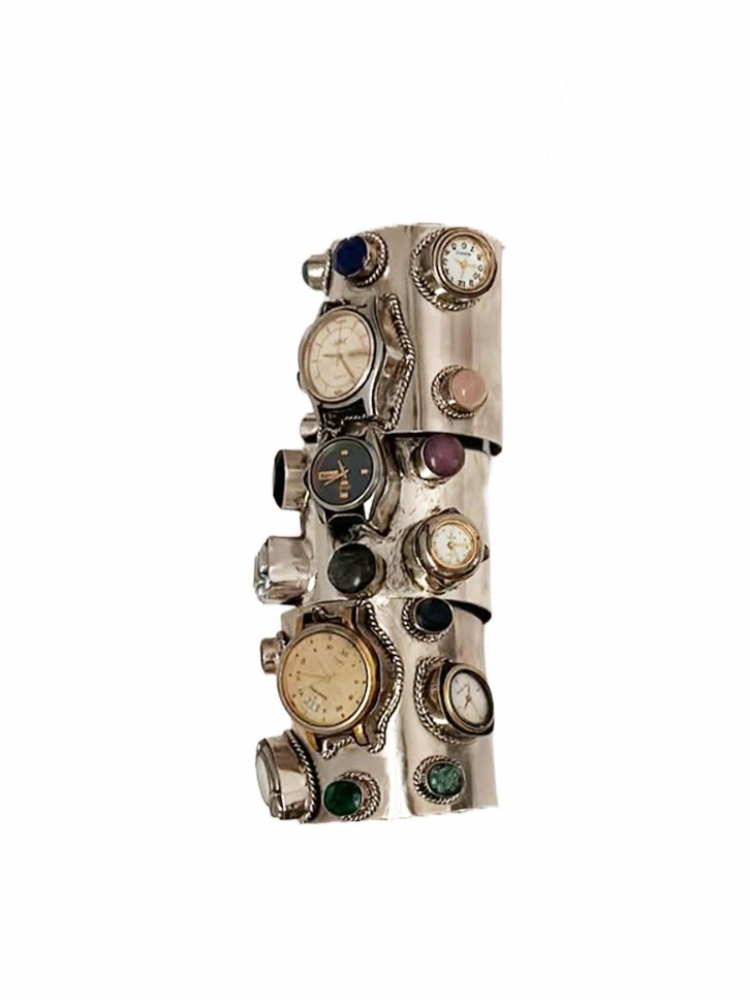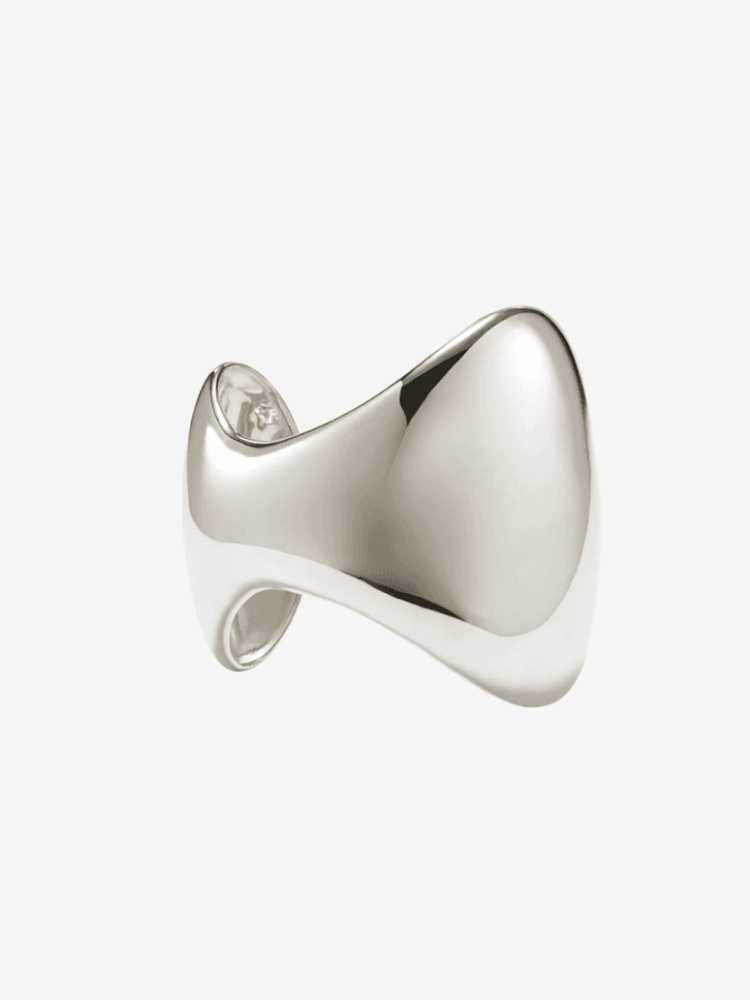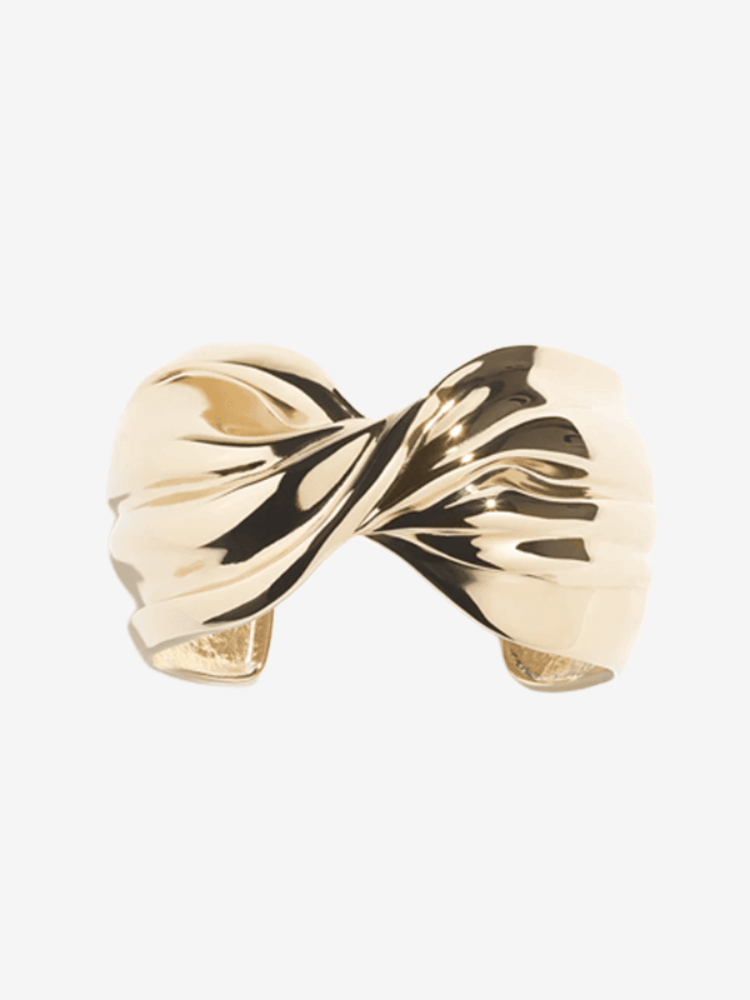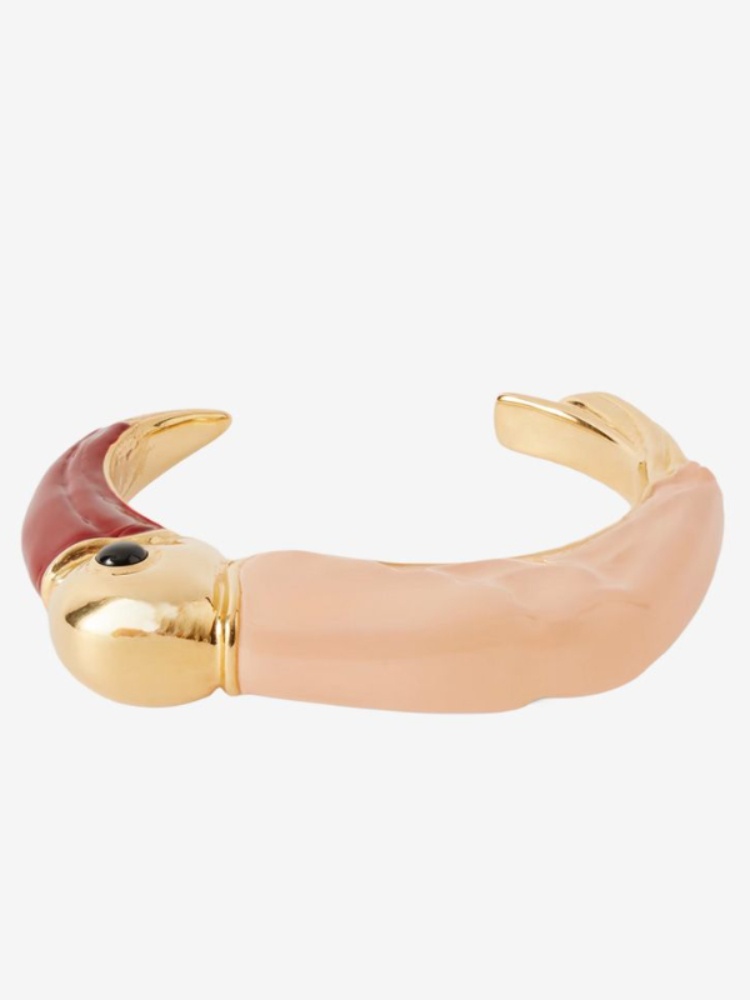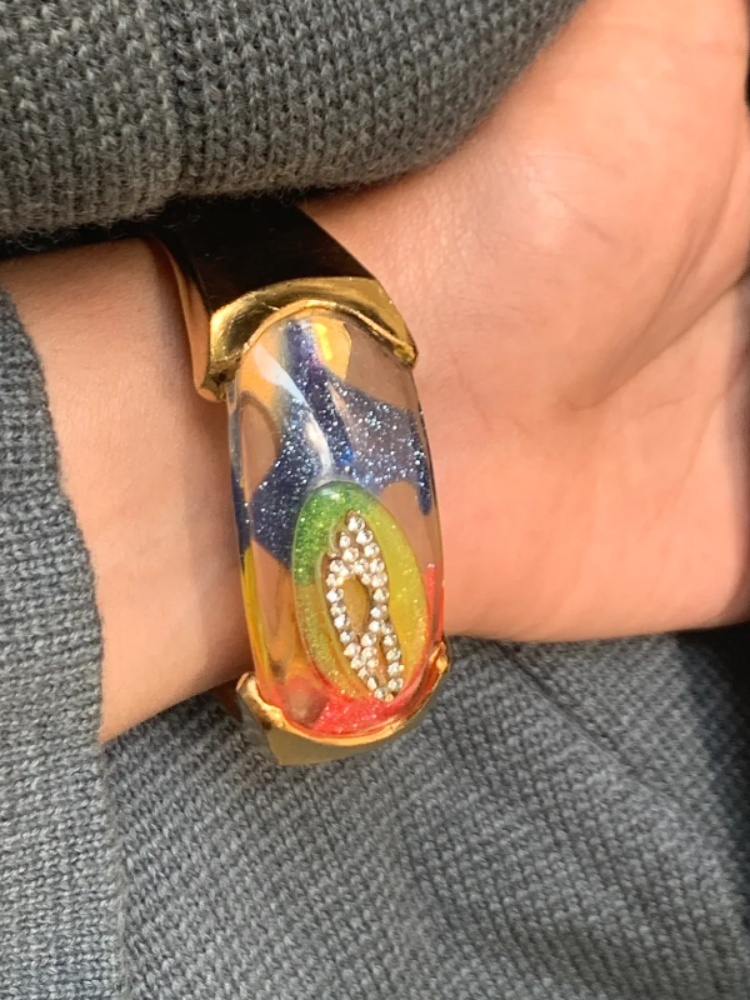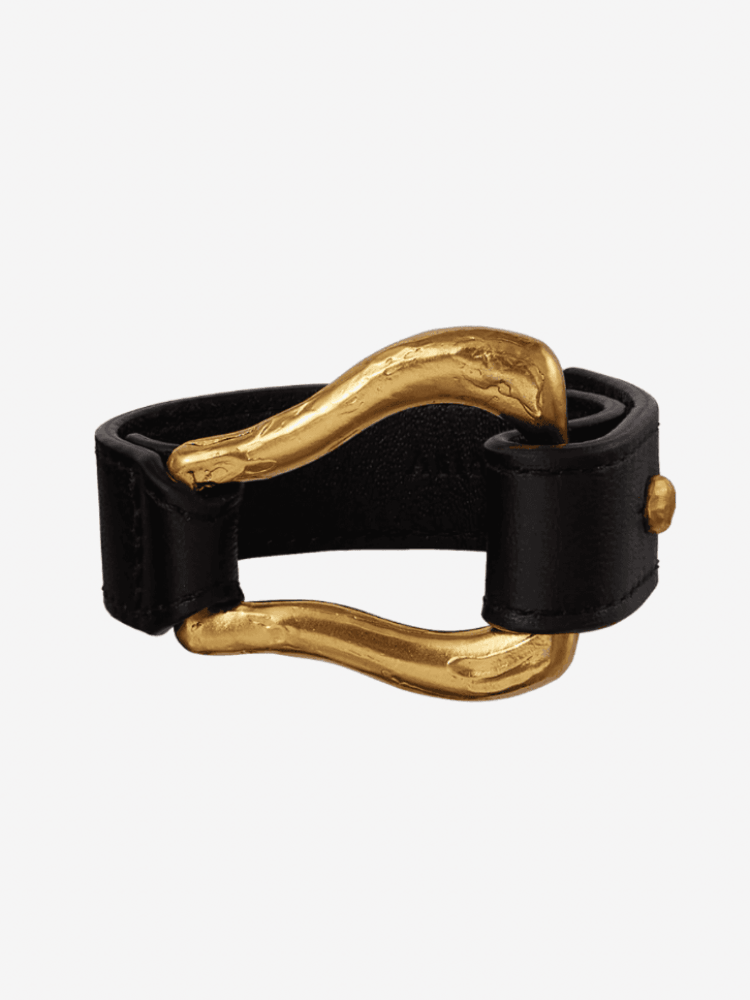




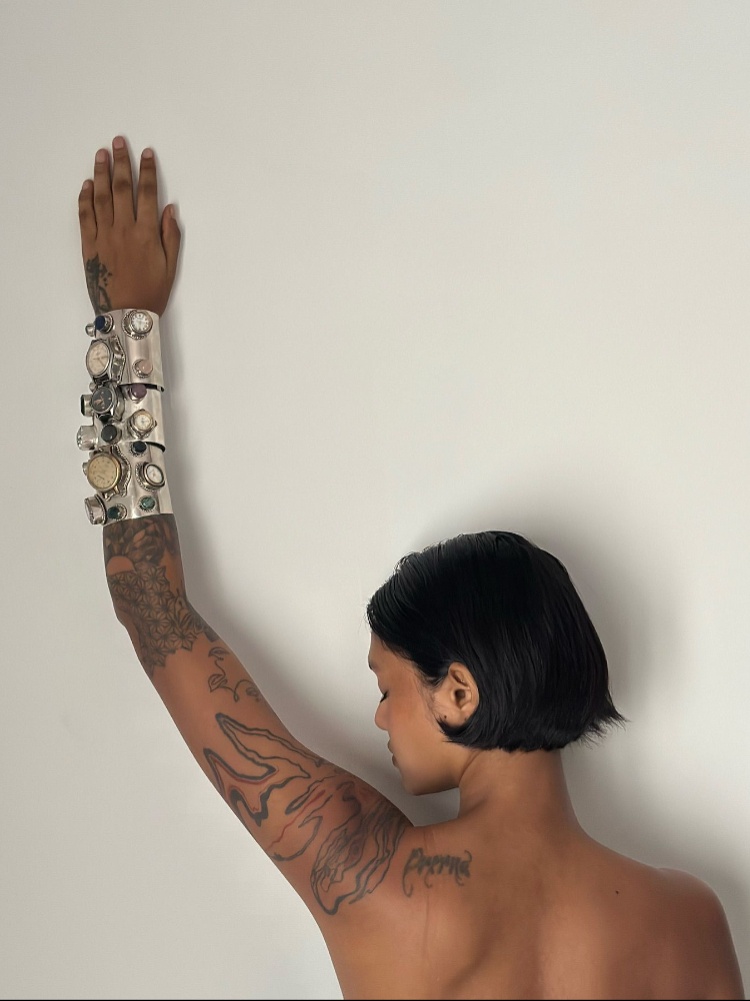

In the early 1970s, when Elsa Peretti created her now-iconic Bone cuff, she probably didn’t realise she had created an object that would come to define 20th-century design history. The polished, curved design that was inspired by anatomy and architecture in equal measure was meant to be worn as a pair, one on each wrist, like a pair of luxurious handcuffs. The original design was carved from wood for her friend Halston, and when she joined American jeweller Tiffany & Co in 1974 the Italian-born model turned designer was able to refine its form further in silver and then gold. As everything Peretti designed for Tiffany, from her Open Heart or Bean pendants to her Thumbprint home objects line, the cuff has been a success ever since, worn by women from Liza Minnelli to Margot Robbie and Gal Gadot (who wore two 18-carat yellow gold versions in the film Wonder Woman 1984, a nod to the character’s protective armour).
But the power of a chunky piece of wrist jewellery to adorn and convey power and status has been acknowledged since civilisation began. Think of the Dancing Girl of Mohenjo-daro, part of a collection of Bronze Age artefacts at the National Museum in Delhi. The bronze statuette from around 2300 BC depicts a female figure wearing nothing but a necklace with a big pendant, both her arms decorated with bangles, one entirely invisible under a stack of bands (similar to how Rabari women from Kutch still wear their jewellery) and the other with just one oversized shackle around the wrist.