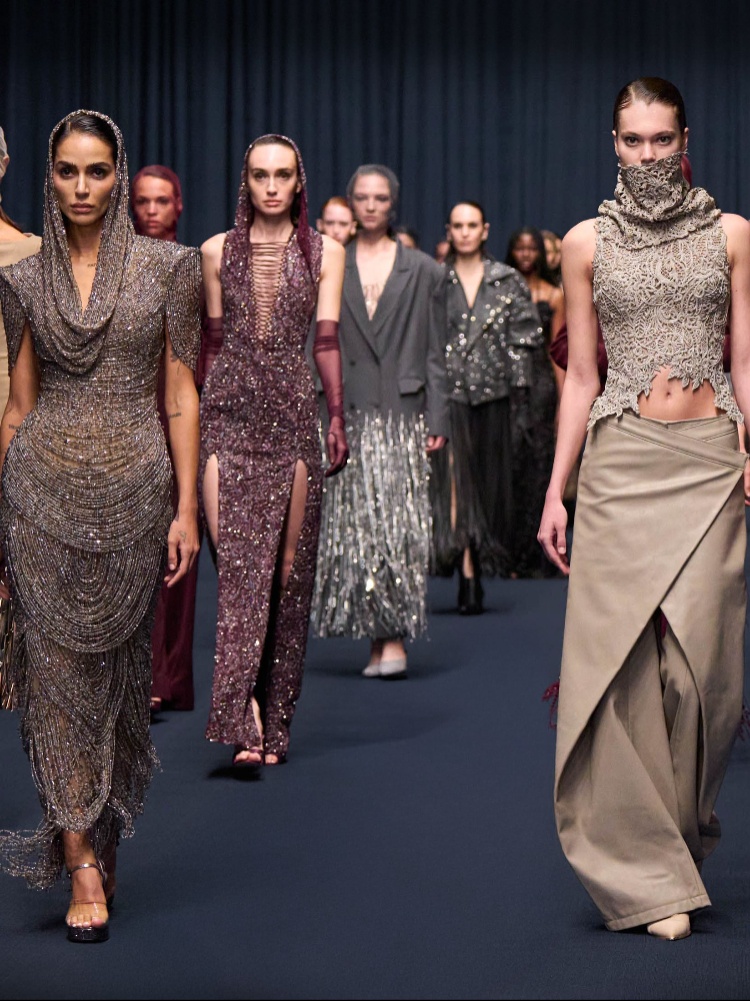
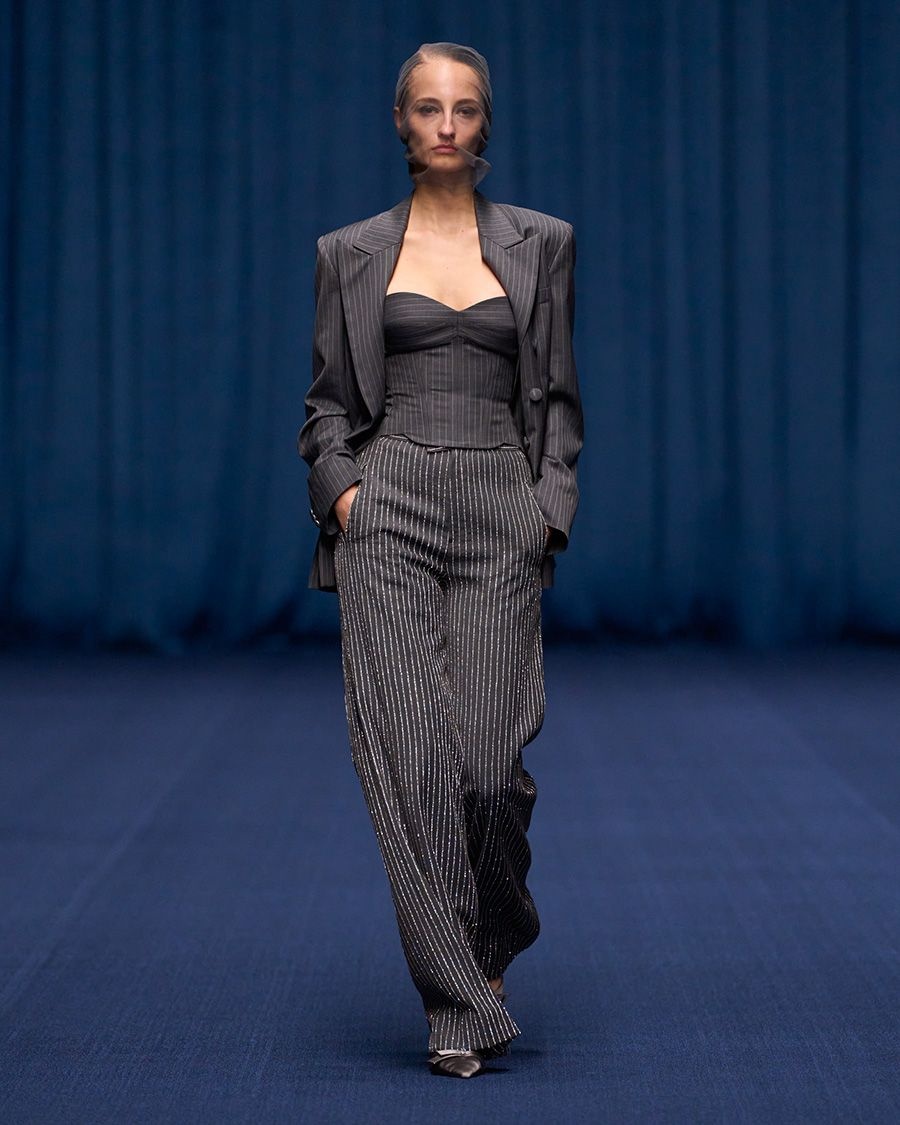
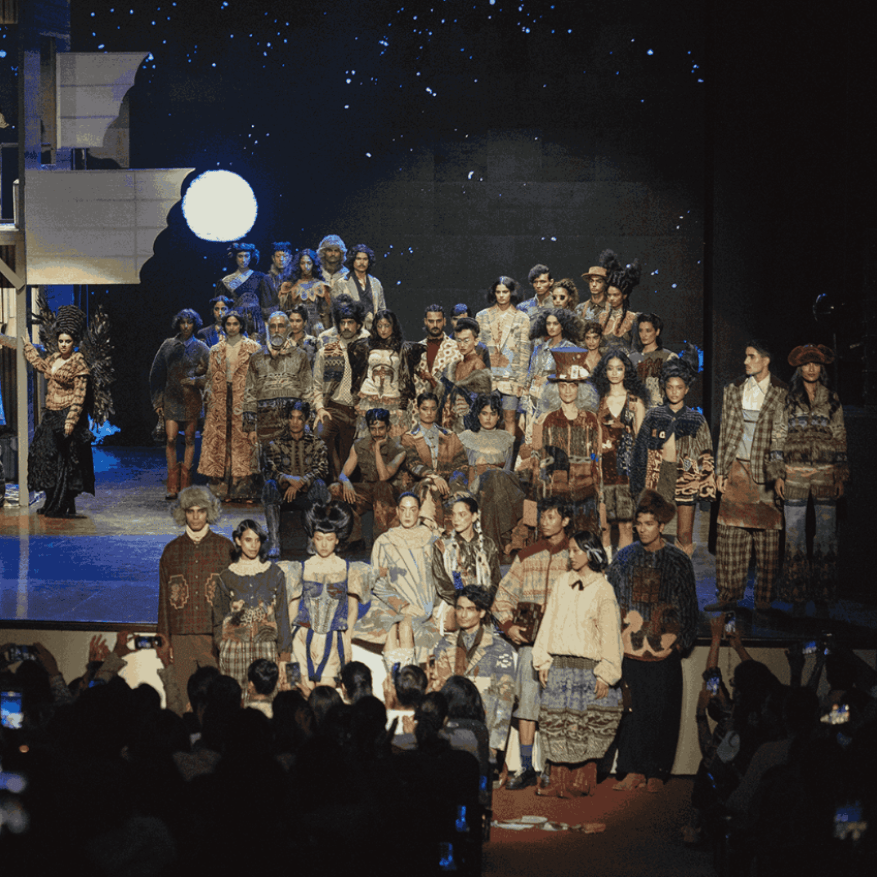
Back outside the Manish Malhotra show, I met friends Sadaf J Khan and Zainab Malik, both in black columnar sheath dresses, who were waiting to get to their seats. The two are part-time content creators and fans of the label who live between the UK and Dubai. Khan was more familiar with Indian brands, citing names like Tarun Tahiliani and Sabyasachi as ones on her radar, while Malik said she was there “to see what’s trending, what’s new, which way the year is going in fashion, and what people will be wearing”. For the pair, a Manish Malhotra show is about more than just bling or Bollywood; it’s also about tapping into the newest silhouettes and getting a first-hand look at the colour palette or mood of the season.
Jacob Abrian, CEO of the Arab Fashion Council and Dubai Fashion Week, was clear about the curation of the designers on the schedule: “We wanted brands that are Indian but also definitely very global in their outlook, because that’s what Dubai is all about.” Abrian is of Lebanese and Italian heritage but started the Arab Fashion Council in 2015 to, “build an institution that could nurture regional talent, create structure within the industry, and position Arab designers alongside the world’s leading fashion capitals.“ For Abrian, Dubai’s strength lies in its openness, “It is a city without rigid creative boundaries, here tradition and modernity coexist seamlessly. Designers here are not confined by a single aesthetic; instead, they are encouraged to experiment, innovate, and think globally." Which is where Indian designers with their focus on, “handwork, embellishment, luxury, and occasion dressing, while also embracing modern silhouettes and global sensibilities,“ come into the picture.
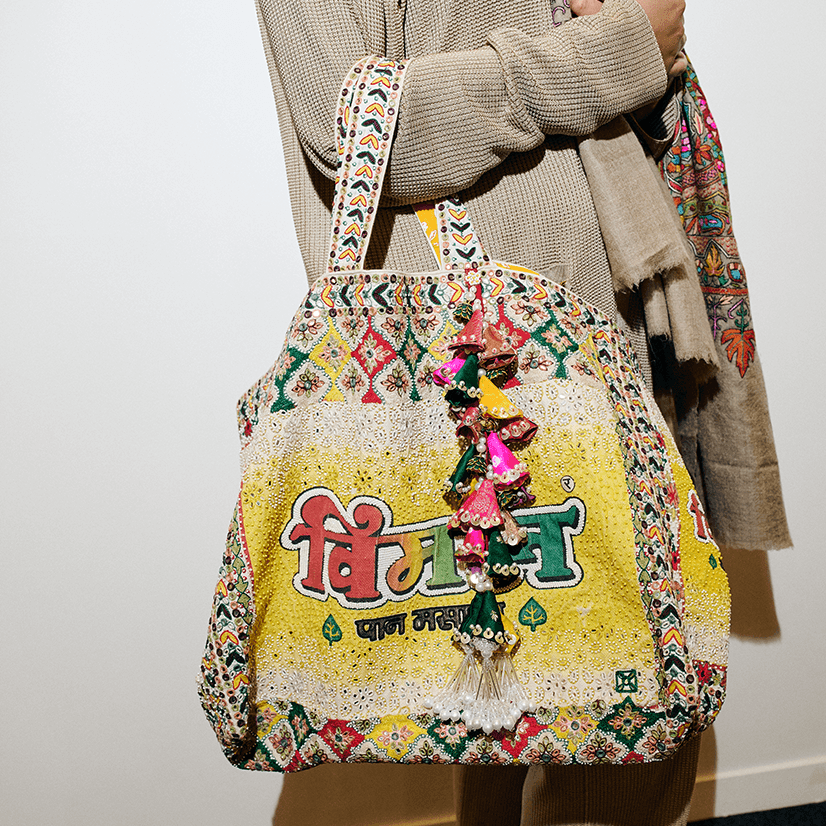
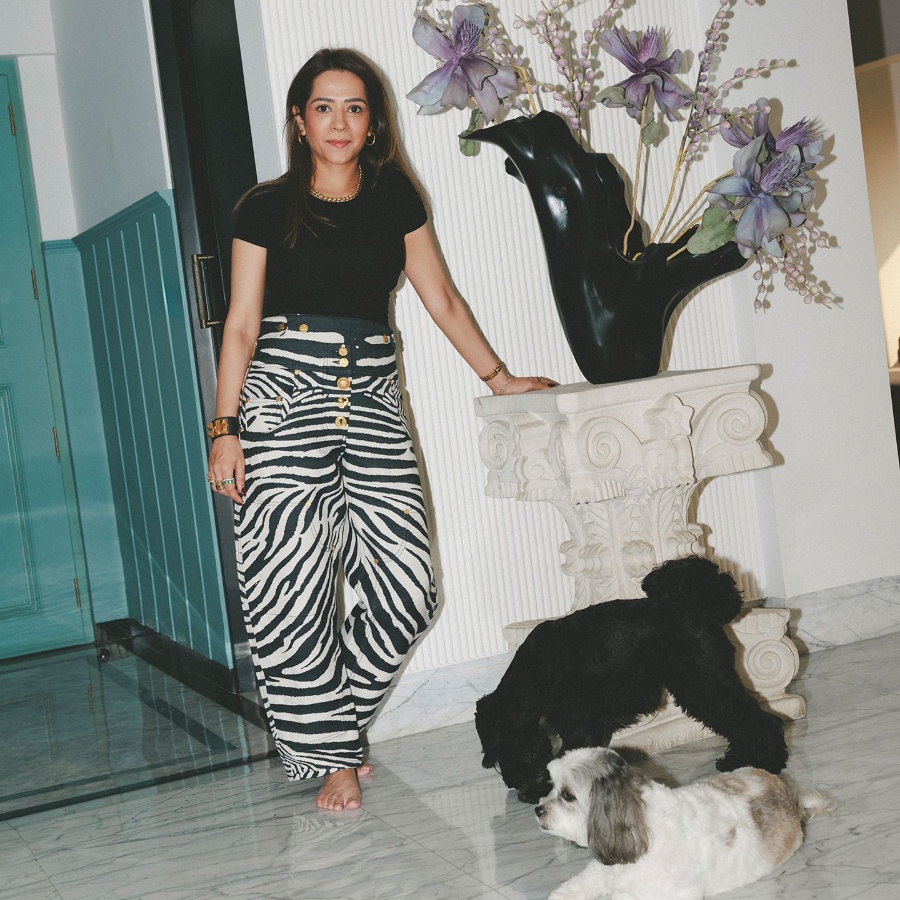
Even away from Dubai Fashion Week, it’s become increasingly clear that customers are seeking out Indian designers for more than the typical heavily embellished eveningwear that one has come to associate with fashion in Dubai. At the city’s tony Alserkal Avenue, brands like Nappa Dori and Jaipur Rugs already have standalone stores alongside Subko Coffee. Multi-designer boutiques like The Edit, which is helmed by lawyer Rumana Nazim, retail Bodice alongside jewellery brands like Outhouse, Misho, and Valliyan. Shuffling Suitcases, another multi-designer outlet specialising in Indian brands, like péro, Khara Kapas, and Yam, opened its first standalone in January this year in the bungalow-lined Al Wasl neighbourhood.
As Dubai establishes itself as an increasingly cosmopolitan city (local Emiratis make up about 11 per cent of the population, while the rest are expatriates largely from India, Pakistan, the Philippines and more), its residents’ fashion needs have evolved too. Just as they seek out Japanese ramen, French butter, or Chinese chilli oil from the grocery story, they’re seeking fashion that’s equally diverse. It’s no longer enough to just have the latest logo-covered bag from a European brand. As content creator Malik said outside the show, “We’ve got so many expats here, and just like there are people from all over the world, there should be fashion from all over the world too.”