




Indigo has long carried a tangled reputation. Once known as Blue Gold, it was a prized dye built on forced cultivation. A colour that financed empires, emptied villages, and left stains that still show. The exhibition Blue Futures at Hampi Art Labs (running till January 2026) acknowledges that history but dares to look ahead too.
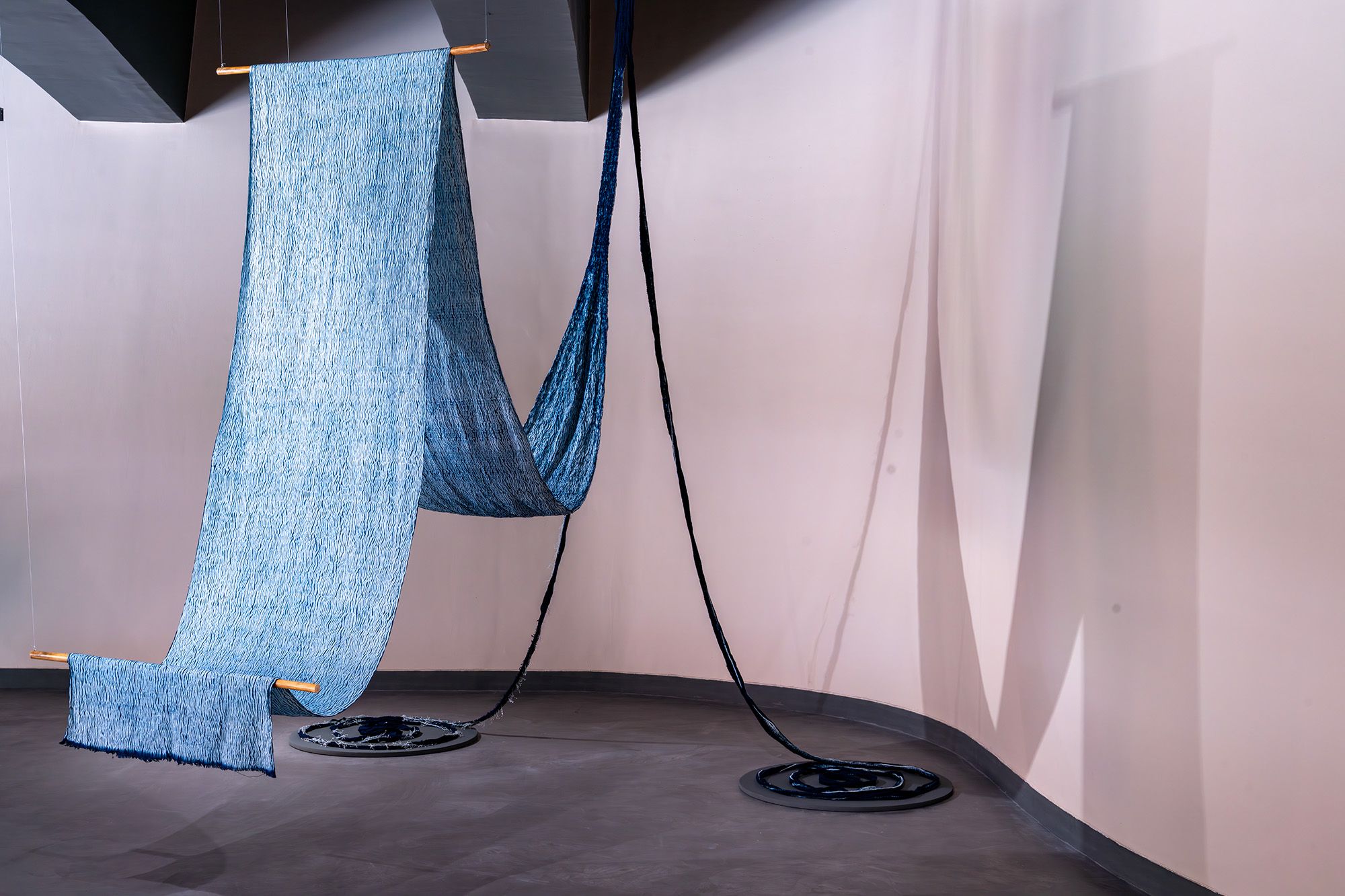
The show features the works of 13 artists from India, Japan, Mali, and Europe. Their works range from heavy stone and ceramic to fragile woven cloth. Indigo is the shared sky, although each artist uses it to paint their own cloud of imagination.
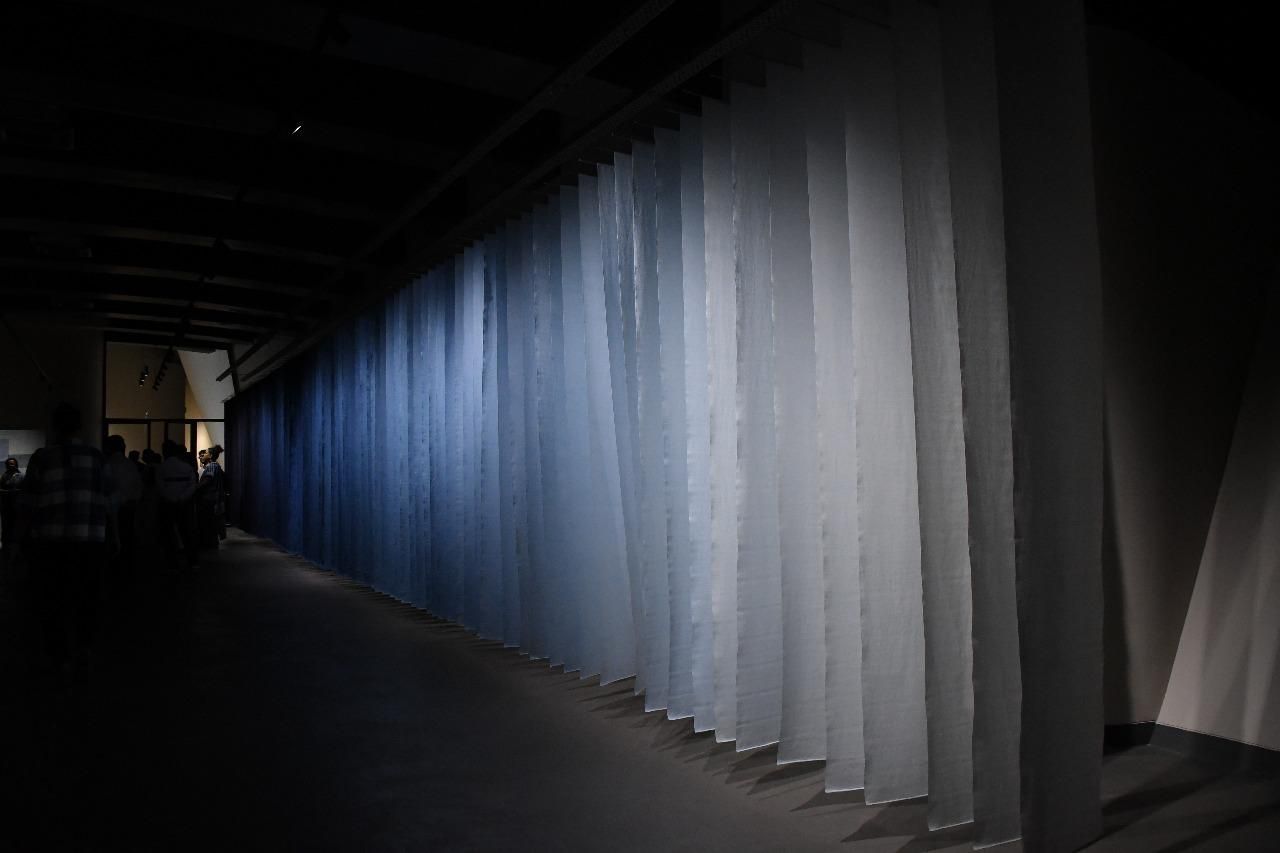
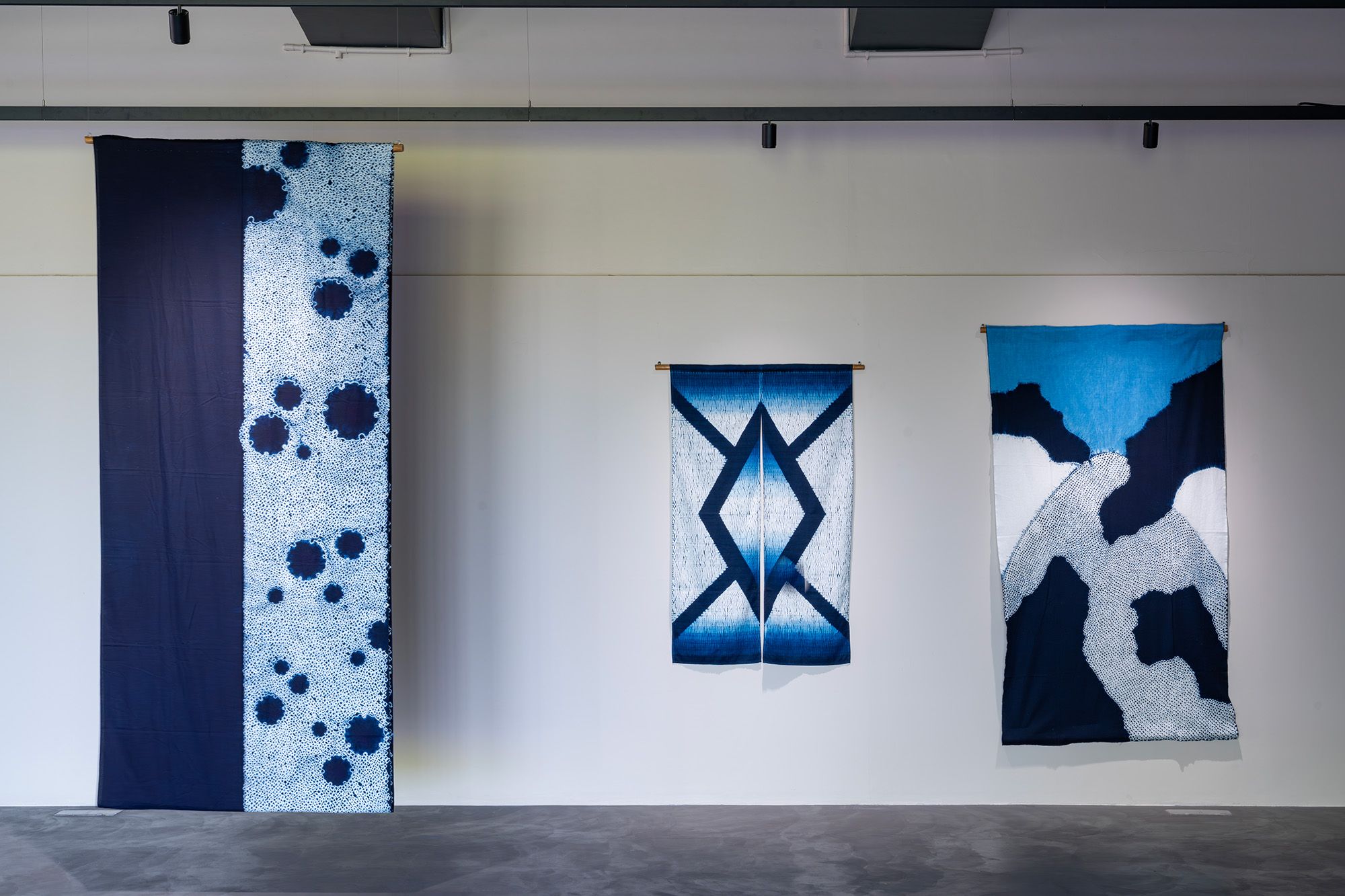
Banners in 100 shades of indigo by Japanese collective Busaisou
One set of works is by Kolkata-based textile wizard Bappaditya Biswas, an institution in himself. The 52-year-old UNESCO award winner is the co-founder of Bai Lou—a label he runs with his wife Rumi—as well as Byloom, the iconic Kolkata store that’s a first stop for visitors to the city seeking out everything from playfully printed home linen to finely woven saris. But over the last few years, ever since the Covid-19 pandemic, Biswas has been focussing his attention on reviving ancient hand-painting and dyeing textile techniques, reframing textiles as art and activism rather than fashion.
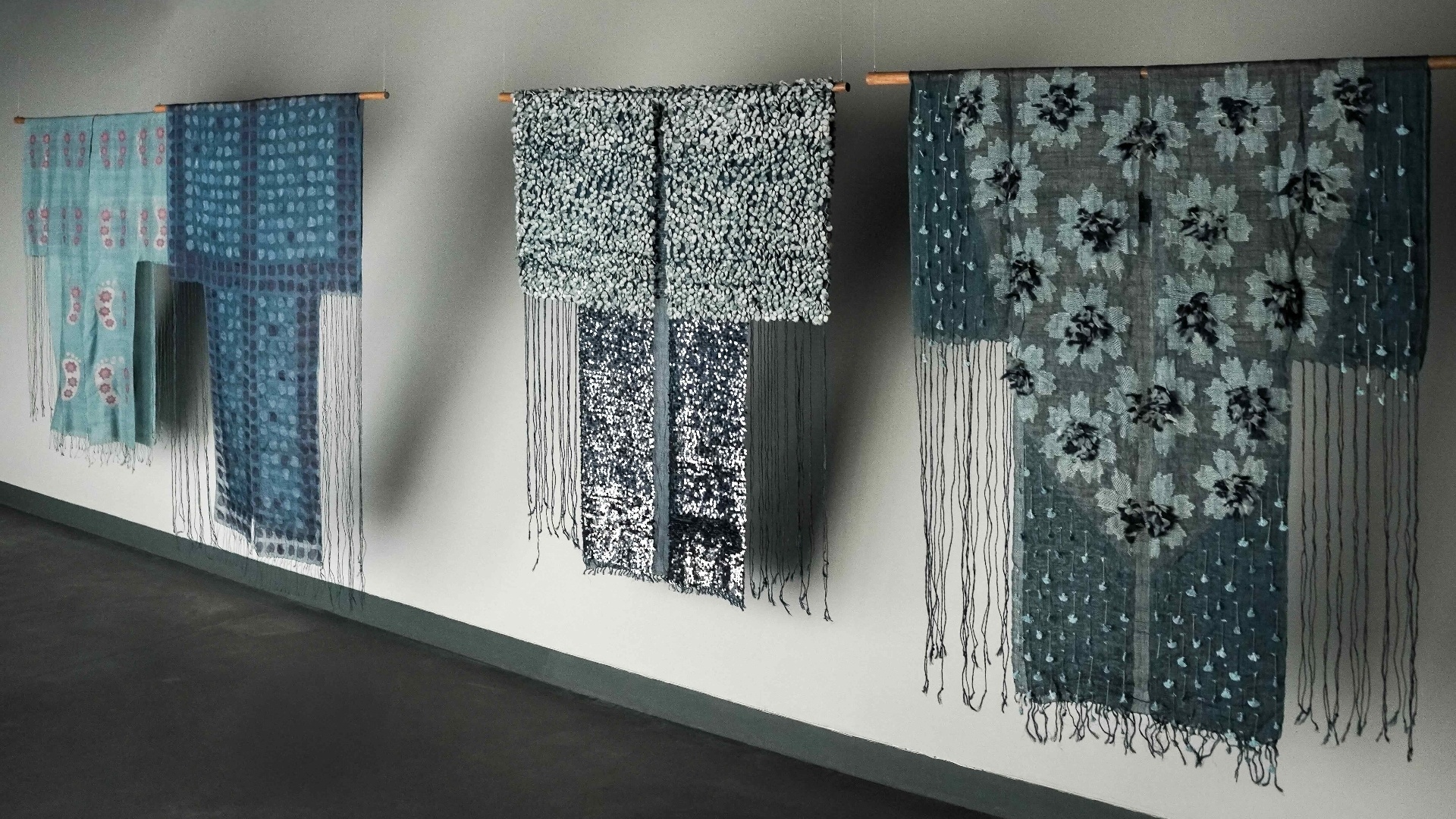
Biswas’s works occupy the central gallery at Hampi Art Labs. When you walk into the facility spanning 9 acres housing exhibition spaces, studios, apartments for residencies, gardens, and a café, you’ll encounter four unstitched kimono-like forms hanging from the ceiling. The four are part of a larger set of 20 first shown at the Serendipity Arts Festival in 2019. At first glance, the kimonos appear sheer. Step closer, and each cloth reveals its trick: irregularities that are created on the loom itself, not added later. One kimono holds tiny air pockets woven into its surface. Another integrates small felt discs and sequins during weaving, no tailor required. Another is woven with motifs of Goddess-like gold feet. This ingenious precision on the loom is a signature of Biswas, supported by a long collaboration with weavers who understand how far the handloom can stretch.