



Arts31 Jul 20265 MIN

30 years of doing embroidery for Hermès, but Maximiliano Modesti is a modest man

The founder of Kalhath Institute on Venetian churches, Azzedine Alaïa’s practical jokes, and the value of anonymity

Image

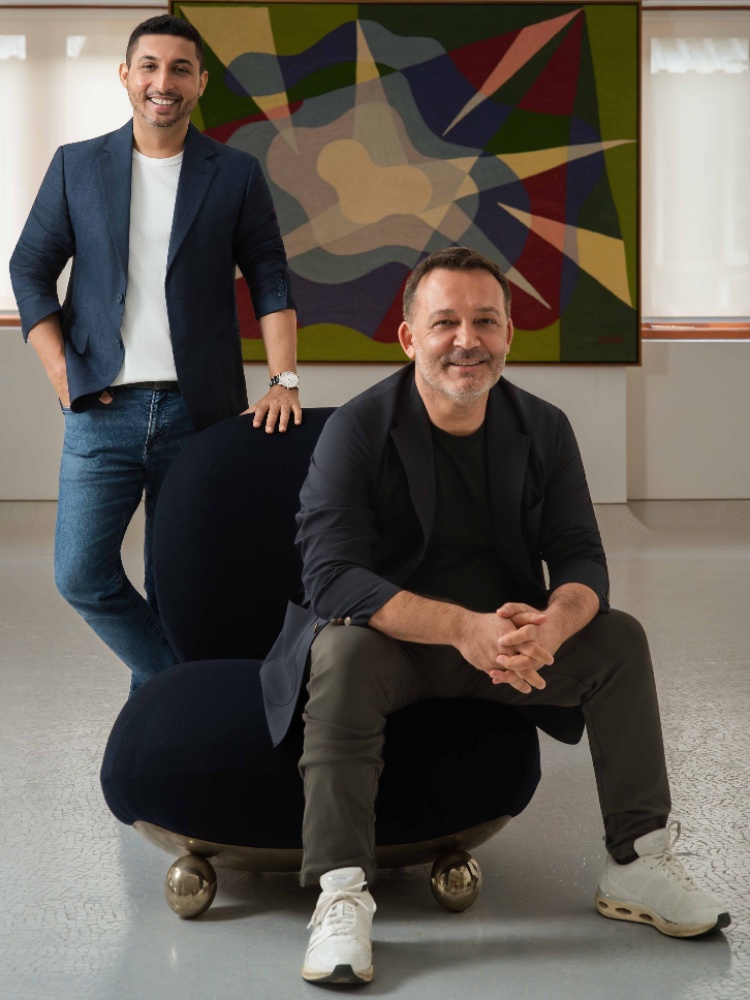
(L-R) Rooshad Shroff and Maximiliano Modesti at the Rooshad Shroff Gallery in Mumbai. Seen behind is a historic 1924 embroidered work of Italian artist Giacomo Balla

Photographs by Sourabh Chouhan

For 30 years, Maximiliano Modesti’s embroidery has walked down runways in Paris under other people’s names. Hermès. Alaïa. Lagerfeld. McQueen. Galliano. Westwood. Donna Karan. Stella McCartney. Yet, not one piece carries his signature; he has never wanted it. “Nobody owns craft,” he reasons, “and I’m not the artist. It’s not in my education or in my philosophy to put my signature or my stamp on anything.”

When architect Rooshad Shroff suggested that 10 years of Modesti’s Lucknow-based Kalhath Institute ought to be marked with an exhibition, his first response was, no, thank you. “I’m not very much into exhibitions, promotion, communication,” he says. “It’s a commitment to the craft, a commitment to India, a commitment to the artisans.”

Shroff, a member of Kalhath’s advisory board, pushed anyway, on the grounds that hardly anyone knows what Kalhath is or what Modesti has spent a decade doing inside it. “The exhibition celebrates a decade of the Kalhath Institute—the education training centre dedicated to embroidery. The landmark dates of the journey are shown through the arts residencies and key events of the institute,” adds Shroff about the ongoing exhibition at his Mumbai studio.

Modesti arrived in Mumbai (then Bombay) in 1993 with a bag of knitted fabric handed to him by Tunisian-French couturier Azzedine Alaïa and not a single contact. He began making samples in the karkhanas of Grant Road. Three years later, Alaïa introduced him to the head of Hermès, and he designed his first embroidery for the French fashion house. And he continued to do so for the next 30 years.

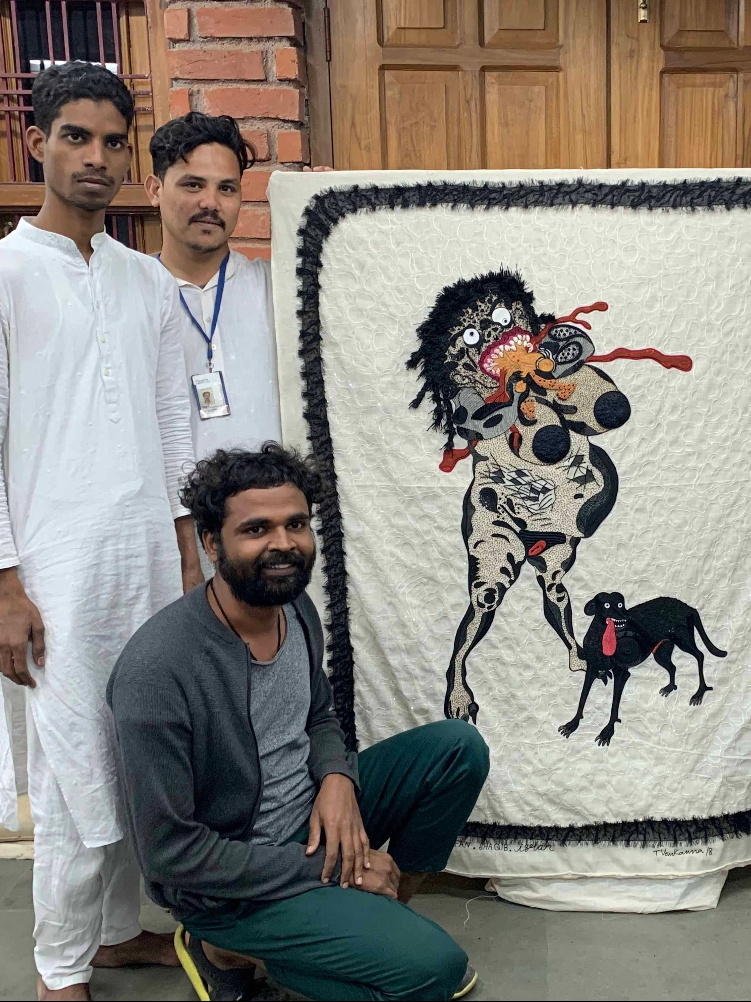
In between, he founded Les Ateliers 2M, which has grown from 20 people to more than 800 in Mumbai, with commissions from the largest couture houses across the globe. In 2016, with co-founder Mohammed Amine Dadda, he opened Kalhath Institute in Lucknow—“a training centre”, he is careful to specify, not a school. You need five years of embroidery experience just to get through the door. A residency programme followed in 2018, opening with T Venkanna, whose collaborations with the Kalhath karigars now sit in the Kiran Nadar Museum of Art in Delhi, the Burger Collection in Hong Kong, and the Leister Collection in Zurich.

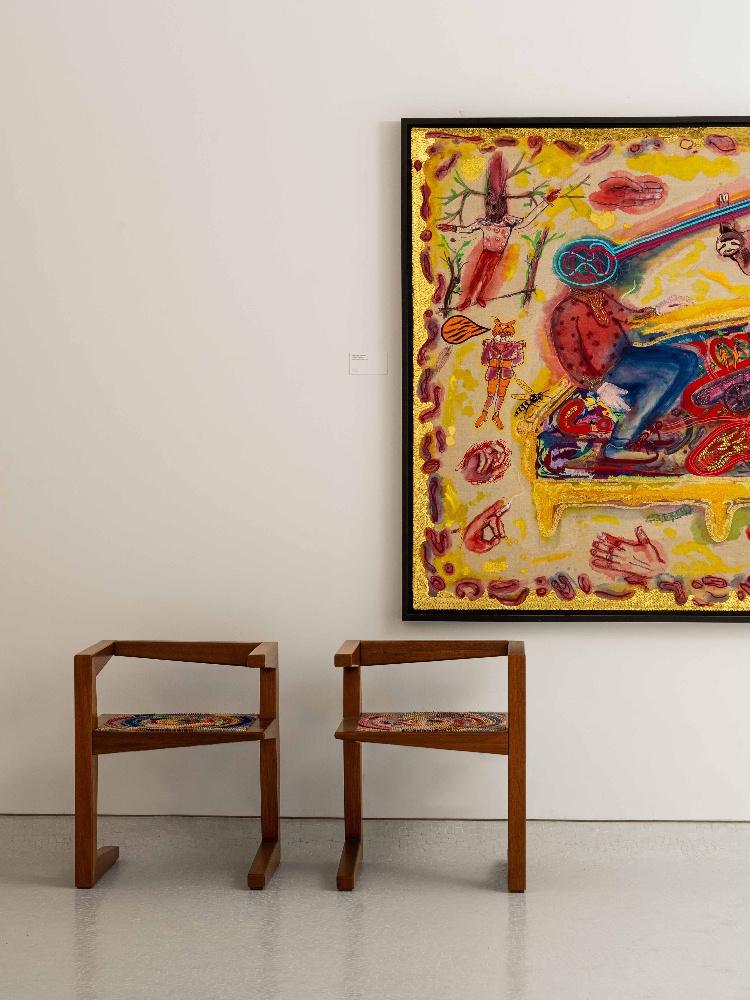
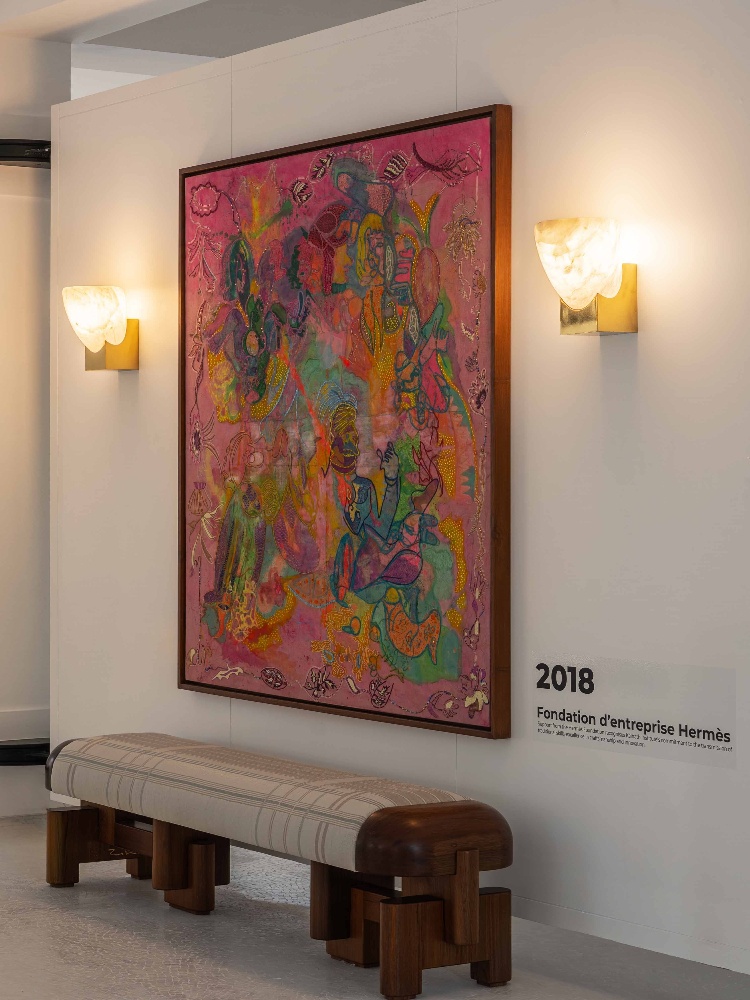
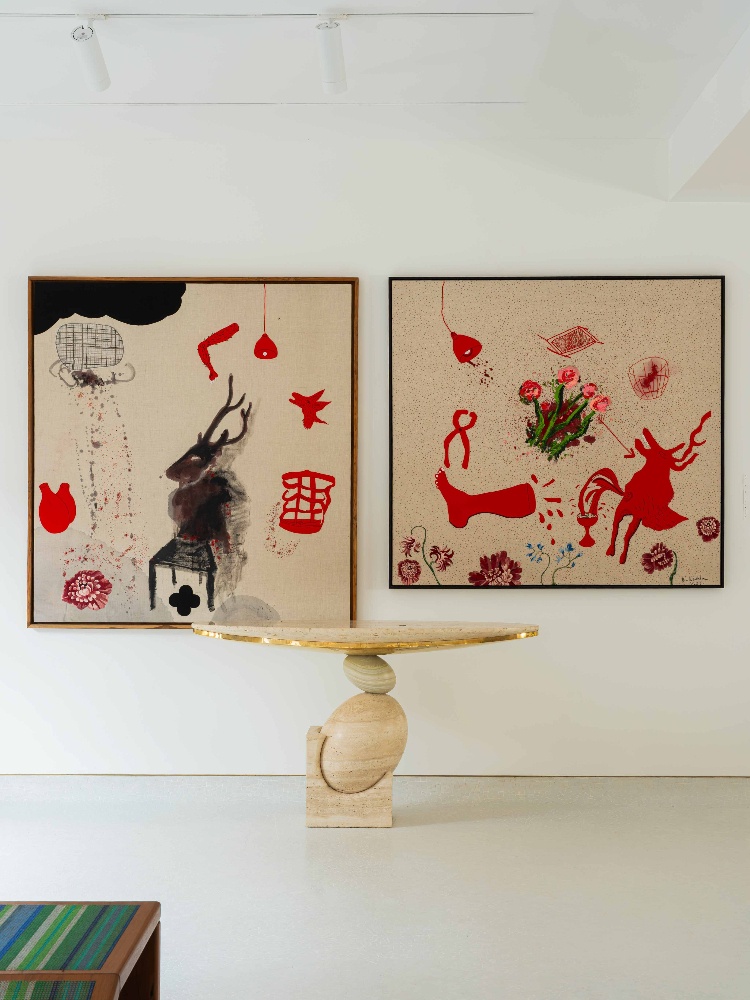
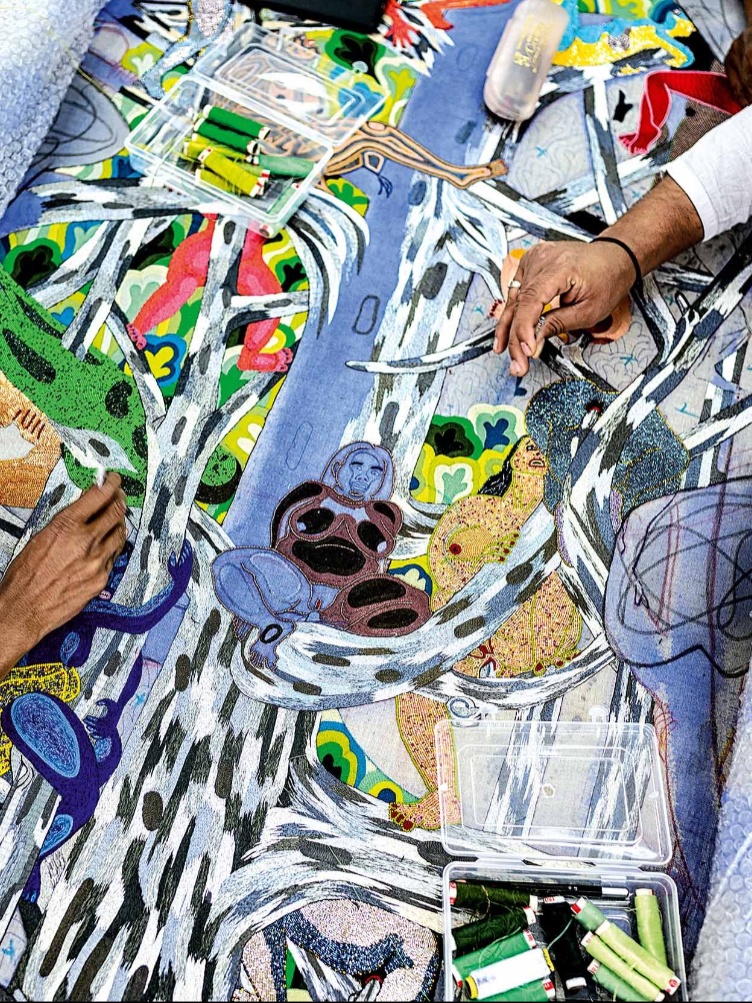
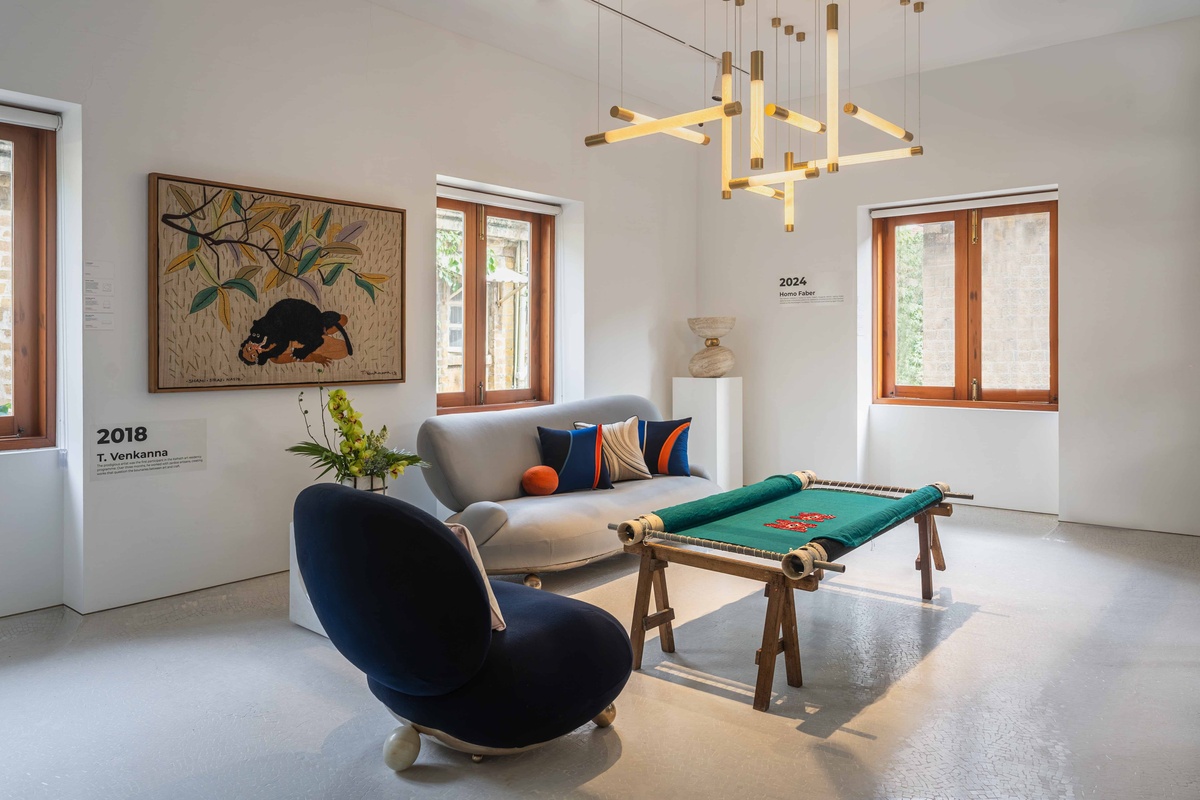
Since then, 11 artists have come to Kalhath, and all their works—20 in total—are currently on display at Shroff’s South Mumbai gallery. Some of these artworks—embroidery on different media—hang on the walls, some on the open frames, and a few others are on display in the studio.

Among them are Moroccan artists Yassine Balbzioui and Amina Benbouchta. The latter undertook a production residency in 2024-2025, and has her works ‘Prospero’s Island’ and ‘Where the wind blows’ (both acrylic paint and hand embroidery on linen) on display. Also interacting with Shroff’s striking furniture pieces are works by artists such as American textile artist Lauren Januhowski, who interweaves autobiographical narratives with the stories of the women around her. Her work ‘Prayer Tree’—zardozi embroidery, beads and satin and organza appliqués—is steeped in history, beliefs and legends. 
Below, Modesti talks to The Nod about the early days of Kalhath, a prank that cost Alaïa, and the painting he has thought about for nearly 40 years.

Everyone asks why you chose Lucknow for the Kalhath Institute, and not Mumbai or Delhi…

Because Lucknow, historically, is what we in France call the summum—the height of Indian embroidery. What happened in Lucknow under the patronage of the Nawabs of Awadh will never happen again in any kind of history. And in Lucknow, as of today, you have about one lakh women and men practising embroidery. Only in India do you have these kinds of crazy numbers. Everything is larger than life.

Were you a child who was interested in art, or a child who happened to be surrounded by it?

I was very lucky! I was born into an Italian-French family, and my mother’s family comes from Venice, where it’s difficult to avoid art and beauty. My favourite moments were going to church every week with my grandmother. I was not interested in religion; I was interested in the grand paintings and frescoes and was always trying to push my grandmother to go to a different church every week. Then I realised churches were open all the time, so I started going myself.

What was your first visit to India in 1992 like as a student?

I was pursuing an MBA at the Institut Français de la Mode, and I had this intuition that something was happening in India at the time. This was during the historic turning point of economic liberalisation and deregulation, when India was opening up again to the world. I decided to come and study the opening of the Indian market to luxury brands, and was able to get a grant from Lacoste, who wanted to figure out a way to enter India. So, I came for a five-week trip to study that and realised it was a tough market! But in the first week of my stay—I remember it so clearly—I said, forget about the market for luxury brands, craft is everywhere! I was shocked and wondered, what the hell is this crazy country, how is there so much craft everywhere you turn? Coming from Italy, where craft was truly disappearing, suddenly I was seeing craft alive.

What was the first craft that caught your eye?

Block printing, because in Venice we have Mariano Fortuny, who used to print velvets with block prints. Suddenly I was in a country where block print was made everywhere, and I went crazy. Instead of doing my study for five weeks, I stopped for two weeks in Jaipur and started making cushions and tablecloths to sell back home.

You returned from that trip and were hired by Azzedine Alaïa almost immediately. How did India come into it?

Alaïa was a specialist in knits and gave me knitted fabrics and said: go to India, come back with something interesting. So, I got on a flight to Bombay, not knowing anybody, and started making samples in the karkhanas of Grant Road. I loved sitting with the artisans, and embroidery is very grateful. It’s slow, but with time you see the design emerge.

What were your four years working with him like?

Never compromise. Not on your vision, not on your design, not on the quality of what you do. It’s not only about the quality of the product; it’s about the quality of everything. I’ve worked with everybody since, and there’s nobody like him. He could say f*ck off to Anna Wintour…and he could play a joke on Linda Evangelista. One day he called her (he could change his voice very easily) and said, “This is Brittany from Elite. You need to get on a flight immediately to Paris to meet Karl Lagerfeld. And she took a flight from New York, came on a Sunday morning, reached Rue Cambon, and there was no fitting! There was nothing! She got mad at him; I think she didn’t speak to him for six months. You couldn’t control Azzedine.

We regularly did fittings for Lauren Bacall. Nicole Kidman would keep stopping by. But I didn’t realise the grandeur of it all at the time, because it was Azzedine’s life and I was accompanying him through it. Today I want to slap myself for not taking more pictures!

You’ve spent 30 years putting embroidery into other people’s collections and never added your name to it. What does that anonymity feel like?

My most beautiful success is the Hermès family saying, “We don’t want to work with anybody else but Max.” Even I would ask them, “Are you sure?” But they always said they only trusted me. Creation is about trust, so why should I communicate that?

And embroidery doesn’t need visibility; it’s sustained by an ecosystem. There’s a very strong domestic market here, with 95 per cent of the embroidery produced in India being consumed within the country, and only 5 per cent is exported. We are nothing compared to the rest of the country and should learn to stay humble.

You’ve been collecting since you were 14. What does your home look like?

It’s filled with Italian design from the ’80s and ’90s, but very mixed. I like a contemporary painting next to a 17th-century Italian painting, a Noguchi table with Memphis chairs, because I see a connection between all designs and all periods of art. There’s always a relationship. Sixteen years ago I discovered Warli painting and started collecting Jivya Soma Mashe, when nobody was looking at him. You could buy a painting for ₹20,000 or 30,000, and I loved it! I could afford it.

When I was 17, in Paris, I’d visit Galerie Jean Fournier every Saturday, and he was kind enough to unroll one canvas for me each week. One day he opened a canvas, and it was Joan Mitchell. I thought it was the most beautiful painting I’d ever seen, but it was ₣100,000! I went to my father and asked him to lend me the money, and he said I was crazy and that I could buy an apartment for that much money. So, I couldn’t buy it. But sometimes a collection is not about possessing the work, only keeping the memory of it. Even if I don’t own that Joan Mitchell, that painting hangs vividly in my memory to this day.

Where do you go when the inspiration runs out?

Art! I have a library with thousands of art books, and I pick one up. Sheila Hicks. Olga de Amaral. Joan Mitchell, always. In 500 years, who will remember what we embroidered for Hermès or Christian Lacroix? Nobody. But people will still be collecting Venkannas. What doesn’t change is that every morning, irrespective, at 9:30 am I’ll be in the workshop. That will never change.

An exhibition celebrating 10 years of Kalhath Institute is on view at Gallery Rooshad Shroff, 3rd floor, Dubash House, Ballard Estate, Mumbai, till September 30, on weekdays from 10 am to 7 pm and weekends by appointment only. info@rooshadshroff.com

The Nod Newsletter

We're making your inbox interesting. Enter your email to get our best reads and exclusive insights from our editors delivered directly to you.