



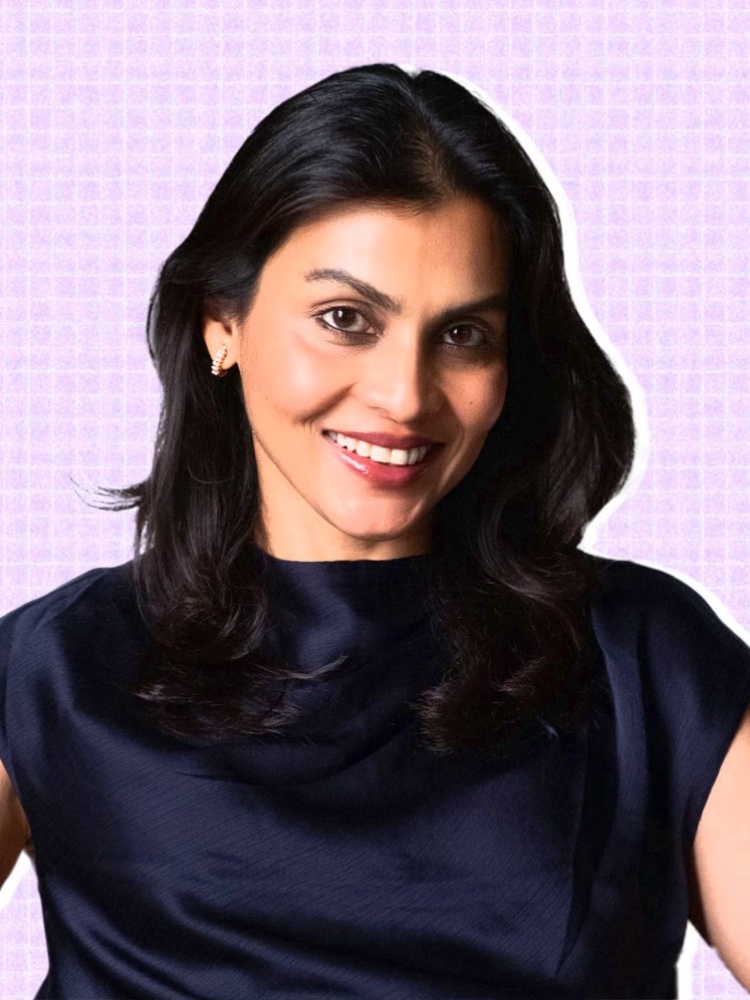
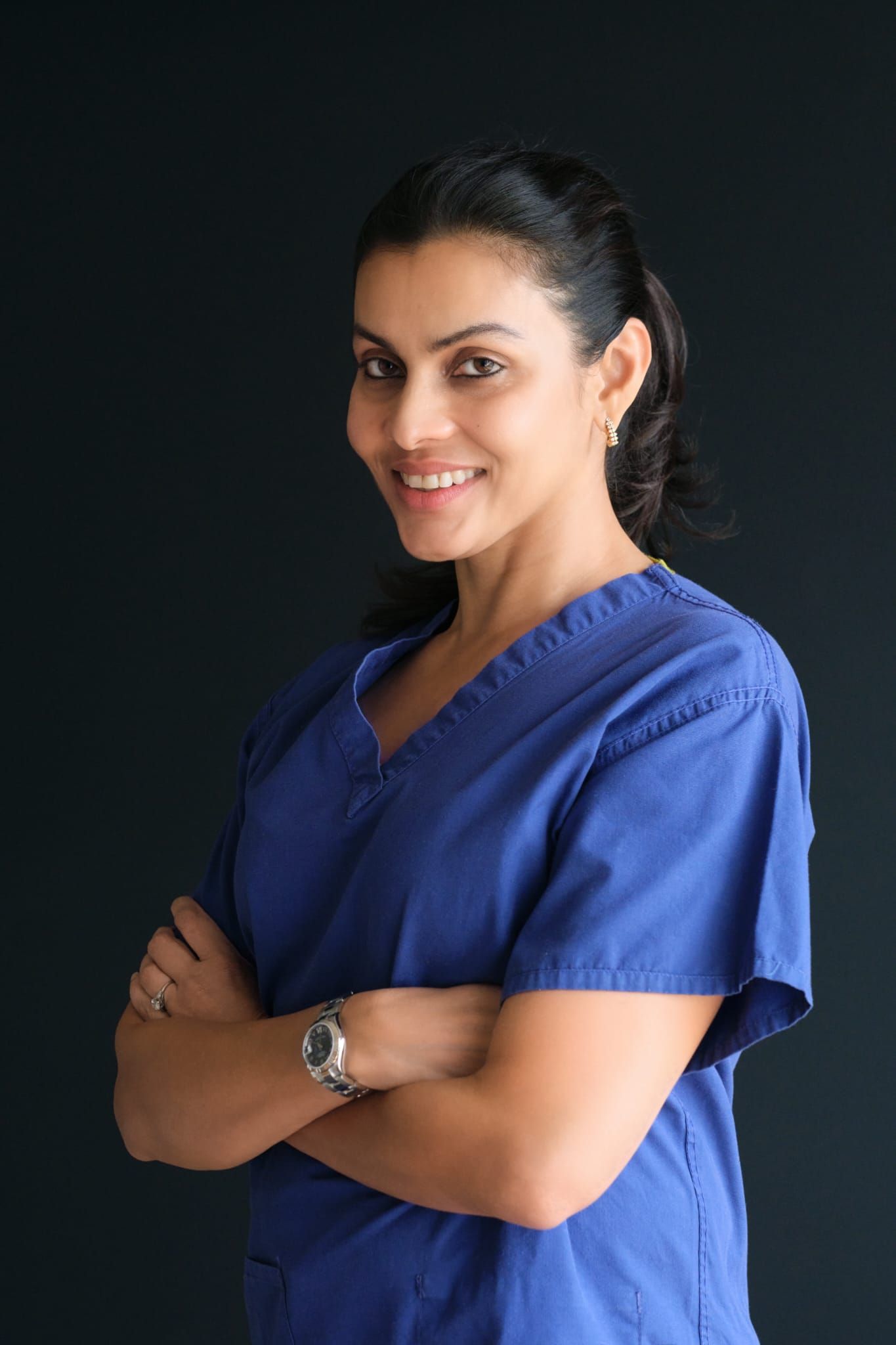
In certain circles in London—specifically, the group chats of women losing their hair and mind during perimenopause—the name Dr Archana Rao comes up a lot. She runs one of the very few NHS clinics in the UK dedicated entirely to skin and hair. The waiting list is a year. Her research has been published in Nature Communications. She lectures doctors and trichologists across the globe. This month, the dermatologist is opening a second private clinic in Wimbledon because even the year-long waitlist, it turns out, isn’t meeting demand.
Her approach is unglamorous and, in the age of viral serums and supplement stacks, radical in its insistence on first principles. There’s a questionnaire to fill before the appointment. Then a full blood panel: not just iron but ferritin, thyroid panel, B12, folate, vitamin D, zinc, liver, and renal profiles. A proper look at the scalp. And then the referrals: a psychologist for the woman who is clearly not fine but insisting she is; a dietician for the patient whose iron stores are so depleted no topical treatment will touch it; an endocrinologist for the hormonal complexity that falls outside her lane.
The women who find their way to her tend to arrive carrying something heavier than hair loss. She sees it constantly—a woman turning pink with suppressed emotion while insisting she is absolutely fine. She hears this so often it has become its own kind of ache. “You are a very strong woman. And to keep going as a strong woman, you need the tools to do it,” she says.
It started with a hunch
Ask any woman in perimenopause what’s happening to her skin and hair, and she’ll tell you plenty. Ask her doctor, and you’ll get a lot less. When Dr Rao went looking for the literature, she found there was none. Not a chapter on perimenopausal skin. Not a line on the hair changes that come with hormonal shifts. “I realised,” she says, “it’s a whole different game altogether.”
It was a realisation she was uniquely positioned to act on. Trained at Nair Hospital in Mumbai, she briefly worked alongside her aunt, the well-known dermatologist Dr Jamuna Pai, before following her husband to London, where her Indian degrees weren’t recognised and she had to start over entirely. She retrained through Imperial College London, with clinical stints at Chelsea and Westminster Hospital and Ealing Hospital. “You realise things are very much the same but also so different,” she says. “I wonder how I did it. I had lots of guts and stamina at that time.”
What it gave her was an instinct most of her British peers didn’t have, and when she became a consultant at Kingston Hospital NHS Trust, she already knew the difference between something that needs a biopsy and something that just needs someone in the room who has seen it before.
At some point during our conversation, she says, “I must have been really crazy to do all of this, but yeah...” Given that she spotted a gap nobody else was looking at, built a clinic the NHS told her there was no money for, and is now more in demand than the system can hold, it is, you quickly realise, a considerable understatement.
Diagnoses are in the details
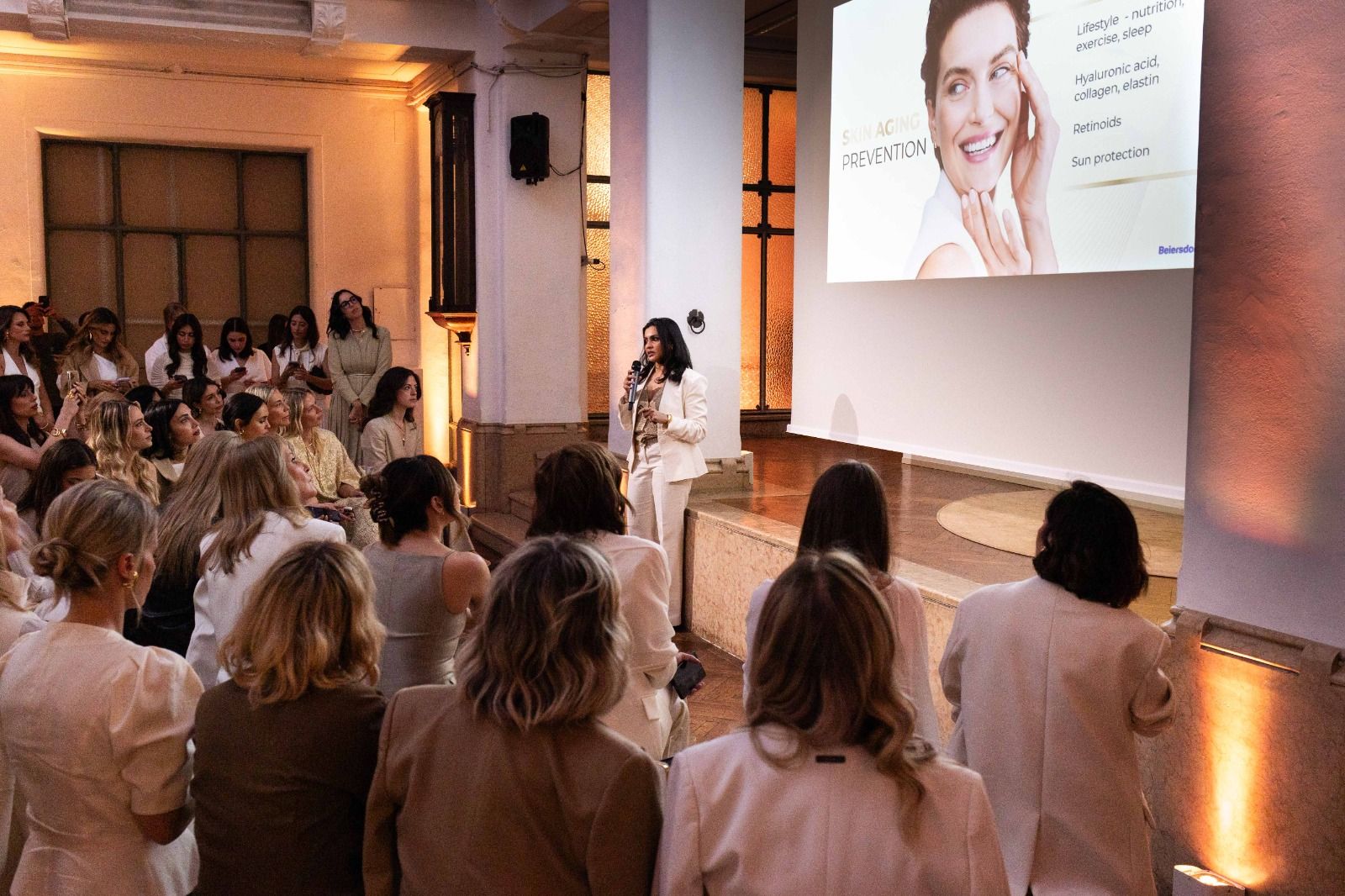
Thanks to media today, the conversation around perimenopause and menopause has found multiple platforms. Podcasts, columns, your Instagram explore page... It is everywhere. Dr Rao welcomes it, with one pointed caveat. “They speak about HRT, brain fog, night sweats. Very few realise this can impact the skin and hair as well. Even when I give a talk and GPs are in the room, they say, ‘Oh really, this happens to the skin also in menopause?’ And I’m like, yes. Your full body is changing. Your mind is changing. Hormones are changing. Why shouldn’t your skin and hair change?”
While she understands the impact of these hormonal fluctuations, she also feels that often doctors diagnosing hair fall with a blanket “it’s hormonal” is a flattening of this complex issue. It is a pet peeve for her, and she talks about it with the patience of someone who has been correcting it forever. “It’s not a diagnosis! You lose hair because of a reason. Or reasons. Genetics. Low iron. Underactive thyroid. Autoimmune causes. There is always a cause. It is never an umbrella term, and it is never a one-step solution.” The women who’ve spent years being fobbed off with that non-answer and thousands on products that did nothing—they are not the exception. They are the norm, she says.
Another issue she sees often in her practice is just plain misdiagnosis. “Loads of women [who were] coming in with skin problems...most of them were on antidepressants. And I told my husband: something’s wrong. Is it south-west London? Why is every woman in her forties and fifties on an antidepressant?” GPs, she concluded, were handing them out like candy for symptoms that were hormonal, not psychiatric.
The newer trend showing up in her clinics? GLP-1 patients. Women who, on Ozempic or Mounjaro, lost weight fast, and then three to six months later are losing hair. “When the body loses a lot of weight rapidly, it reacts to that as shock. The hair follicle doesn't take too kindly to it.” The mechanism is the same as postpartum shedding. The body registers something seismic. The hair pays the price later. Dermatologists, she says, are increasingly on the frontline of a conversation that started in someone else’s office.
Ask her what she’d change about how the medical system handles women at this life stage, and she doesn’t pause. “Take them a little bit more seriously,” she says. “When you’re young, it’s your menstrual—you’re hormonal. Then as you get older and you don’t have your periods, it’s menopausal—you're hormonal. There’s always something to blame for a woman. They never turn around and ask a man: why so grumpy at this age? I’m pretty sure the grumpy old man is also a result of menopause, honestly,” she says, not entirely joking.