



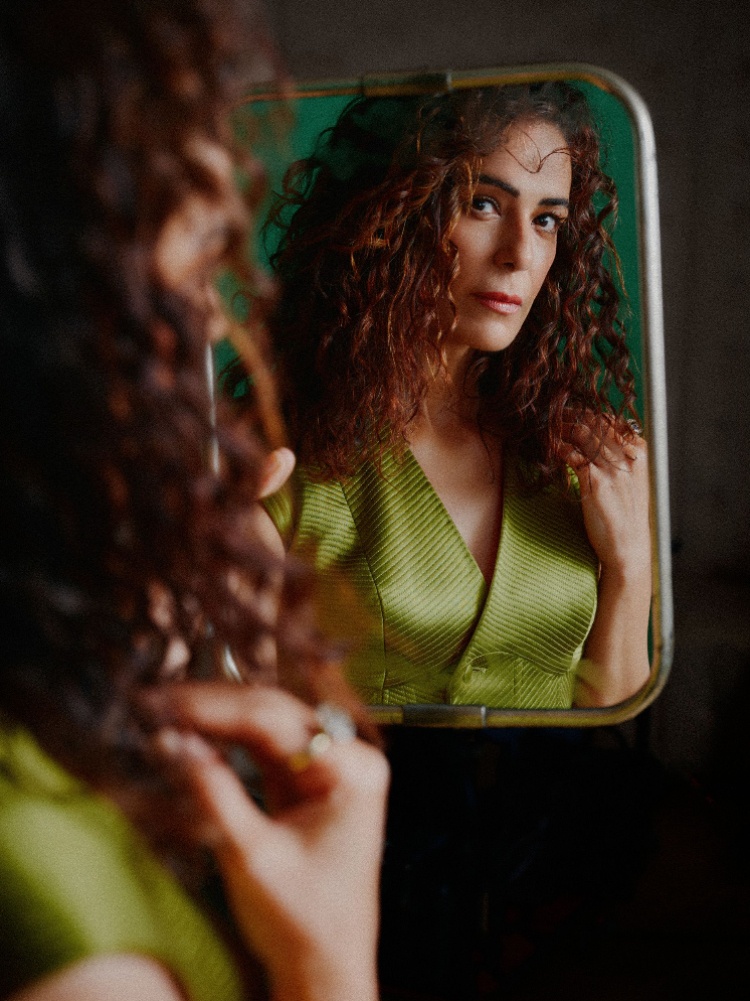

I meet Mona Singh on a dank, overcast afternoon in July at Kona Kona, her jewel-toned, all-day bar tucked in a “kona” of Mumbai’s chaotic suburb Andheri. Four days of unceasing rain have left the city looking more dishevelled than usual. By contrast, Singh, in a soft white top and blue jeans, with her hair pulled back, looks fresh and pleasingly matte. The place is quiet, with a few tables taking late lunches. If the guests recognise her, they don’t let on.
“I’m still surprised when people do recognise me,” she says, and she’s not crazy for it. Kona Kona is home turf as well as work, but anywhere else she’s happy to just blend in. “I’m shy socially, I think. Like, I’m fine in a group, but if my friends are at a restaurant and I have to join them, I’ll be like, please come out and get me.”
She’s been experiencing a deluge of her own. In 2026, she’s had nearly as many releases as months—her sixth, Raju Hirani’s cyber-crime dramedy Pritam and Pedro, dropped in July. And there are at least eight upcoming projects listed on her IMDb page. The line-up is fortuitous—many variables determine a project’s release date regardless of when and how far back it was filmed—because it has translated into a tight little showcase of her powers. “I am so happy,” she beams, “It’s not the quantity that I’m celebrating. It’s the spectrum, you know? There’s six different women on screen.”
These include a Goan granny-core gangster in Vir Das’s spy comedy Happy Patel: Khatarnak Jasoos; a fauji wife and mother holding on to her faith in the big-ticket Border 2; a cold-blooded sand-mining mafioso in the OTT film Subedaar; and a pressured sub-inspector and grieving mom in Sudip Sharma’s disquieting police procedural thriller Kohrra 2. It’s as if the much-discussed creative drought ravaging the Hindi entertainment industry has skipped her altogether. She chuckles, “No, but honestly, it’s not been a sudden burst for me. This has been the harvest of years and years of patience.”
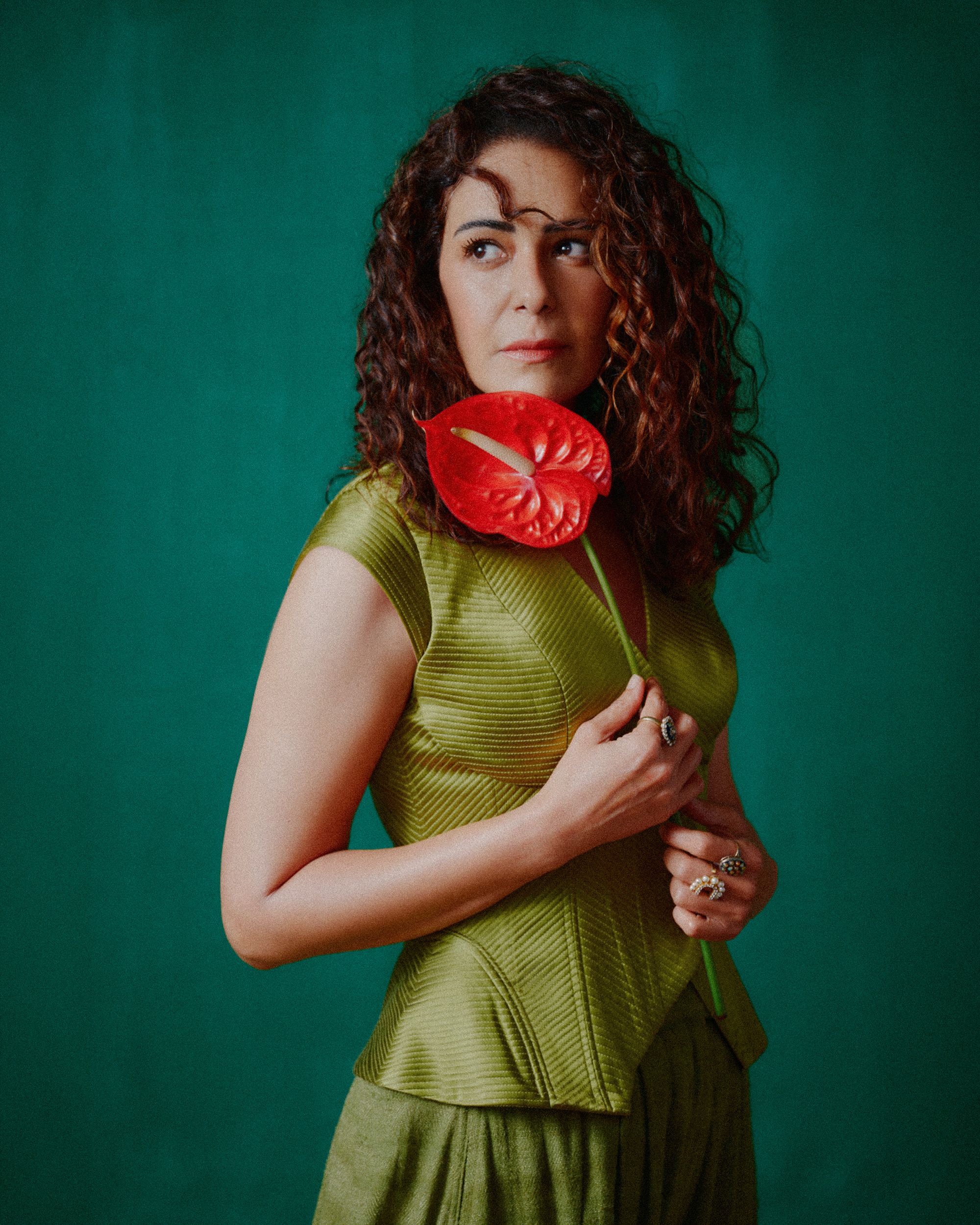
She doesn’t mean she had to wait for opportunities or success. For a rank outsider whose only inroad to showbiz was the public phone directory, Singh has never actually had a dearth of those. She entered the TV industry at 22, the star of primetime hit Jassi Jaissi Koi Nahin (a role she scored by cold-calling producers Deeya and Tony Singh, the duo behind seminal ’90s Hindi TV like Banegi Apni Baat and Just Mohabbat). It made her a household name in the course of its 2.5-year run and would have kept going—the producers had generational storylines ready to go—but Singh bowed out. “I was like, it’s run its course. She [Jassi] had a makeover. She’s fallen in love with her boss. She’s gotten married. It’s time to pack up.”
By 24, she was riding the country’s first reality TV boom, hosting and competing in a clutch of popular shows like Jhalak Dikhhla Ja and Entertainment Ke Liye Kuch Bhi Karega for the next several years. In between, she made her big-screen debut in 3 Idiots but kept returning to the open arms of soaps. By 32, she was leading another hit TV series, Kya Huaa Tera Vaada (2012-13), which incidentally marked her formal passage into Onscreen Mom.
Her first decade in entertainment burnished her raw talent and gave her recognition as well as financial security. But what she’d been waiting for, from as early as her first show, was a deeper creative satisfaction. She had understood back then that TV would only offer her “the binary track of good girl or villain”, but she wanted more. It was around this time that she began to track the first crop of fiction shows on YouTube. “I thought, this is the next thing,” she says. “Maybe there’s not enough money in it right now, but let’s experiment.”
She quiet-quit television by 2014 (“I didn’t make an announcement because life has a way of playing games”) and began to navigate a slow transition to the internet. In the intervening years, she took time off to rest, travel, and cut her teeth in theatre with Raell Padamsee’s Unfaithfully Yours. By 2017, her first web show, TVF’s Yeh Meri Family, came out—and along with it, numerous #MeToo allegations against the company’s CEO. It would be a while longer before the show began to gain word-of-mouth pickup, and her second-screen journey was on its way.
Another decade on, whole new generations and geographies of audiences have become accustomed to Singh lending weight and warmth to any scene she’s in. Platforms like Netflix and Prime Video have given her global visibility, while shows like Made in Heaven 2, in which she played the mouthy-but-kind financial auditor Bulbul Jauhari, and The Ba***ds of Bollywood, where she plays mother to the lead Lakshya, have put her on Gen Z’s radar. “Otherwise they used to approach me saying my mom is your fan or my nani is your fan,” she laughs. She’s been building a neat filmography too—after 3 Idiots, it was another Aamir Khan starrer, Laal Singh Chaddha (2019), that gave her big-screen career a second wind. But OTT is her spiritual home as an actor. “It’s more raw. It’s more unfiltered, more fearless,” she says.
You understand what she means when you watch Kohrra 2. Her SI Dhanwant Kaur is transfixing. Dark clouds of grief and exhaustion roll across her features in the absence of much other verbal or physical expression; her despair is implosive. “At the end of our scenes, Pradhuman [Singh, the actor who plays her husband] and I would grab each other’s shoulders and howl and howl to release the pent-up emotion. Afterwards I was empty.” Singh tells me she’s not a big crier in real life. When life hands her challenges, she’s more likely to square her shoulders and set her jaw. “I save all my emotions for the camera. The catharsis happens there.”
Singh’s still playing a lot of moms—in four out of the six releases this year, for example. But now they contain multitudes, because she’s being very picky. “My problem is they are often no more than the moral compass, the motivational speaker for the hero,” she says. “Why, man? I don’t want to do that. And I have no qualms in saying no to people.”
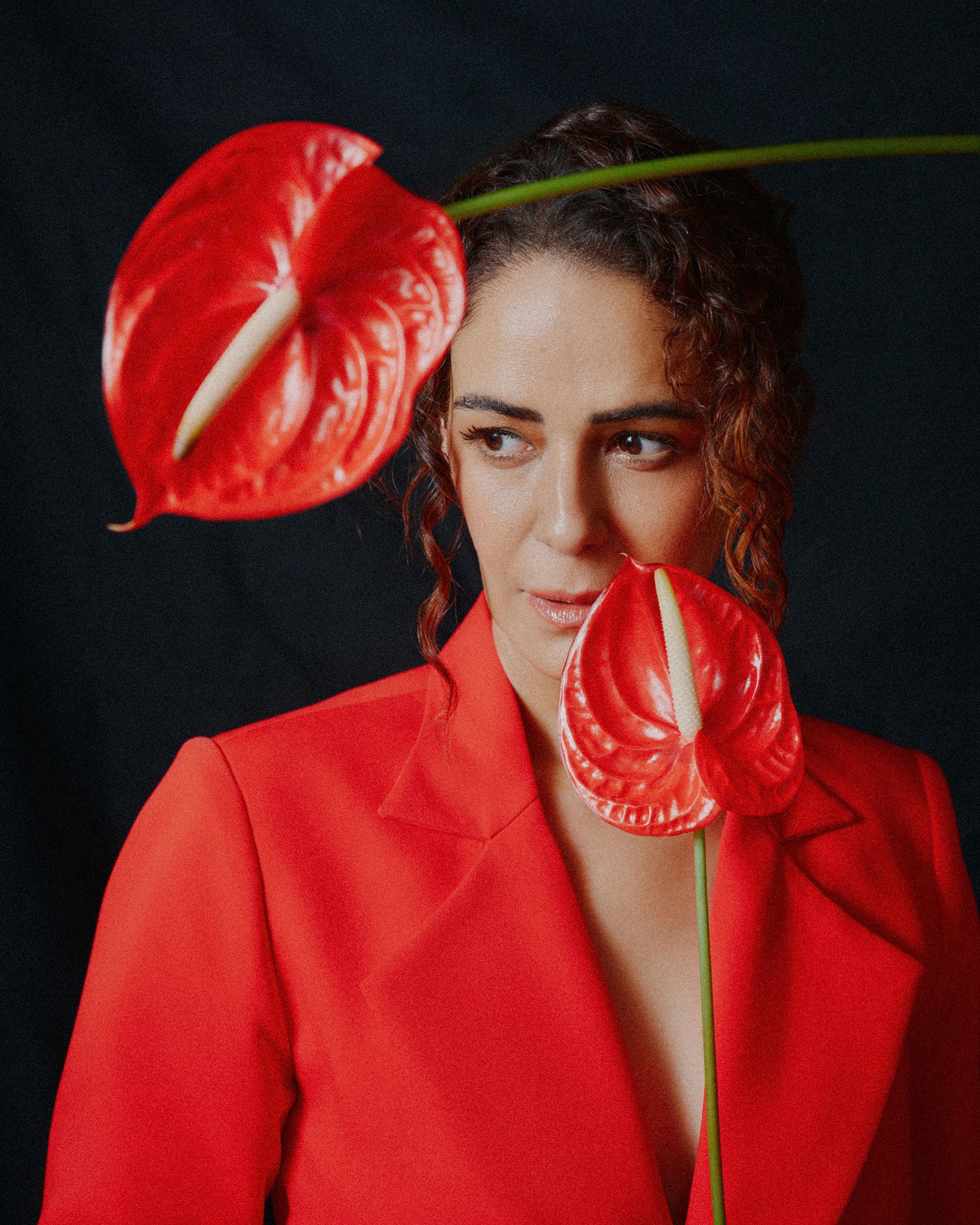
She’s been building that muscle for a long time. In fact, the course of her career and life have been altered by the frequency with which she has deployed “no” at pivotal turns. Like when she refused to keep studying further after graduation, because she was sure she was meant to be an actor. Or when, a week before she was to fly off to her first job as an air hostess for Singapore Airlines, she tearfully told her father she wasn’t going because she knew it was not for her. She broke with convention in her personal life too, ignoring pressure—“more from the press than my parents”—to get married and have children. Instead, she used the break from her TV career to freeze her eggs and told her folks she would marry only for love, which she found with filmmaker Shyam Rajagopalan in her late thirties.
What is the source of this unstinting self-trust? For Singh, it is indisputably her fauji family. As they moved with her Colonel father’s every new posting, never staying anywhere more than three to four years at a time, she, her parents and her older sister, Sona, became each other’s safe space and anchor. “I have become this because of them. It was like, your comfort zone is home. Outside, take your risks.”
Her father especially looms large for her. He’s been the voice in her head and the wind at her back. When she had her Singapore Airlines job meltdown, he said to her, “Cancel your visa, and wherever life takes you, we are there.” He kept his word, years later even thwarting his well-laid retirement plans in Pune to move into her Yari Road flat, because she was lonely and homesick. ”He built his retirement home there and had a thriving community. I said, ‘Are you willing to give up that for me?’ And he was like, ‘Come on.’”
We’re sitting at her favourite table by the entrance, and as I tuck into the fluffy, flavoursome mutton siddu—their bestselling Himachali bread appetiser Singh insisted I try—she nods at incoming customers. One of them, who is clearly an acquaintance, walks up to rave about her Kohrra performance. “Thank you, thank you!” she smiles, hand to heart. Once he leaves, she turns to me, “God, I just can’t remember his name.” Perimenopause is the culprit. “Sometimes, I’ll be trying to tell my cook what to make and I’m just pointing at the vegetables like, ‘...woh, woh wala bana do.’ The names won’t come.” Her brain is foggy, she says, her bones crack, and she’s popping Omega capsules by the threes daily.
But in every other way, ageing has been only wonderful. Her forties have been delivering the compound returns of years of sticking to her guns. She’s staying booked and busy—in H2 she’ll be working on her first indie feature and she has her first offer for a vertical series that she’s giving serious thought to. (“Whether it’s vertical, cinema, or OTT, if the product is good, it will travel.”) And the eight upcoming projects we mentioned earlier. Kona Kona has just opened a second, even bigger outlet on the other side of Andheri, and she’s returned from vacationing with Rajagopalan in the house they’ve just bought in Goa.
Promotions every month this year have taught Singh that she might just be a closet fashion girlie too. She’s been rocking power suits across her promotions and screenshotting all the homegrown brands she wants to wear for her stylist Triparna Majumder, who has been getting increasing requests from designers to dress her client. “I was very happy with my anarkalis for the longest time, you know? But now I think, let's up this game as well. That this is also how I can be.”
At 44, mom is a role she’s relegated to fiction; IRL she’s a happy dog mom to her two furry babies, and Cool Aunt to Sona’s now-young-adult children. “I brought them to learn how to bake a pizza in the kitchen here when they were down [from New Zealand] this time. I said, now go home and make it for mama.”
A typical day in the last six months, when she’s not been shooting, has looked like this: early nights and slow mornings without her phone, warm foods to aid digestion, and yoga to keep her lean. She takes a bonsai class online and is studying the tanpura for an upcoming role. Evenings from 4 pm to 7 pm is sacrosanct teatime with her parents who live five minutes away, and weekends are at Kona Kona, hosting and partying with friends and family.
“Are you just living the dream?” I ask, trying not to sound too envious. “Every day,” she laughs. “It feels amazing, you know, because you followed your heart, you listened to your gut, and you did not have a plan B. And now you’re living that life.”
Editorial Direction: Megha Mahindru. Photography: Pulkit Mishra. Videography: Prasanna Khawale. Fashion Lead: Naheed Driver. Bookings Editor: Nikita Moses. Multimedia Designer: Mehak Jindal. Visual Editor: Ria Rawat. Set designer: Risha Shetty. HMU: Umang Thapa. Styling assistants: Vedica Vora, Anushka. PR: Spice