



Fashion15 Oct 20266 MIN

Péro does sexy (yes, really) with a little help from Barbie

With the debut of Péro Intimates, teeny-tiny koodai, and rollerblading Barbies and Kens on the Lakmé Fashion Week runway, Aneeth Arora gives Barbie’s wardrobe a whimsical makeover

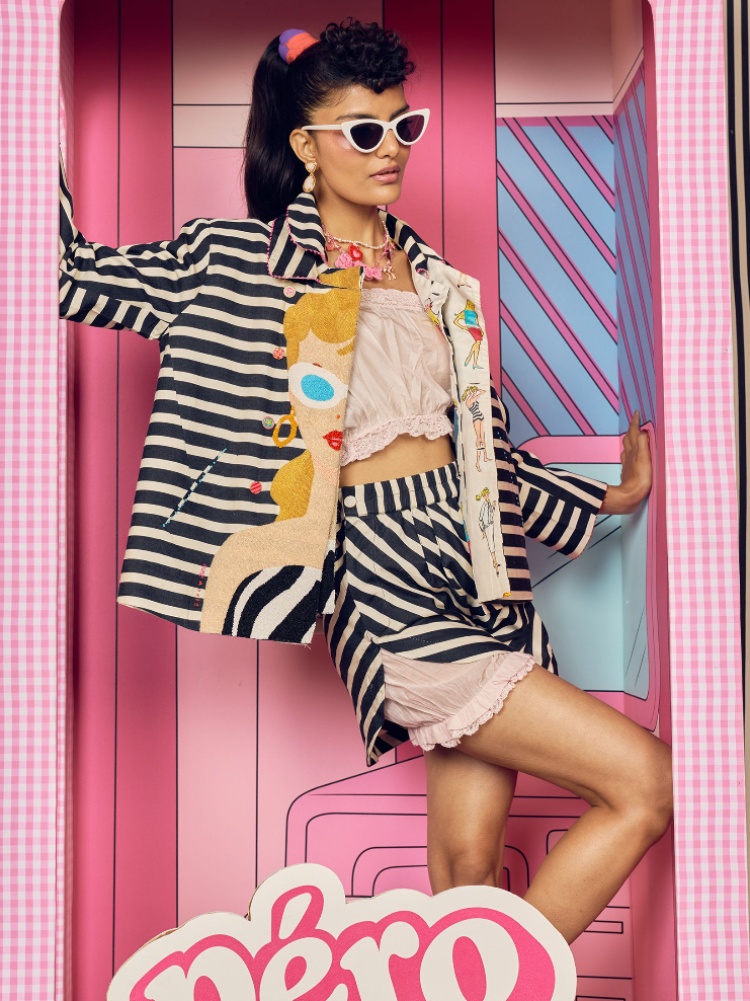
Pero x Barbie Look 1

Look 1 from the Péro spring/summer 2027 collection

Courtesy Péro

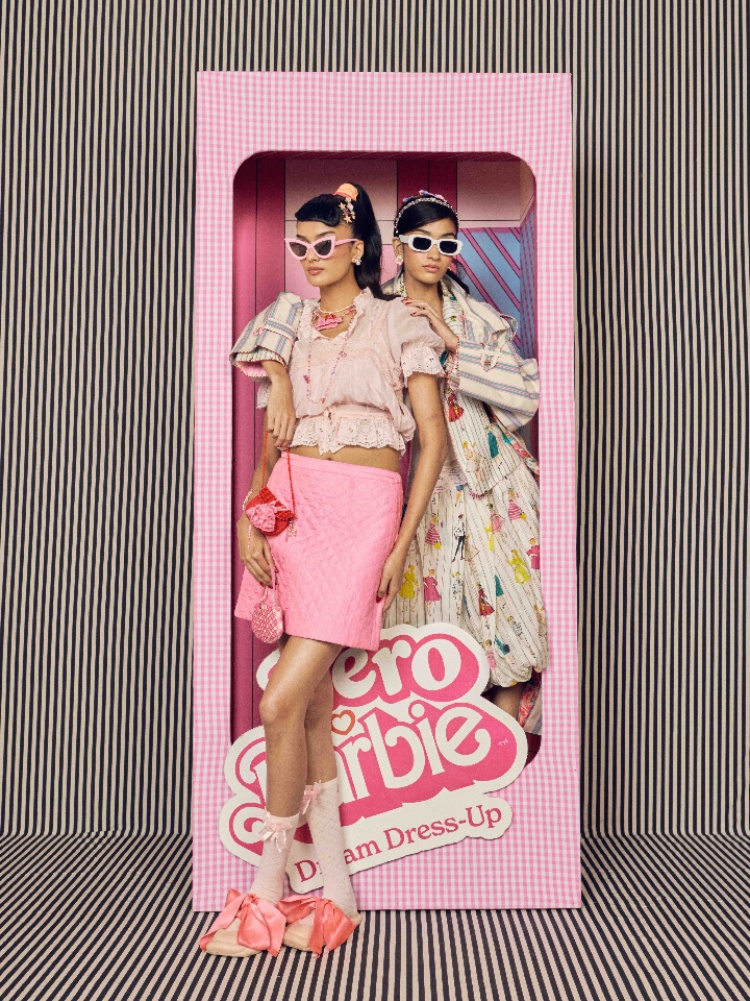
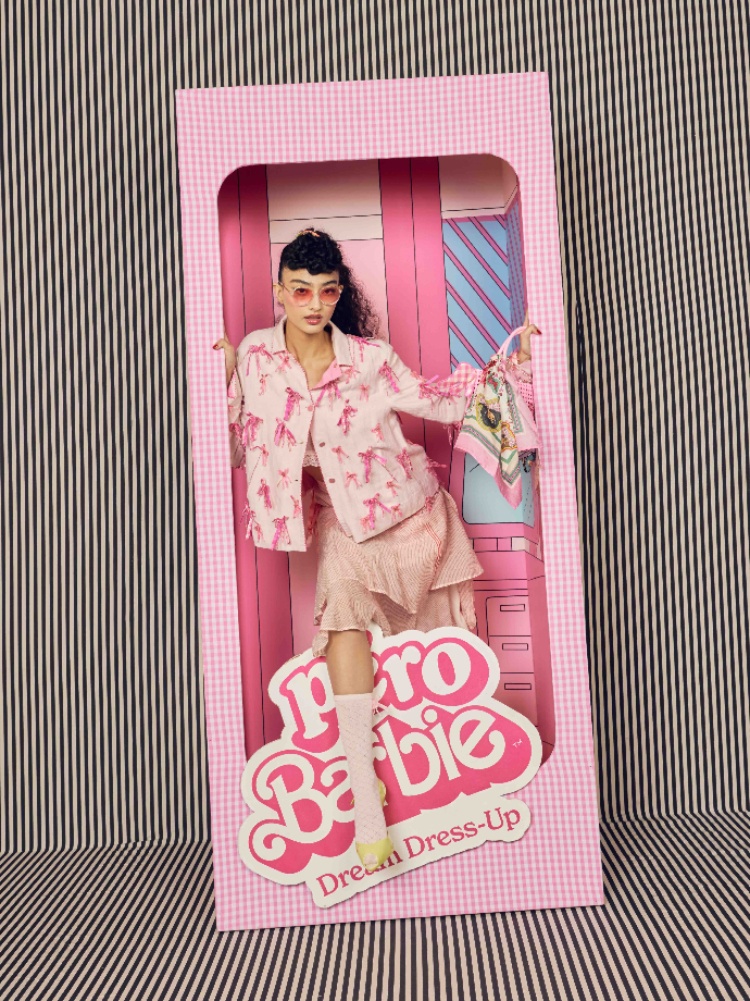
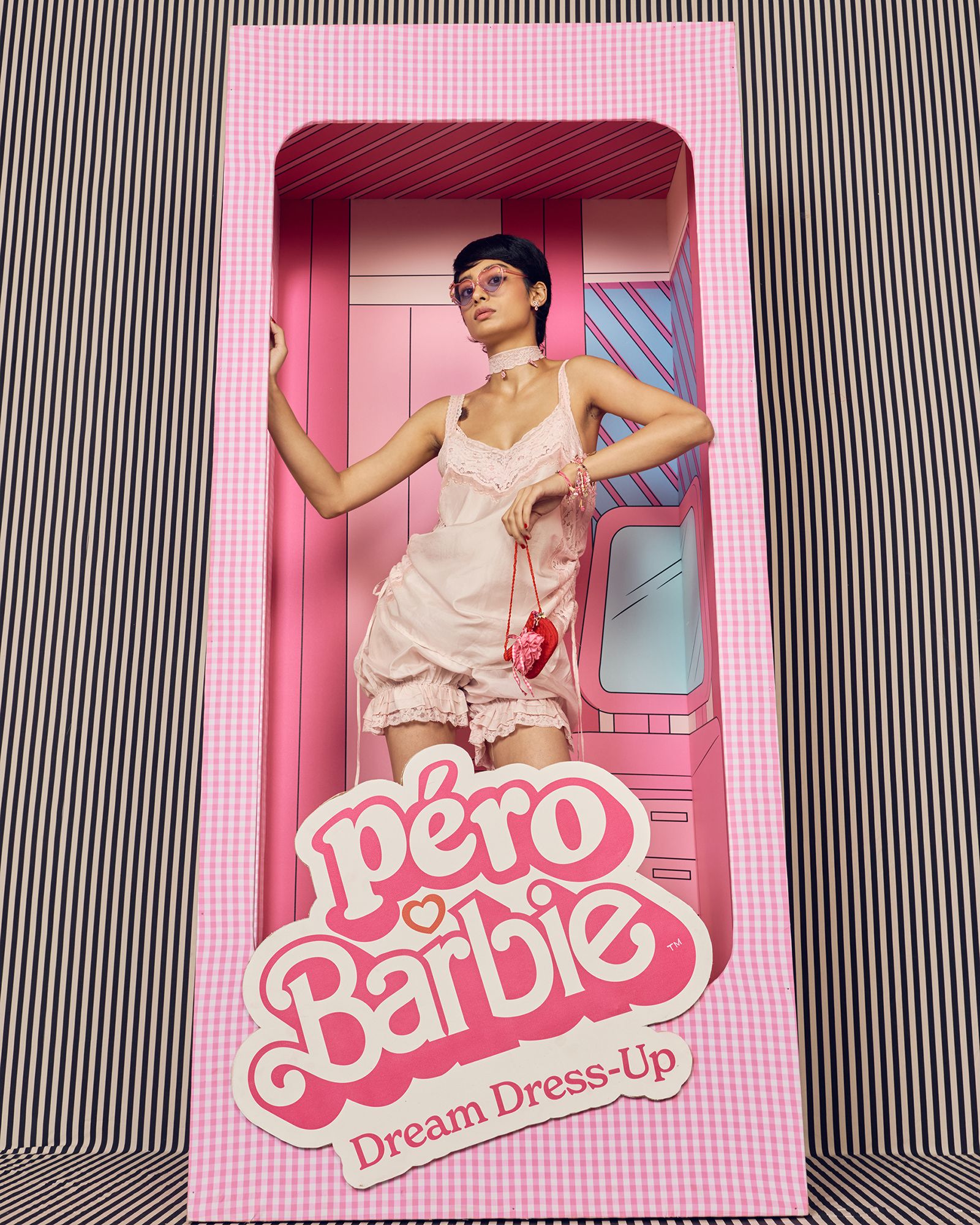
Last night, for the opening show of Lakmé Fashion Week in partnership with FDCI, Aneeth Arora brought Barbie’s Dream House to the Péro runway. A live band performed in a recreation of the doll’s famous pink abode in the centre; life-sized Barbie boxes were scattered across the runway, with models stepping out from them as the show began, like dolls coming to life; and the soundtrack switched between bubble-gum pop and the chirpy voiceovers of vintage American Barbie commercials—an idea Arora arrived at after watching countless old advertisements while researching the collection. And because it’s not Barbie’s world without a set of rollerblades, some models came gliding down the runway in inline skates or shoes fitted with Jet Wheelies, while others teetered in plastic pumps.

Over the past few years, Barbie has enjoyed something of a pop culture renaissance, thanks in no small part to Greta Gerwig’s 2023 live-action blockbuster Barbie and Margot Robbie’s sensational press-tour wardrobe, which paid homage to some of the doll’s most iconic looks. Now, the world’s most famous doll is back in the limelight for another reason: a surprise collaboration with Delhi-based label Péro, best loved for its anti-fit silhouettes, textile experimentation, and whimsical approach to dressing.

Péro, of course, is no stranger to doing collabs. Its previous outing with Sanrio’s Hello Kitty was a huge success, and about a year ago Barbie’s parent company, Mattel, approached Arora about doing something similar. “A lot of credit goes to what we did with Hello Kitty and how it was seen globally, and I think that’s how Mattel also decided to approach us for Barbie,” Arora tells me over a phone call ahead of the show. “We always work two years in advance for every season. Because we got to know about Barbie well in advance, we were able to start incorporating the colours and themes in the fabrics,” she says.
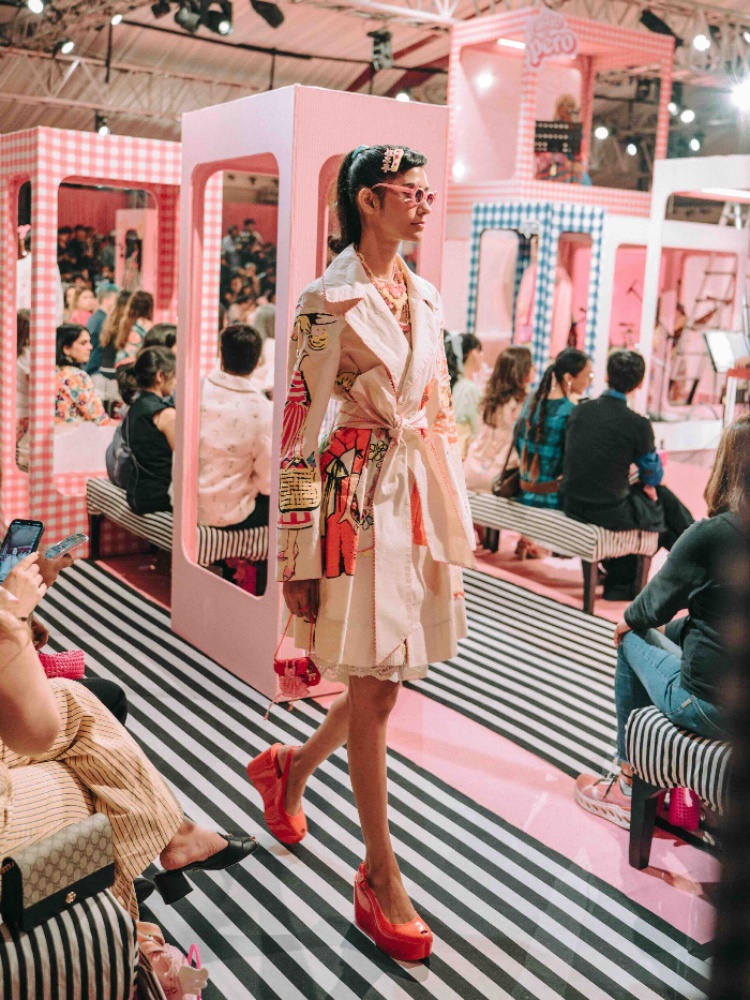
But collaborating with Mattel came with a rather extensive rulebook. “I feel that Hello Kitty was easier. Barbie had a lot more restrictions and guidelines we had to follow, and I respect that because it’s easy for even iconic brands to get diluted when they do collaborate. In fact, it’s a learning experience for us,” Arora says. “We are a brand that doesn’t know where to stop. When we start creating, we keep creating more and more. But the constraints helped us practise some restraint. Even though it was tough, it really helped us,” she adds.

To prepare, Arora and her team began poring over Barbie’s official brand book and style guides, tracing the evolution of the doll’s wardrobe from her debut in 1959 to the present day. “The Barbie universe is very interesting. The first thing that comes to people’s minds is pink. But there’s much more to Barbie than just pink,” Arora says. Titled ‘Dream Dress-Up’, the spring/summer 2027 show opened with a series of black-and-white pieces, with stripes interpreted in mashru, block prints, and knits—all developed in different parts of India—inspired by the first-ever Barbie, who wore a striped bathing suit. “It was the most exciting thing we stumbled upon during our research, because, to tell you the truth, I was scared I would have to work with a lot of pink,” she admits.

Arora was also keen to get her hands on Mattel’s vintage archives, including early illustrations of Barbie that reminded her of old-fashioned paper dolls and their cut-out wardrobes. The artwork finally arrived just two weeks before the show, too late to incorporate into the clothes. But the team managed to use it for a miniature pop-up paper-doll wardrobe for guests to take home, complete with cut-out outfits they could use to dress their two-dimensional Barbie.

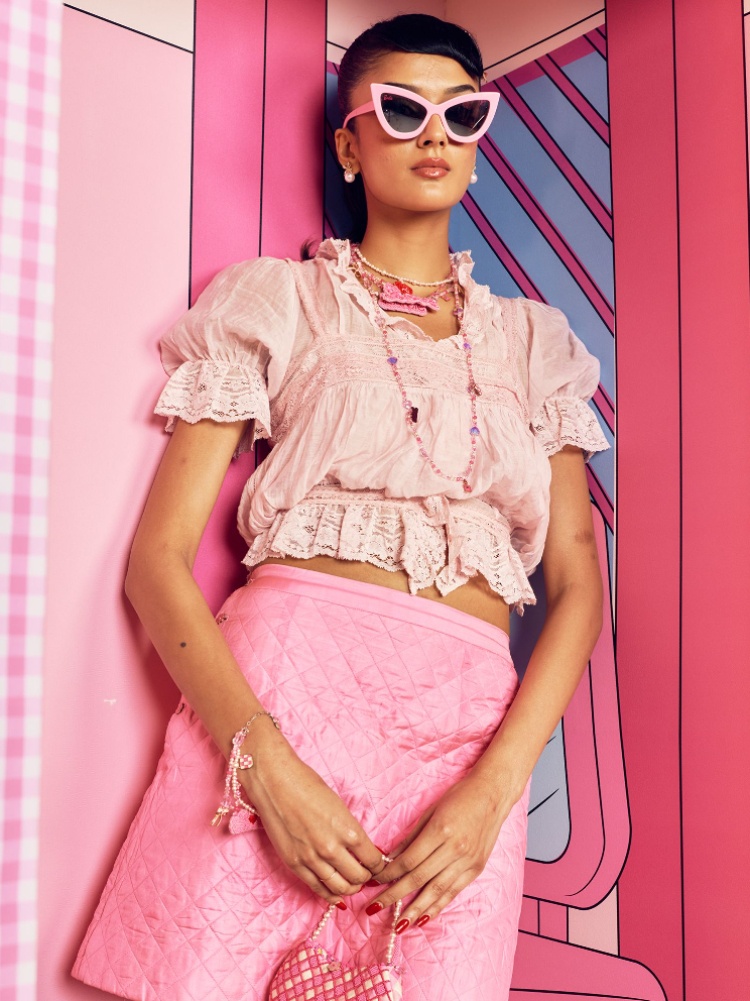
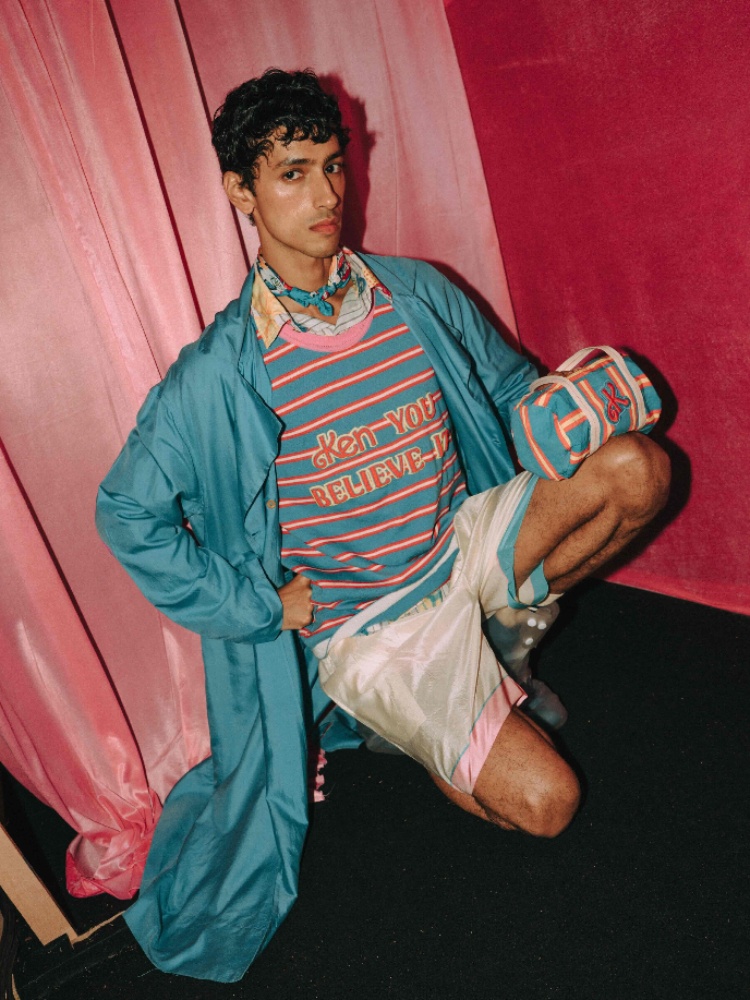
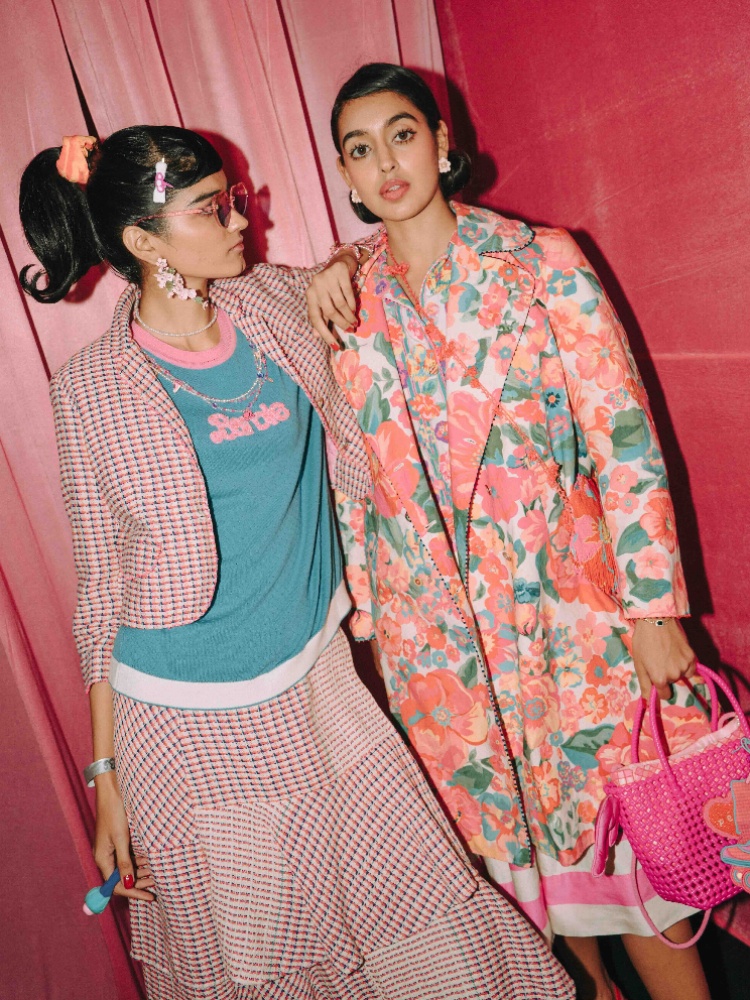
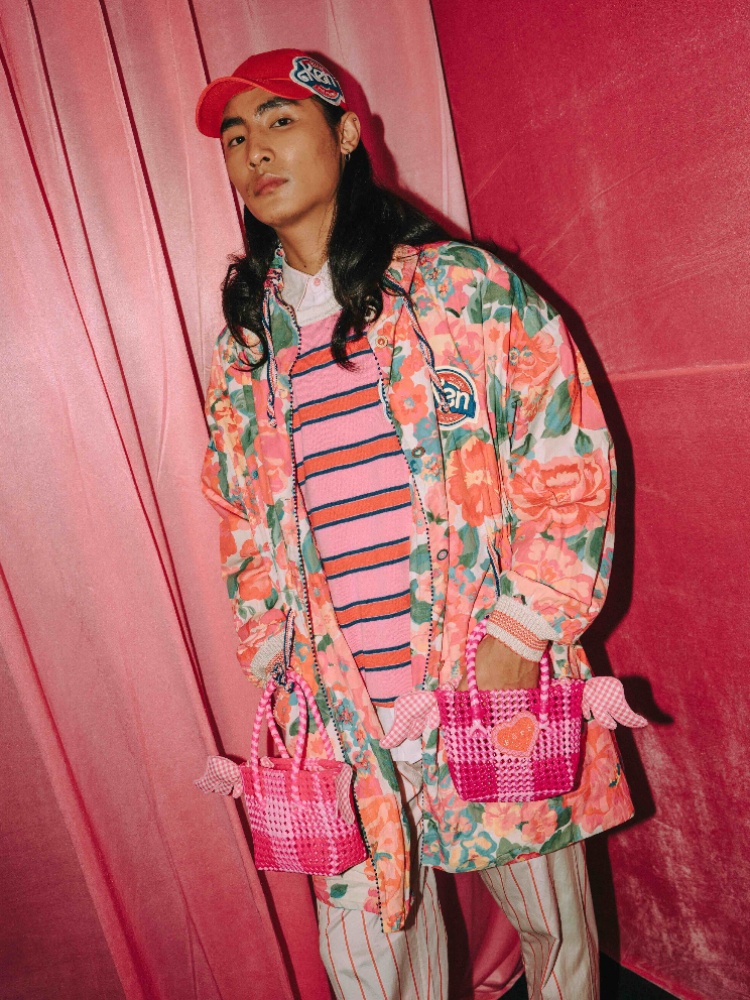
Naturally, there was a lot of pink in the collection. But instead of replicating Barbie’s greatest sartorial hits from the different eras one-for-one, Arora used the opportunity to give Barbie a full-blown Péro wardrobe with recognisable motifs from the Barbie universe. “We wanted to break the stereotypes associated with Barbie—that it’s all about form-fitted clothing, pencil skirts, and minidresses and skirts.” Instead, the Péro-fied Barbie wore retro varsity jackets and windbreakers emblazoned with the Barbie ‘B’, alongside knits, T-shirts, and denim carrying the numbers ‘59’ and ‘61’, marking the years Barbie and Ken were introduced, respectively. The letters ‘B’ and ‘K’ appeared sporadically too: “Every time you see Barbie wearing a ‘K’, she’s borrowed it from Ken and vice versa.” Arora, however, adds, “It’s not a literal journey, but it is a journey of Barbie from 1959 to how a Gen Z or a Gen Alpha Barbie would dress today. People who are familiar with Barbie will be able to relate and connect with what Barbie wore in the past but also see what their Barbie can look like in the modern day.”

The details, of course, went far beyond simple patches of recognisable logos. Flowers rendered in moti bharat, an embroidery technique where colourful glass beads are strung together and stitched without a fabric base, bloomed across the back of a sporty bomber jacket. Half the flowers were sewn onto the fabric, while the rest of them hung loose in a cascade of beads. In another look, colourful laser-cut, three-dimensional appliqué bows formed a collage that appeared to float over a hot-pink dress.

For Arora, the collection wasn’t so much about creating individual Barbie outfits as much as reimagining the contents of her wardrobe through Péro’s lens. “Because the overarching theme was ‘Dream Dress-Up’, it was about how a child sees a Barbie in an ensemble in the box. So, it was more about putting a wardrobe together—of silhouettes, colours, and patterns—and that’s how we approach clothing at Péro as well. We make a whole range of separates first and then put the looks together as opposed to sketching the full look and creating it.”

Also part of the collection is a new line of Péro Intimates—vintage-inspired undergarments, like camisoles, French knickers, pantalettes, tie-up bras, and slip dresses, made with lightweight 500-count cotton khadi and trimmed with handmade lace from Europe. On the runway, some were layered underneath the clothes, while others were worn on their own, making yet another case for underwear as outerwear. “It’s our own version of innerwear. There’s no stretch, no underwire, no spandex, elastic or lurex, which is why we’re not calling it lingerie. Everyone’s losing their bras today because they don’t want to feel restricted. So, we’re going back to an era with a range of very comfortable intimates that will eventually move towards the loungewear space,” Arora explains.

Pero x Barbie intimates_the Nod.jpg
A preview of Péro Intimates

And because no Barbie wardrobe is complete without accessories, Arora also used the show to formally introduce Found Péro, an existing initiative that incorporates crafts and objects discovered through her travels and the label’s creative explorations into Péro’s offerings. Its first official outing takes the form of miniature koodai, the traditional plastic wire baskets made by artisans in south India. The irony of using plastic for a label that has so far been averse to synthetic textiles isn’t lost on her. “When Barbie came to us, the line that kept playing in my mind was from that song: ‘Life in plastic, it’s fantastic.’ I took that with a pinch of salt. As adults, we take things too seriously and say things like ‘No, it’s plastic’, but one has to see the whole journey of koodai and how it lasts throughout a lifetime. Sometimes, it’s even passed on from a grandma to a granddaughter, because it doesn’t wear out,” says Arora. For the collection, the label worked with artisans in Chennai to create mini koodai with recycled wire in practically every shade of pink. “We just thought Barbie’s wardrobe should be complete—from what she wears inside to the bag she carries,” she says.

The collaboration has also turned Arora into a bonafide Barbie collector. She had only three Barbies growing up, the first two earned as rewards for coming first in school. “Back then, it used to be one of the expensive toys, and I had to earn it by studying hard and scoring a good rank,” she laughs. The first was My First Barbie, dressed in white with a pink satin ribbon around the waist, followed by the Peaches and Pink Barbie. When she came third in class one year, her parents had an excuse not to buy her another, but a friend came to the rescue, gifting her the Indian Barbie in a yellow sari with a brocade border for her birthday.

Decades later, her collection has finally expanded. Over the past year, she has amassed around 25 to 30 Barbies, hunting down vintage dolls on Etsy and eBay and enlisting friends to help track them down. “I told a lot of people that I was looking for these Barbies and then they started pouring in. People kept sending me screenshots saying it’s available here or there.” Her collection now includes the original swimsuit Barbie and the first Ken. This time, though, she’s deciding what Barbie wears.

The Nod Newsletter

We're making your inbox interesting. Enter your email to get our best reads and exclusive insights from our editors delivered directly to you.