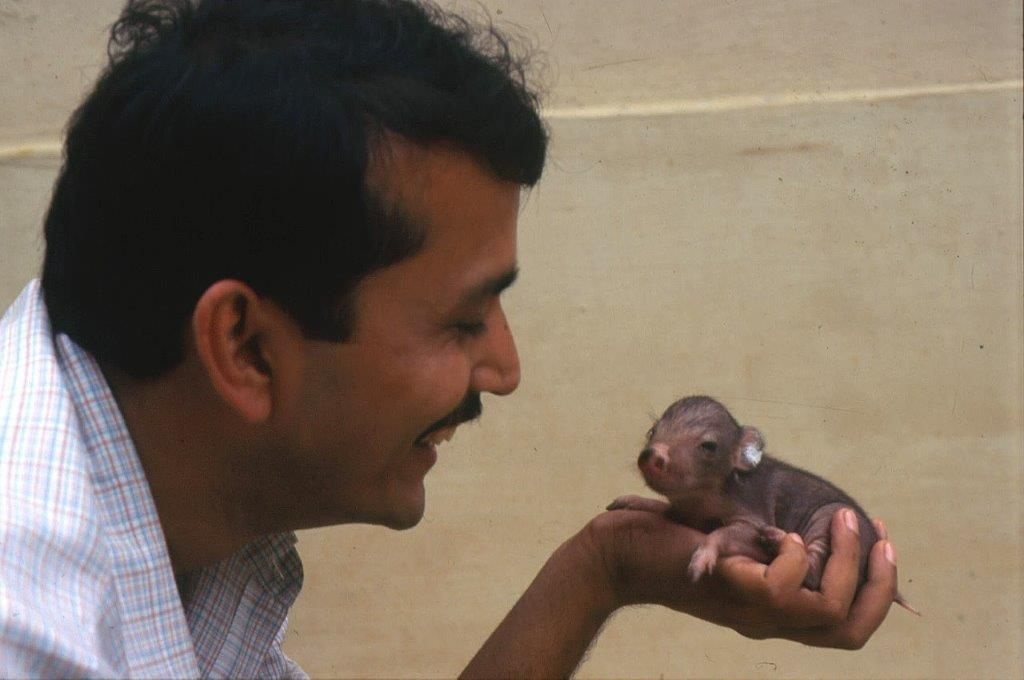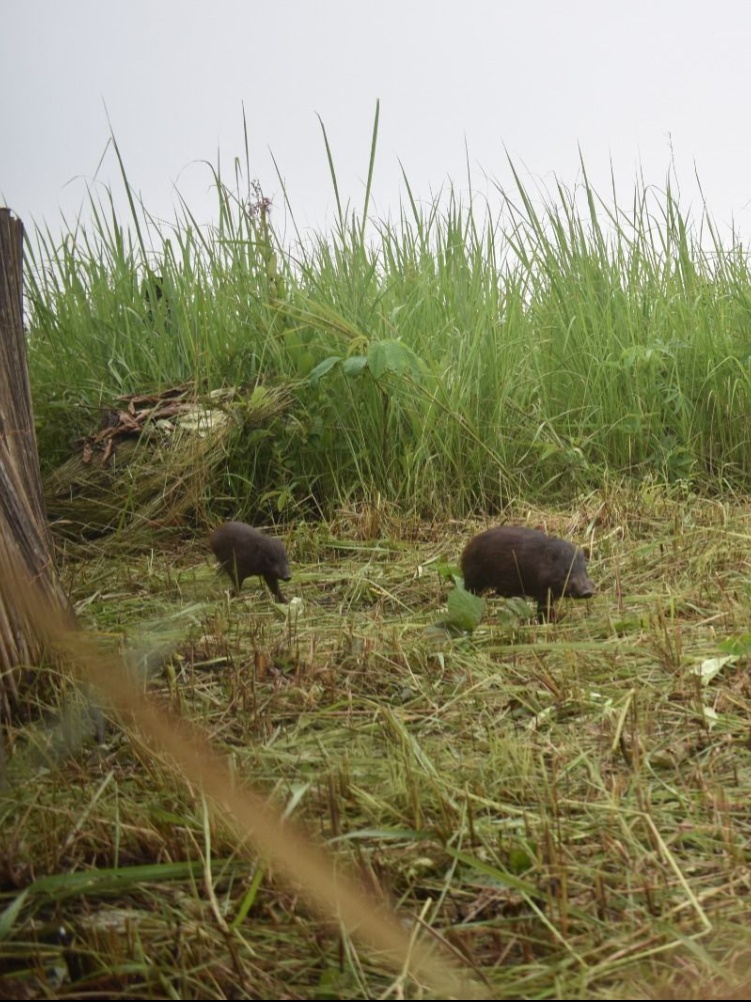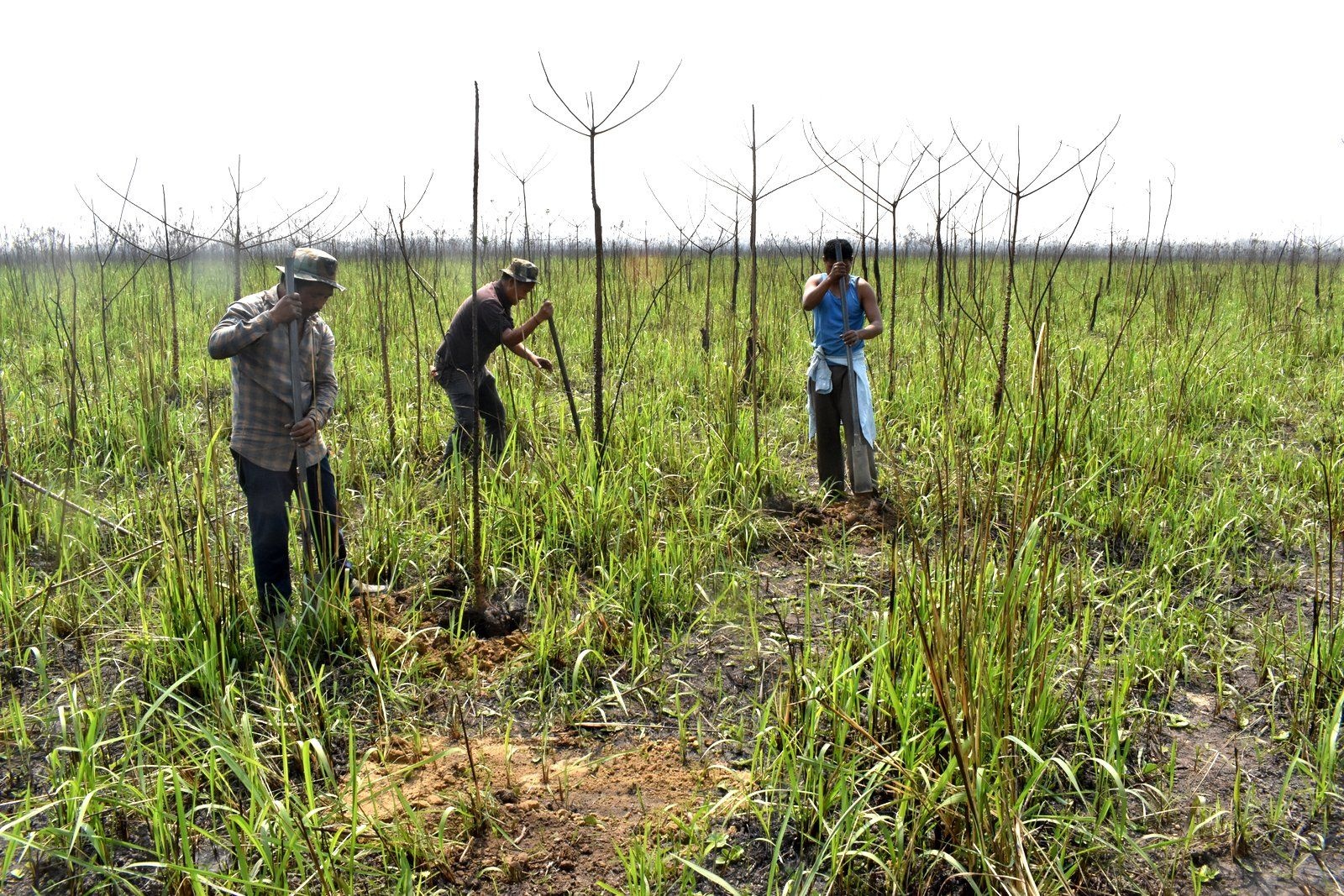




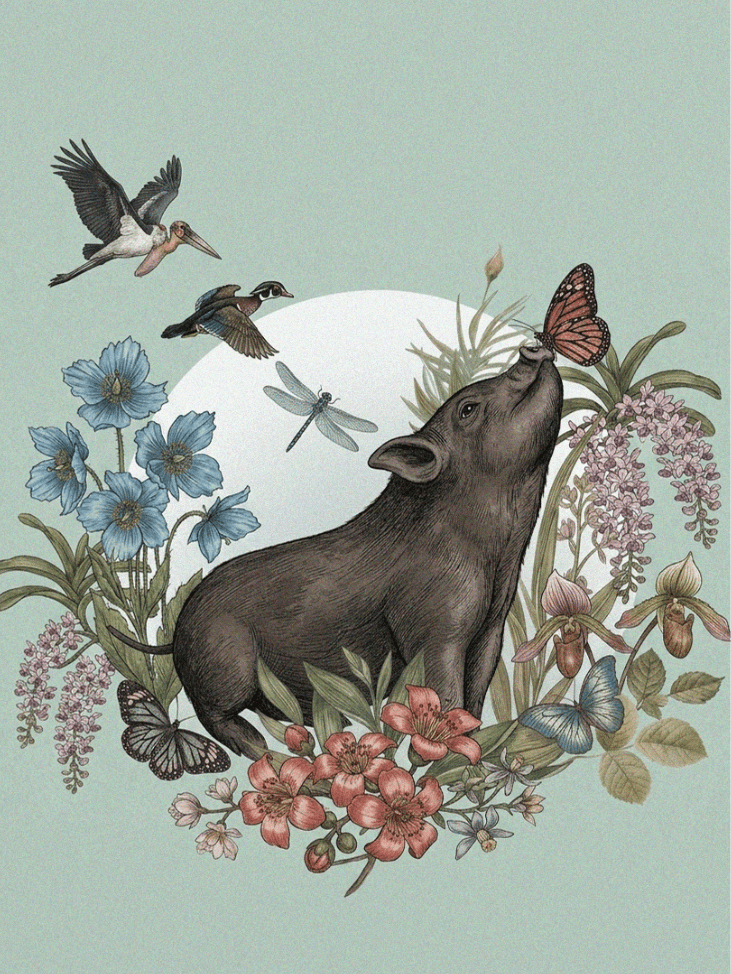

In the tall, swaying grasslands of Assam’s Terai, a narrow belt along the sub-Himalayan foothills, a light-footed creature stirs. It’s a species few have ever seen, and even fewer have heard of: the pygmy hog. Barely a foot tall, it’s the world’s smallest—and rarest—wild pig. It’s so small that it’s almost impossible to spot amid the tall grasses it scurries in. A part of the genus Porcula, it has a bristly brown coat, rounded snout, and small tail, and is native only to the dense sub-Himalayan grasslands.
Today, the pygmy hog is endangered and is on the International Union for Conservation of Nature’s (IUCN) Red List. But this isn’t a 2026 problem. From the 1800s to the 1900s, the hog’s existence silently slipped into crisis. Its numbers declined due to indiscriminate grass burning, cattle overgrazing, hunting, and commercial forestry. In fact, up until 2019, it fell under the critically endangered species according to IUCN, which has since changed.
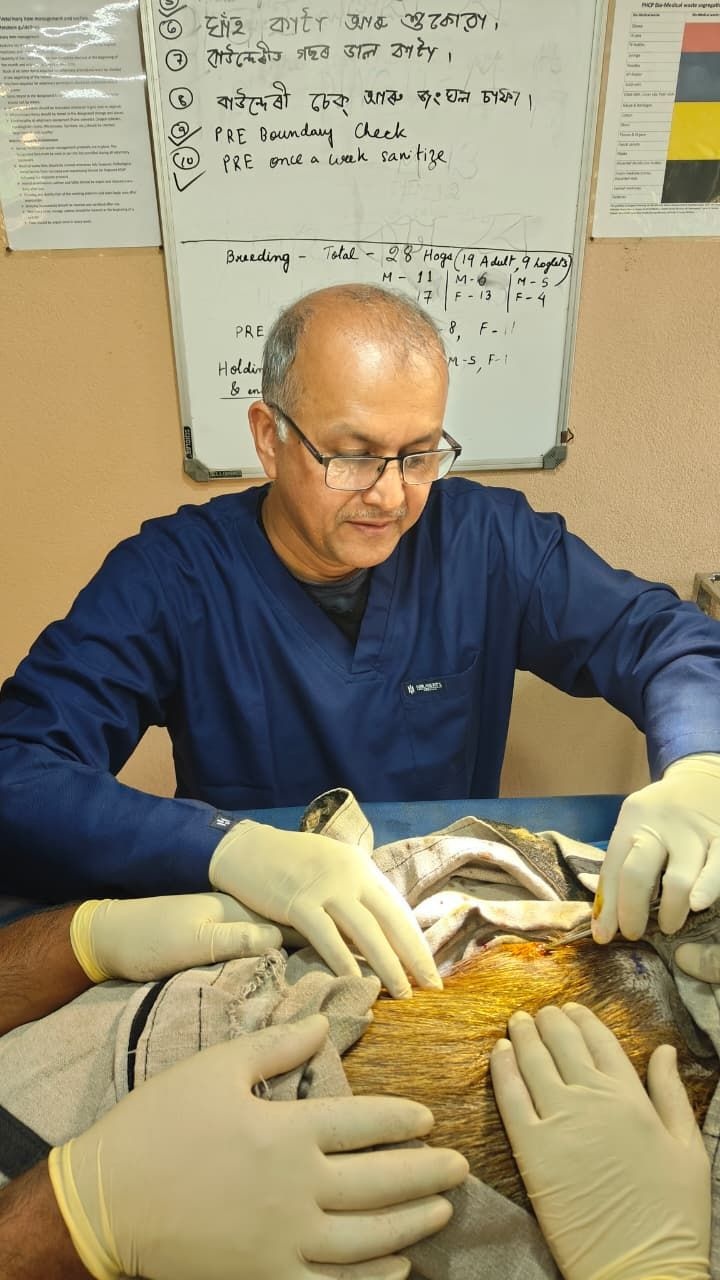
This is all thanks to the efforts of a group of wildlife conservationists at the Pygmy Hog Conservation Programme (PHCP)—a collaborative project of the Assam Forest Department, Durrell Wildlife Conservation Trust, IUCN/SSC Wild Pig Specialist Group, and local organisations like Aaranyak and EcoSystems-India.
Since 1995, PHCP is working towards repopulating the species. But why is this shy, secretive little pig—little known beyond the communities that share its habitat—so important to protect?
“The pygmy hogs indicate the health of the grassland,” explains PHCP’s project director Dr Parag Jyoti Deka, who has spent decades working towards the recovery of the pygmy hog population. These grasslands are also keepers of the critically endangered Bengal florican, the one-horned rhinoceros, and hispid hare. “So, if you have pygmy hogs in the grasslands, it actually indicates that the ecosystem is well-functioning.”
Since 2008, the programme has successfully sent 194 pygmy hogs back into wild protected areas across Assam, including the Orang National Park, Sonai-Rupai Wildlife Sanctuary, and Bornadi Wildlife Sanctuary. They’ve been thriving in the wild. In June this year, 15 additional pygmy hogs were reintroduced into the protected grasslands in Manas National Park, Assam.
The discovery
The pygmy hog’s ‘discovery’ dates back to 1847, when naturalist and British diplomat Brian Houghton Hodgson spotted a tiny pig in the Sikkim Terai region with hair the colour of midnight soil. He had spent years documenting myriad birds and mammals of Nepal and Darjeeling (four decades, if we’re counting).
Hodgson observed that the elusive mammal was particularly different from the wild boars that roamed the land—it had a distinctive skull and dental characteristics. The pygmy hogs also exhibited architectural prowess—they were known to weave the region’s thatch grass to build dome-shaped nests for birthing and protecting their young from predators.
Their dexterity and speed too made an impression. In 1891, British aristocrat Lord Frederick Hamilton described them scurrying about during Maharaja of Cooch Behar’s hunting expedition: “These little beasts, no larger than guinea pigs, go about in droves of about fifty, and move through the grass with such incredible rapidity that the eye is unable to follow them,” he wrote. Even the elephants appeared fearful: the hogs’ razor-sharp tusks could “gash the elephants’ feet” as they ran past them.
These vivid observations made in 1800s depicted a relatively thriving species. A little more than a century later, though, that picture had dramatically changed. By the 1960s, the pygmy hog was feared extinct and was almost forgotten. But renowned British conservationist and author Gerald Durrell, a lifelong champion of endangered species, refused to give up hope. Under his leadership at the Durrell Wildlife Conservation Trust, which he founded in 1963, efforts intensified to find the elusive hog. In 1971, a grassland fire in northern Assam drove a group of pygmy hogs into the open. Local tea labourers captured them to be sold in a nearby tea-garden market. Word of this serendipitous sighting rekindled hope in Durrell. Between 1971 and 1989, four attempts were made to breed the diminutive mammal in captivity and pull it back from the brink of extinction. Yet, reports of it surviving were grim, as its habitat continued to shrink steadily.
In 1995, the PHCP was launched as a species recovery programme led by field biologists Dr Goutam Narayan and William Oliver, chair of the IUCN Wild Pig Specialist Group. Taking a more scientific approach, it combined captive breeding and genetic monitoring with field surveys, habitat conservation, and planned reintroduction. The PHCP was the last ray of hope for bringing the world’s smallest pig back in numbers. A year later, six pygmy hogs (four female, two male) were picked up from the wild at Manas National Park, forming a tiny founding population.