



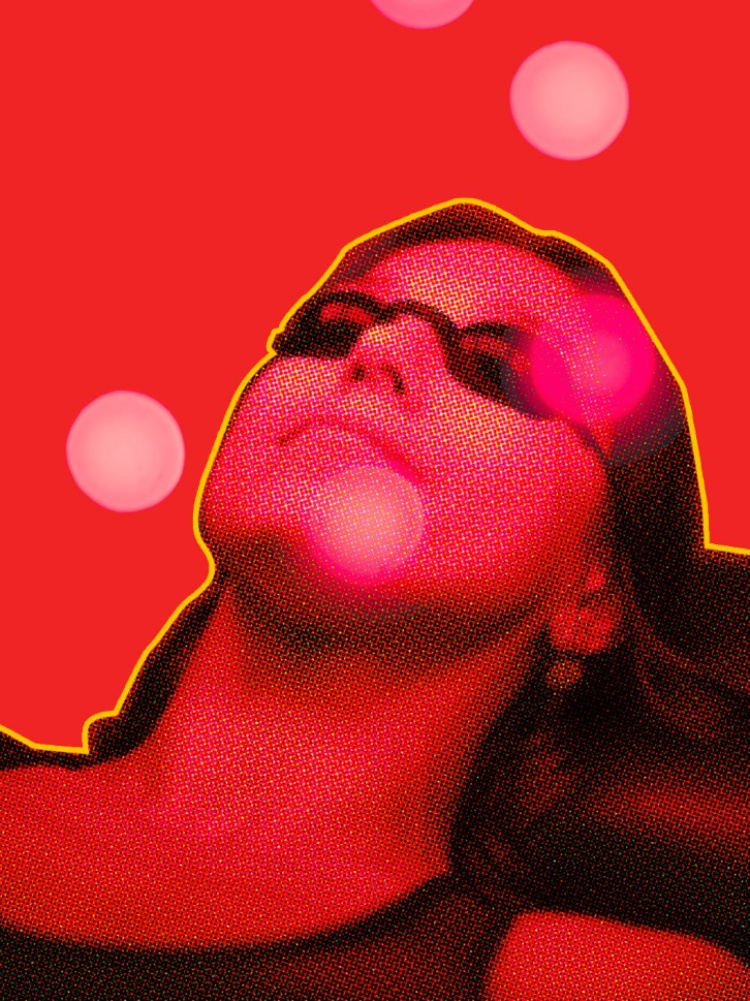

At some point in the last two years, red light stopped being a NASA fun fact and became a GRWM staple. A glowing silicone mask joined the ice roller and gua sha in the lineup—equal parts skincare device and horror-movie prop, beloved by K-pop idols and your dermatologist aunt alike. Scroll Instagram in India right now, and the algorithm has almost certainly served you one: a wand, a panel or a mask that makes you look like you’re about to be abducted, all promising the same thing—collagen production, glow, and reduced puffiness by dinner.
It’s not pure hype, either. There’s real published research behind red and near-infrared light doing things to skin cells—improving circulation, calming inflammation, coaxing out collagen. That’s presumably why it’s crept onto scalps too, sold as a fix for thinning hair. Red light is the one skincare buzzword dermatologists don’t roll their eyes at.
Now, aim it at the brain
But according to Sarah Turner, CEO and co-founder of CeraThrive, we’ve been aiming it at the wrong body part. Turner trained in Psychological Sciences and Nutritional Medicine before a postgraduate stint in Clinical Neuroscience and was in Mumbai recently to speak at India’s first Longevity Summit, at the Fairmont.
“For most of our history, we’ve lived under the light of the full sun,” Turner says. “We’ve very recently become internal creatures—we live these indoor lives.” Red light, she points out, is specifically the light of sunrise and sunset—hours most of us are asleep or doomscrolling indoors. “We receive light not just through our eyes. Our bodies are covered in light receivers—in our skin, in our blood, in our cells, in the mitochondria, which is where our body makes energy.”

Here’s the part that should break the internet: near-infrared light can pass through the skull. “You think it’s in the cranium and so it’s sealed in a dark place,” Turner says. “Not at all.” The thinking is that once certain wavelengths reach the brain, they may influence the mitochondria and the production of cellular energy while also supporting processes involved in repair and reducing inflammation. In theory, that could have implications for things we increasingly care about as we age—cognition, memory, brain resilience, and overall brain health.
That doesn’t mean a red beam is simply switching the brain on. Transcranial photobiomodulation—the technical term for using light to influence biological processes—is still an emerging area of research, with scientists investigating potential applications in cognition, inflammation, and neurodegenerative conditions.
Your gut wants some light too
Then there’s the gut, linked to the brain via the vagus nerve—literally the “wandering” nerve, running from skull to gut to heart. “When we stimulate the gut with light—it’s very sensitive—that sends messages via the vagus nerve to the brain,” she says, adding this comes with knock-on effects on inflammation, immunity, and mood. The gut-brain axis has already gone mainstream—it’s the reason your group chat has opinions on fibre and fermented food. Turner’s argument is that light deserves a seat at that table too.
This isn’t new science dressed up as a trend, either. “In 1903 the Nobel Prize in medicine was awarded to a physician who pioneered light therapy,” Turner notes. This, however, got sidelined for a century by pharmaceuticals.
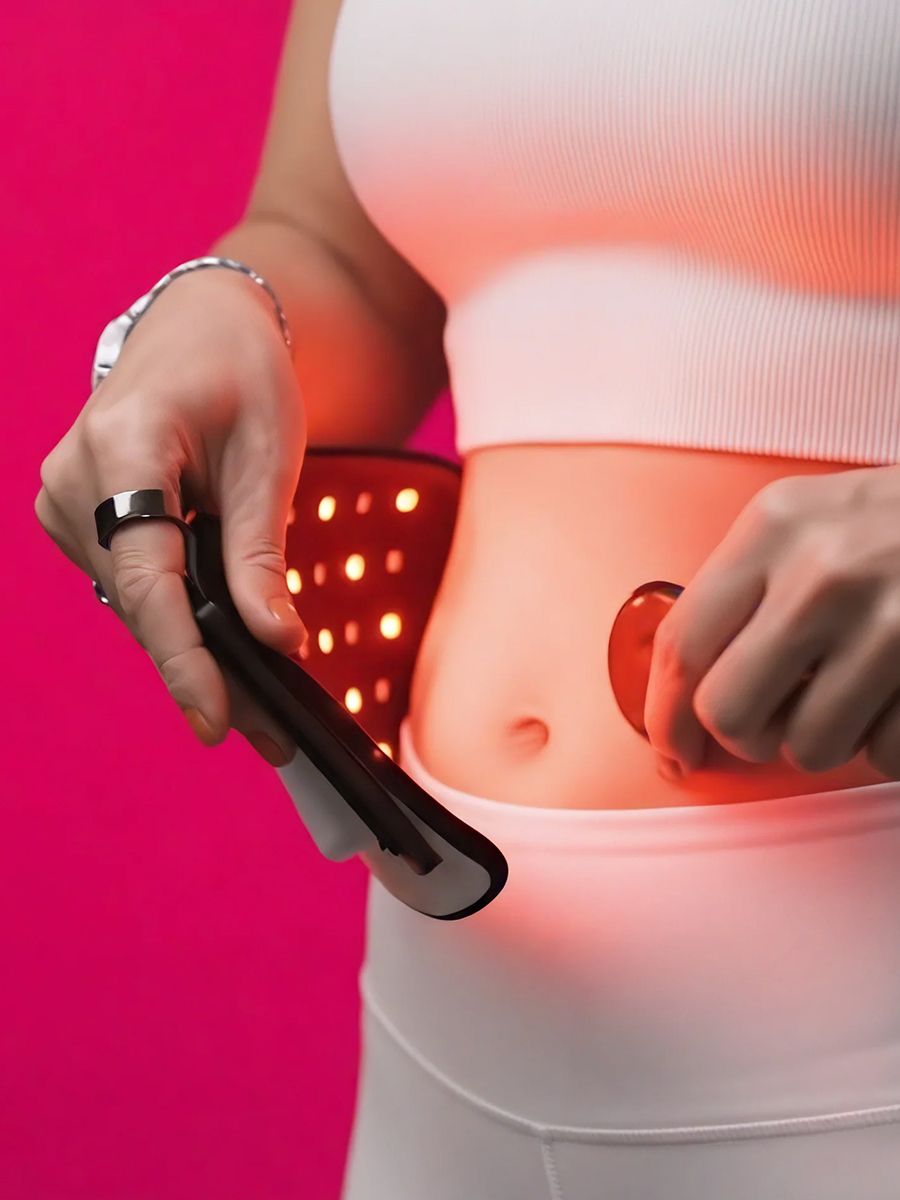
She brings up perimenopause too, a subject India has only recently started discussing openly. Brain fog and night sweats, she says, are partly the body needing more energy for a hormonal system in flux. “Near-infrared light has got a little bit of warmth. It’s comforting—you can put it on your lower abdomen. You can wear the headband for the brain fog.” She’s not anti-supplement, but she’s blunt about where they rank. “Supplements are great, but they’re the icing on the cake. First, you have to do the basics—good light, good sleep, good relationships, a purpose in life.”
So, what do you actually buy?
If you’re shopping for brain benefits specifically, skip the panel—the flat LED board you’ll spot in gyms and facial studios, which you sit near for a few minutes rather than wear. “If you’re glowing red, that means the light’s reflecting off you. It’s not going in,” Turner says. What you want instead is full skin contact: a headband flush against the skull for the brain, something over the abdomen for the gut.
Two names come up if you go looking. Vielight, out of Canada, makes headsets with an intranasal clip, and they’ve featured in university studies on brain inflammation and cognition. It’s the closest thing to a clinical-grade option. And there’s Turner’s own CERA System, a headband paired with an abdominal panel built to hit brain and gut in one sitting.
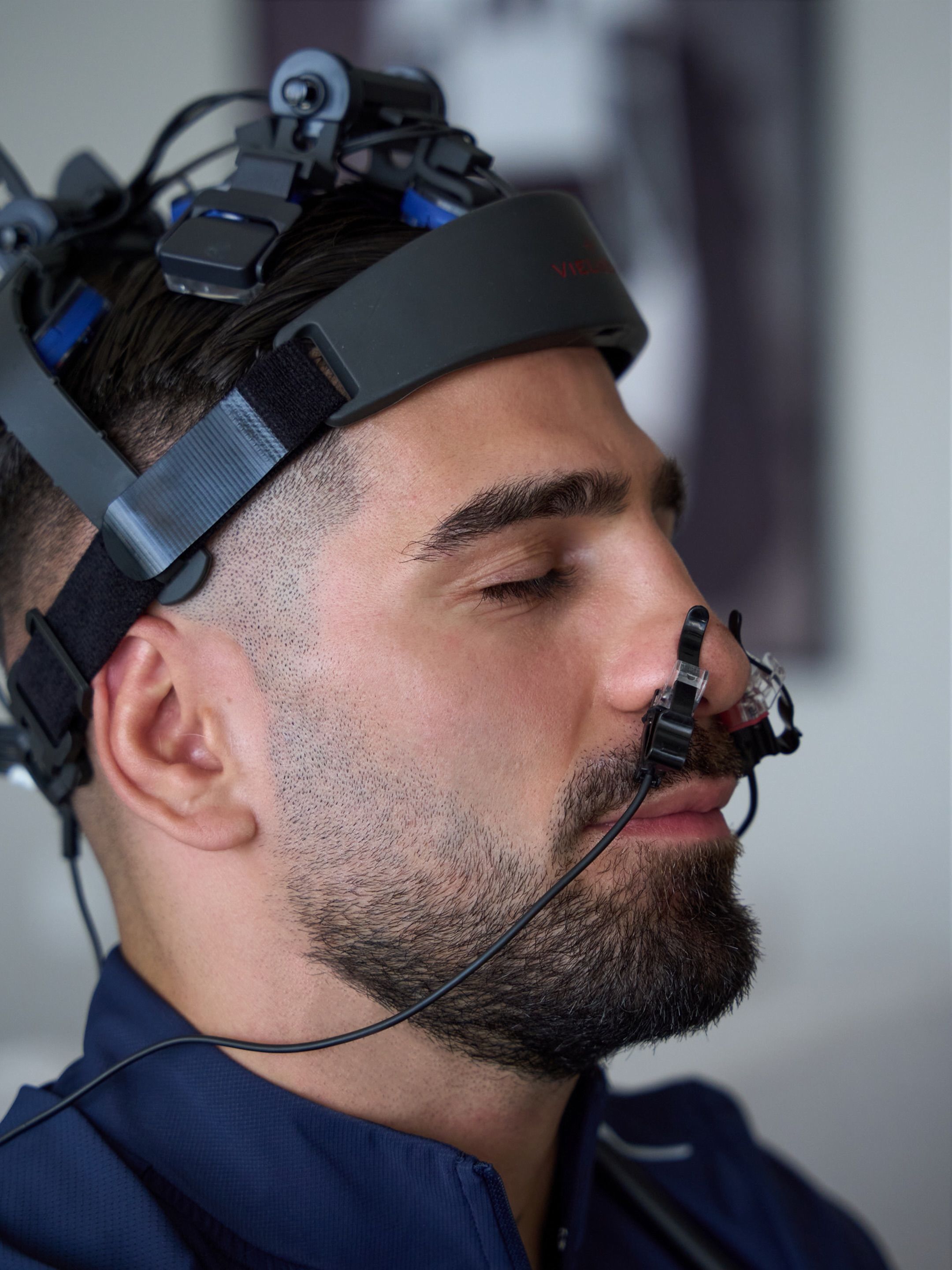
One thing worth knowing before you buy is irradiance. In plain English, it means how much light is actually reaching you. A stronger device isn’t automatically a better one—the dose depends on both the intensity of the light and how long you’re exposed to it. So don’t be dazzled by a device simply because it promises to be “high-powered”; look for the actual wavelength and irradiance specifications.
Neither is on a shelf here yet—both ship out of North America direct to your door, with customs duty on arrival, so budget the wait as well as the import charges.
You can, however, get a version of it in person. Mumbai’s biohacking and longevity clinics—the Biohacker in Chembur, My Pain Clinic Global in Bandra, among a growing handful across Delhi, Bengaluru, and Gurugram—have started offering photobiomodulation as a menu item alongside cryotherapy, hyperbaric oxygen, and IV drips, using full-body red and near-infrared panels rather than Turner’s contact devices. None of them are running it as a dedicated gut-brain protocol yet; it’s filed under recovery and general cellular health, next to the cold plunge.
Start small, stay consistent
On dosage, she’s less “count your minutes” and more “just start”—most devices from a proper company will do something even at a beginner level, and intensity matters less than showing up. “If you do a hundred push-ups in one day and never again, your body doesn’t recognise that.” Ten unglamorous minutes most days beats one dramatic session a month, and there’s no age limit—children, the elderly, everyone in between, unless you’re one of the rare people who still catch sunrise and sunset outdoors daily.
Maybe the most interesting thing about red light isn’t that it could replace your supplements, skincare or sleep routine. It’s that it is forcing wellness to ask a surprisingly basic question: what happens when we change the light we’re exposed to?
For now, the evidence is strongest around some skin applications, while the brain-and-gut story is still being written. You probably don’t need to buy a headband tomorrow. But you might want to start taking your morning light—and your sleep—a little more seriously.