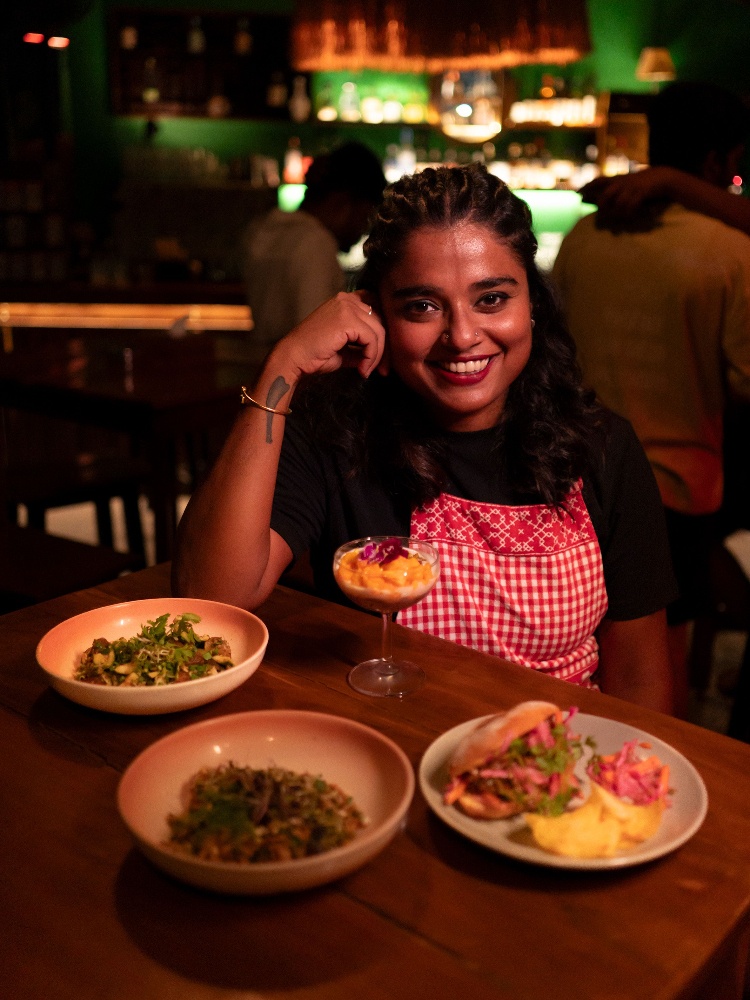
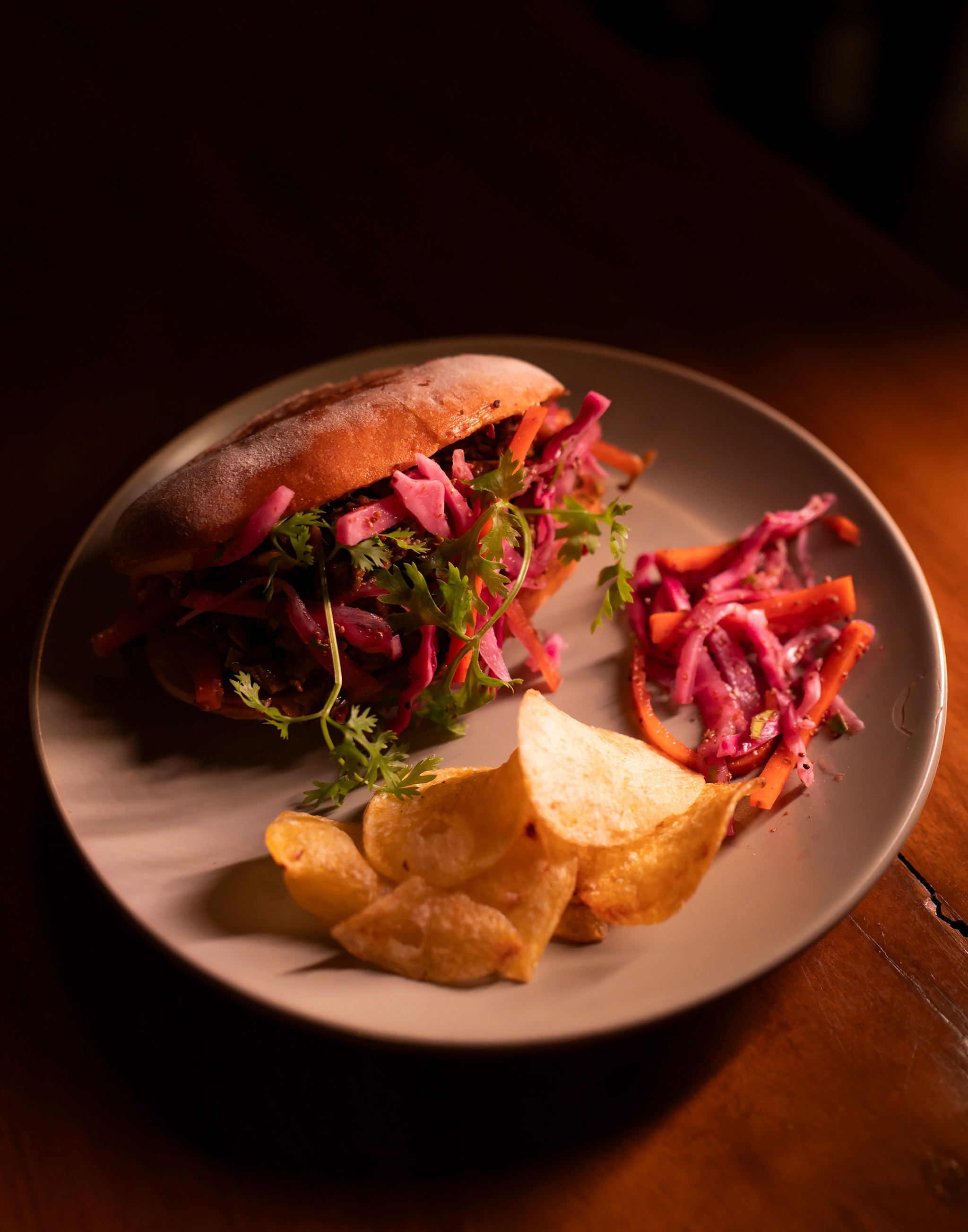
It’s the end of the night at Bonobo, which opened its Goa outpost earlier this year, and Shreya Katyayini pulls up a chair, picks up a banh mi packed with Khasi and Naga flavours, and takes a bite. For three days she has been cooking with her nose, tasting through smell, adjusting by instinct, too saturated to actually sit down and eat. This is what a good evening looks like for Katyayini—50 people in a room discovering food they’ve never tasted before.
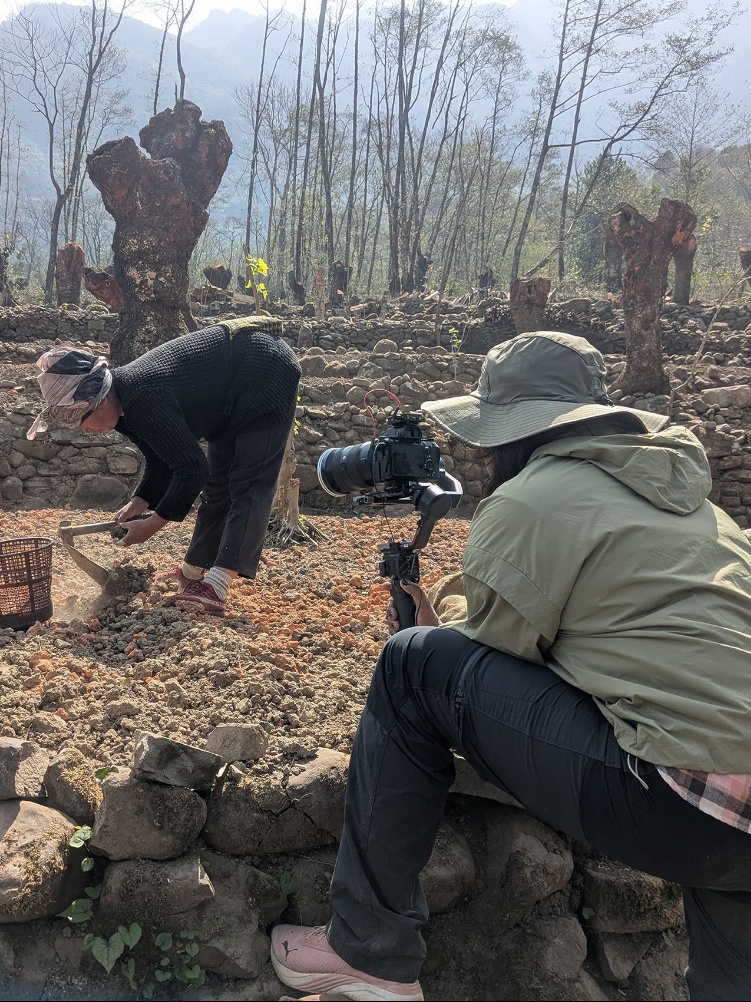
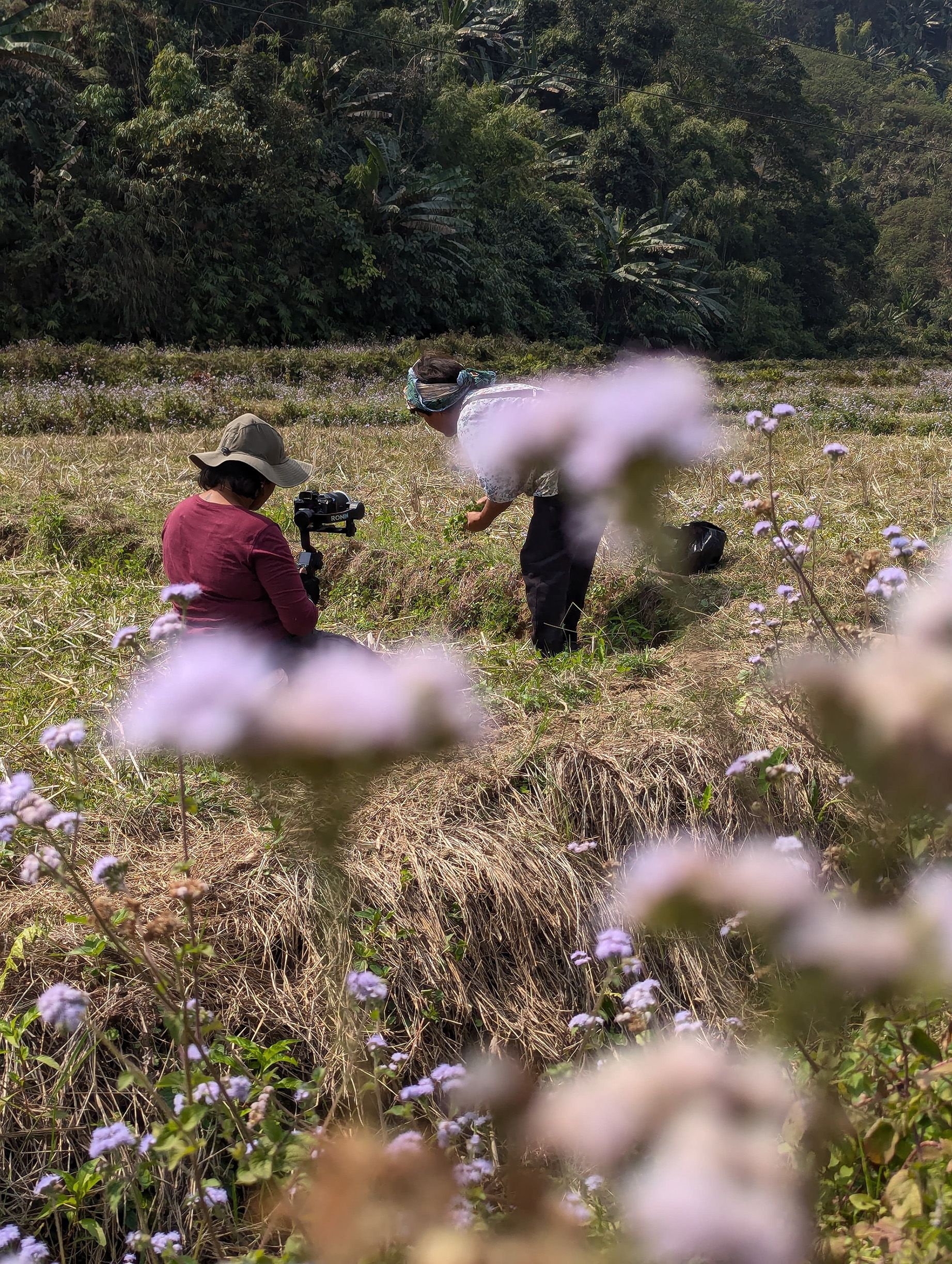
On days when she is not orchestrating supper clubs with multi-course menus, slow ferments, and strangers gathered around a table in Goa, she is in the villages of Bihar and Nagaland with a camera, documenting lives as a filmmaker with PARI (People’s Archive of Rural India), one of India’s most important independent journalism platforms. At 34, Katyayini has stopped treating food and storytelling as separate pursuits. For her, both begin the same way: with people, memory, and the simple act of paying attention.
The week we meet, Katyayini has just wrapped up her last supper club for the month before she heads out to Benaras to document Bhojpuri folk songs for PARI’s music archive. In April and May alone, she hosted back-to-back takeovers at some of the most popular nightspots in Goa—from Bar Colddrinks in Ucassaim to Nook in Guirim, Escape in Socorro, and Bonobo in Anjuna. Her supper club, simply named The Supper Club, has a brand of its own now: B-Side Up, a spin-off pairing food with curated vinyl music, named for the B-side of a seven-inch single, where artists hid their most interesting work.
ADVERTISEMENT
Katyayini runs the video departmentat PARI (People’s Archive of Rural India) Network
Keduokhrieto Sachü
Like many people, Katyayini grew up with the familiar expectation to choose one path and commit to it. But that idea never sat comfortably with her. “Why should our professions stay fixed when we’re constantly evolving as people?” she asks. Her biggest inspiration are the women in her family—her mother, grandmothers, and aunts—all deeply skilled in multiple things, none of which were ever seen as careers. “If my mother had monetised everything she was good at, she would have had eight professions. This just feels like a continuation of that inheritance,” she says.
Growing up, the Patna-born was always intuitive and thoughtful with her choices. She chose History Honours at Delhi University only because the course was least likely to box her in. Later, she moved to Mumbai to train in documentary filmmaking at the Tata Institute of Social Sciences as part of her Master’s in Media and Cultural Studies. The two years—from 2014 to 2016—shaped who she is today. While her batchmates lined up for campus placements, she was in her hostel room firing cold emails to organisations doing work she actually cared about.
And it paid off, in an almost incredible way. One afternoon her phone rang. A voice said: “Hey, this is P Sainath.” She assumed it was a prank. It wasn’t. She met Sainath, the founder of PARI, over a three-hour-long interview, where he sat through every student film she’d ever made. And next thing you know, she was doing everything from planning shoots to editing videos at PARI.
A couple of years in, curiosity pulled her into Mumbai’s film industry. Between 2018 and 2022, she worked predominantly as an assistant director, with credits on films like Sonchiriya (2019), Sherni (2021), and OMG 2 (2023). She was working with crews of 300 to 400 people, troubleshooting everything. “Film sets teach you how to survive chaos,” she says. “You learn how to think on your feet, manage people, solve problems fast, and keep moving no matter what’s falling apart around you.”
But the constant influx of activity in the city can get to one. And it caught on with Katyayini, too. In May 2020, like most city dwellers during the Covid-19 pandemic, Katyayini moved base to Goa while continuing her work in films on project basis. Around that time, B-town had started feeling less like art and more like business. The chaos had stopped being interesting. In 2022, she quit, but instead of pivoting to the next obvious thing she went to go live on a farm.
Between 2018 and 2022, Katyayini worked predominantly as an assistant director in Mumbai's film industry, before finding her way to her dual practices
Katyayini spent the last quarter of the year at Yarroway Farm, 50 biodynamic acres run by Anjali Rudraraju and Kabir Cariappa on the edges of Kabini National Park. She worked the land in exchange for farming lessons, a bed, and lunch. She cooked herself dinner from whatever she could forage. “They’d hand me some grains, maybe oil or spices, and the rest was up to me,” she says. “I had to walk around the farm and figure out what was growing, what was edible, and what worked together.” Every evening for three months, she came back with vegetables, herbs, fruits, and, on lucky days, wild mushrooms. “There’s something very different about cooking with ingredients you’ve just pulled out of the earth. It changes the way you understand flavour, seasonality, and even restraint.”
Something took root there that she didn’t yet have a name for.
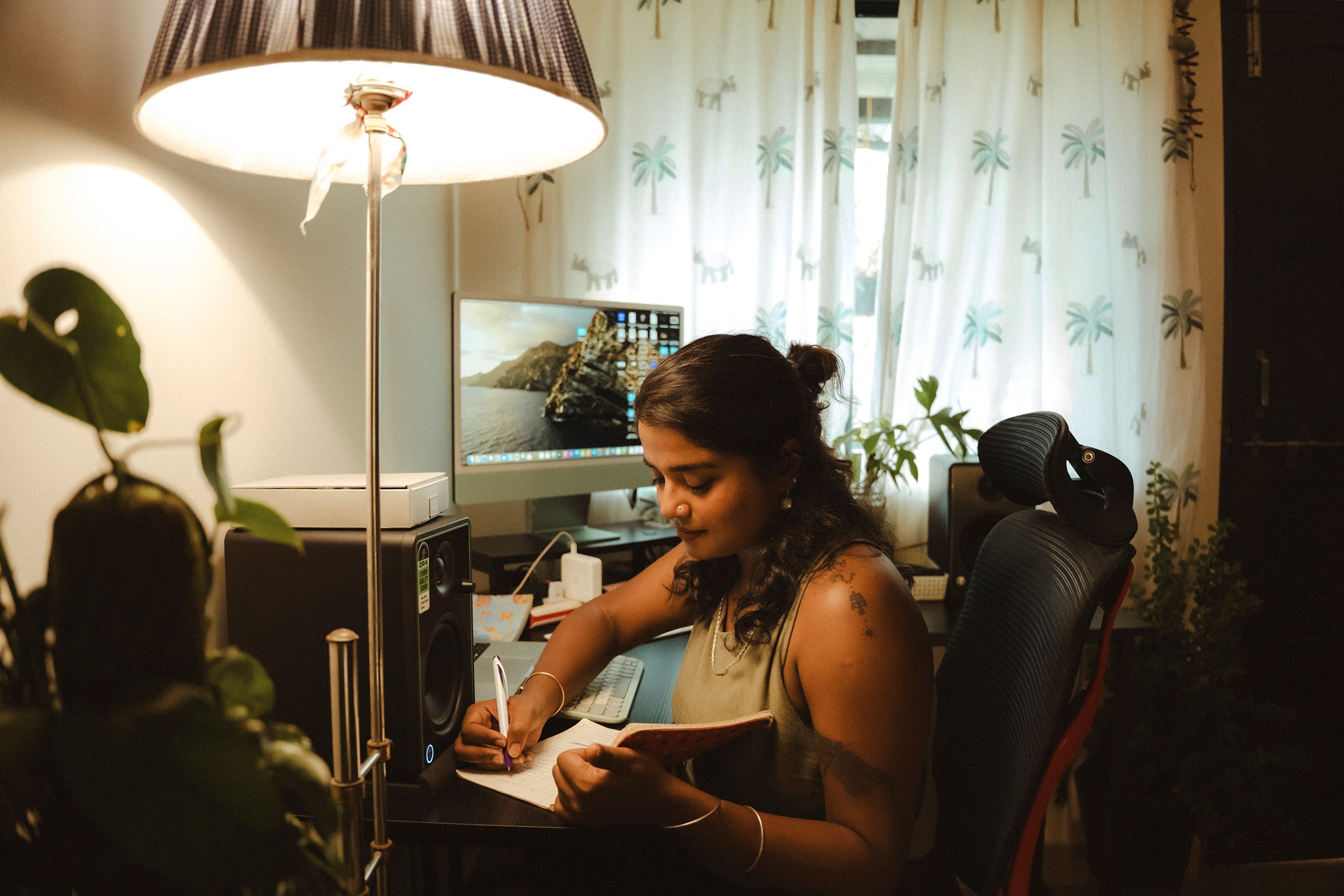
About a year later, she returned to work at PARI, this time as a senior video editor. Now, she remotely runs the video department, travelling into the field alone, shooting, recording sound, coming back and editing it all herself from her 2bhk house in Siolim.
The stories she tells reveal the stakes of the work. In Bihar, she documented the burning of Madrasa Azizia in Bihar Sharif, a 110-year-old institution whose library of rare books and manuscripts was destroyed by an extremist mob—a piece that later featured at an in-memoriam exhibition. In Nagaland, she filmed the women potters of Changki village, among the last still practising a centuries-old hand-pottery tradition using clay from surrounding forests and no wheels or machines. In the same village, she also documented a Mipangming feast, a Changki dish of foraged greens and fermented crab paste cooked in a traditional clay pot. It was this last body of work—sitting with women, watching them cook, eating from their homes—that quietly set everything else in motion.
In February 2025, Katyayini was deep into a field assignment in Nagaland, having spent 25 days eating seasonal fare—harvested or foraged—at people’s homes in village after village. In Kohima, she raided wet markets and came back to Goa with 15 kilos of ingredients and no real plan.
So, she cooked for 25 people using everything she’d lugged back from Nagaland. Just for one night, with no plan to do it again. Then her friend, artist Avril Stormy Unger, asked if she’d take over food for an art show she was hosting where Fursat FM was performing live. The evening was carefully built around mood and intention, and Unger wanted the food to feel like part of the experience rather than an add-on.
ADVERTISEMENT
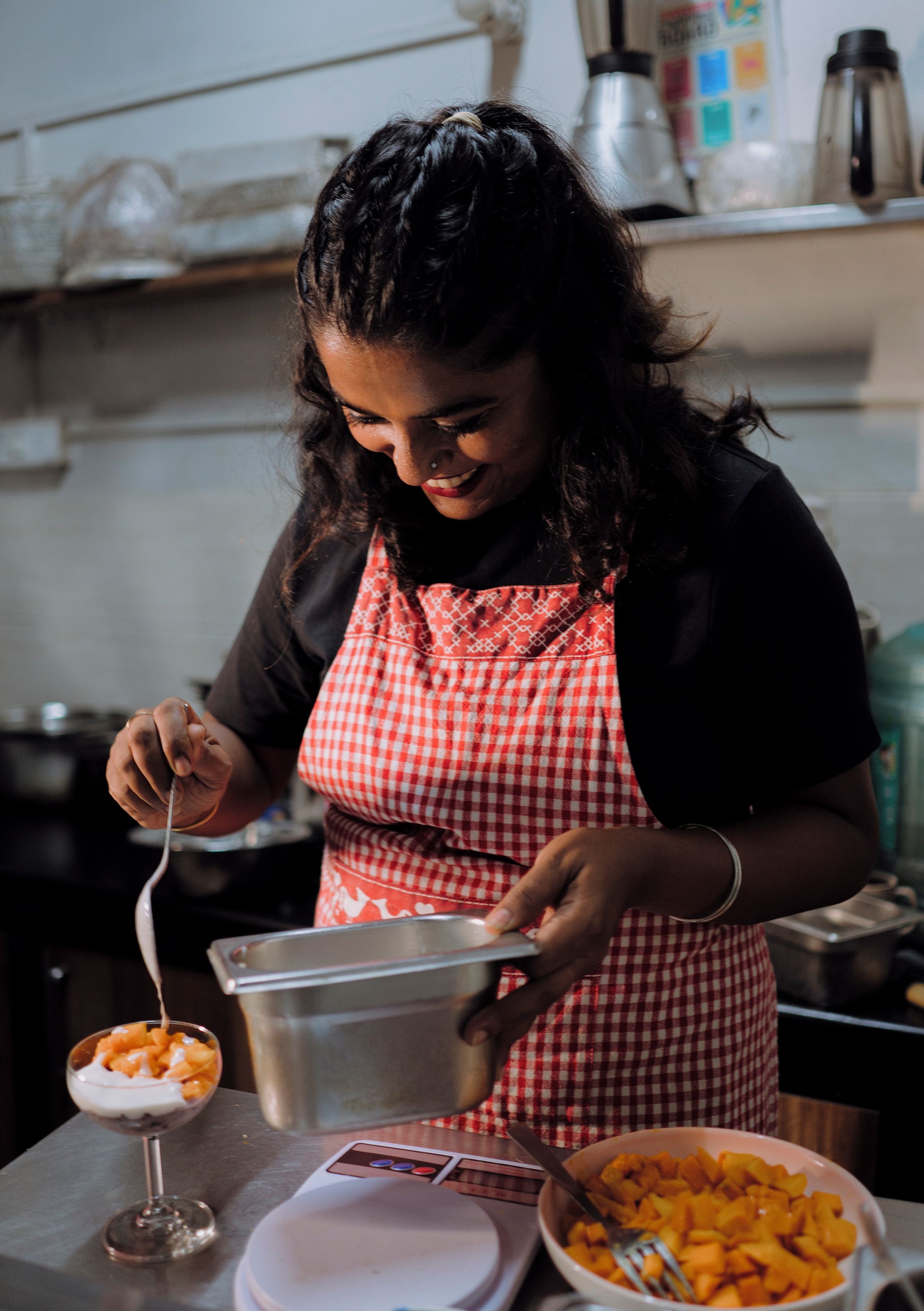
Katyayini hosts her supper club anywhere from once to four times a month depending on her workload at PARI
There was just one problem: no kitchen. Only a counter and a microwave. Years of working on film sets had taught Katyayini to treat limitations as part of the brief. She designed a cold menu of Bihari and Nepali snacks entirely around what she had. “A really fun part of doing pop-ups at different venues is constantly having to adapt to what’s available, and who you’re cooking for,” she says. That flexibility has since become part of her signature.
In 2026, this has snowballed into a series of supper clubs. And before she knew it, she had a second source of income that was unpredictable yet evolving. The scale of her dinners shifts with the format. A sit-down dinner pulls around 30 people, while kitchen takeovers and bar pop-ups run to 60 or 90. She hosts anywhere from once to four times a month depending on her workload at PARI. Menus are short and curated with six to eight dishes, but each is an exercise in geography, pulling dishes from Bihar, Bengal, Odisha, Nagaland, Meghalaya, Manipur, and Assam in a single sitting.
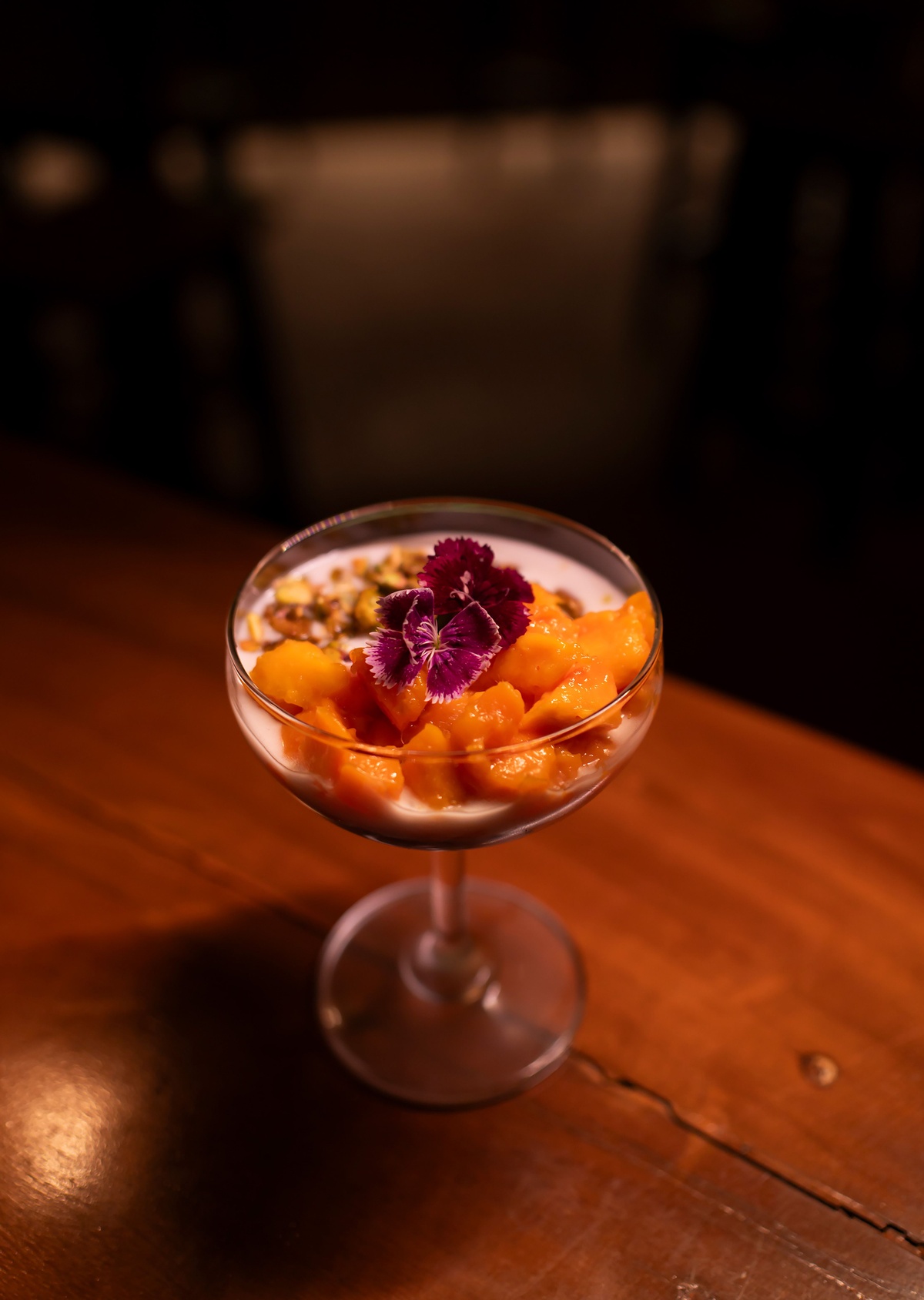
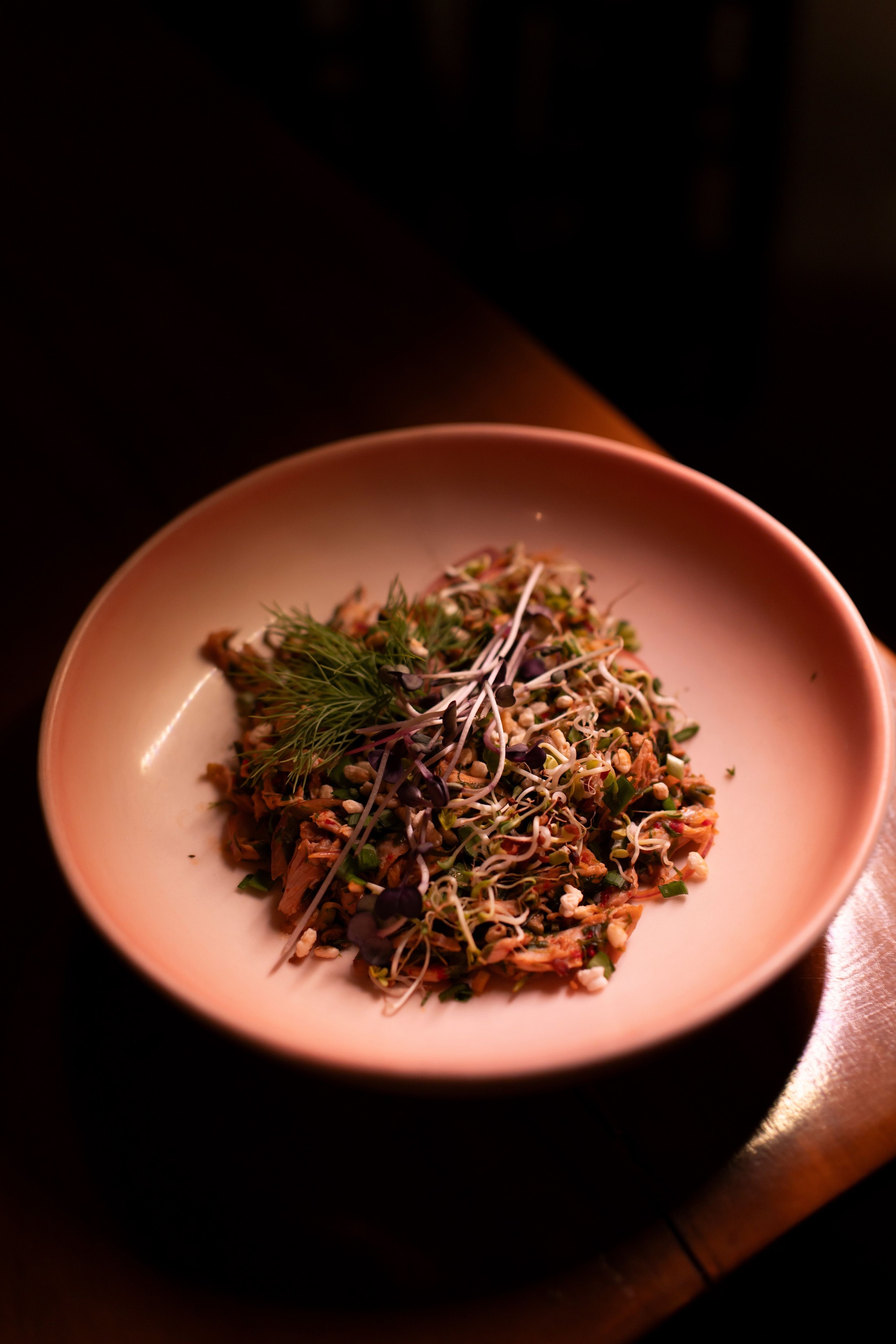
Take for instance the most recent B-Side Up at Escape with Miguels, where she collaborated with Maddwax, a French selector with 25 years of playing across Europe. At the garden space, a gazebo turned makeshift kitchen, she created a menu featuring Khasi and Naga flavours with fresh ingredients sourced from a store in Goa that flies down produce directly from the northeast. There was Napa basil, fresh michinga, mountain peppers, black sesame from Meghalaya, dried rind of a local citrus, stinky beans, dalle chilli, and king chilli. She folded them into salads and banh mis. There were sattu crackers, too, a riff on the Bihari staple of sattu paratha with chokha, reconstructed as a lavash-and-dip situation. And a black sticky rice and coconut milk pudding, fragrant with Napa basil, topped with Mankurad mangoes and pistachios, a Goan twist on mango sticky rice that she’s proud of. The evening capped at 50, and it was a full house.
The work behind each evening is invisible to the people eating it. Locking a venue, planning logistics, curating the menu, designing a poster, personal invites, sourcing, trials, prep... It spans days before a single pan goes on the fire. A kasundi or a fermented condiment might need 10 to 15 days of preparation before the event even has a confirmed date. A good pop-up brings in ₹30,000 to ₹35,000, while on an average she makes ₹12,000 to ₹15,000. Some evenings, she just about breaks even.
It’s not a hefty pay cheque she is chasing, but it does plump up her bank account and keep her calendar busy. Today, both parts of her life bring her a sense of gratification, and the contrast between them is not lost on her.
“Am I being real by doing these two completely different things?” she has asked herself often. But with time, she has come to see how they fuel each other. Every field trip now carries a second current of food curiosity alongside journalism. “One is storytelling. The other is story-listening. In the bigger picture, it’s the same profession,” says Katyayini.
To anyone quietly holding on to a second passion, unsure whether to begin, her advice is simple: “Life feels shorter now, and the world moves too fast to keep waiting. If there’s something else you care deeply about, try it.”
ADVERTISEMENT
The Nod Newsletter
We're making your inbox interesting. Enter your email to get our best reads and exclusive insights from our editors delivered directly to you.