


The poly-professionals19 May 20265 MIN

How this Delhi architect moves between design and drag 

Ishaan Bharat aka Osheen, an architect, drag artist, aerial performer, and designer, talks about queer futurism, creative mutation, and why choosing one lane was never an option

Image

Photographs by Piyush More

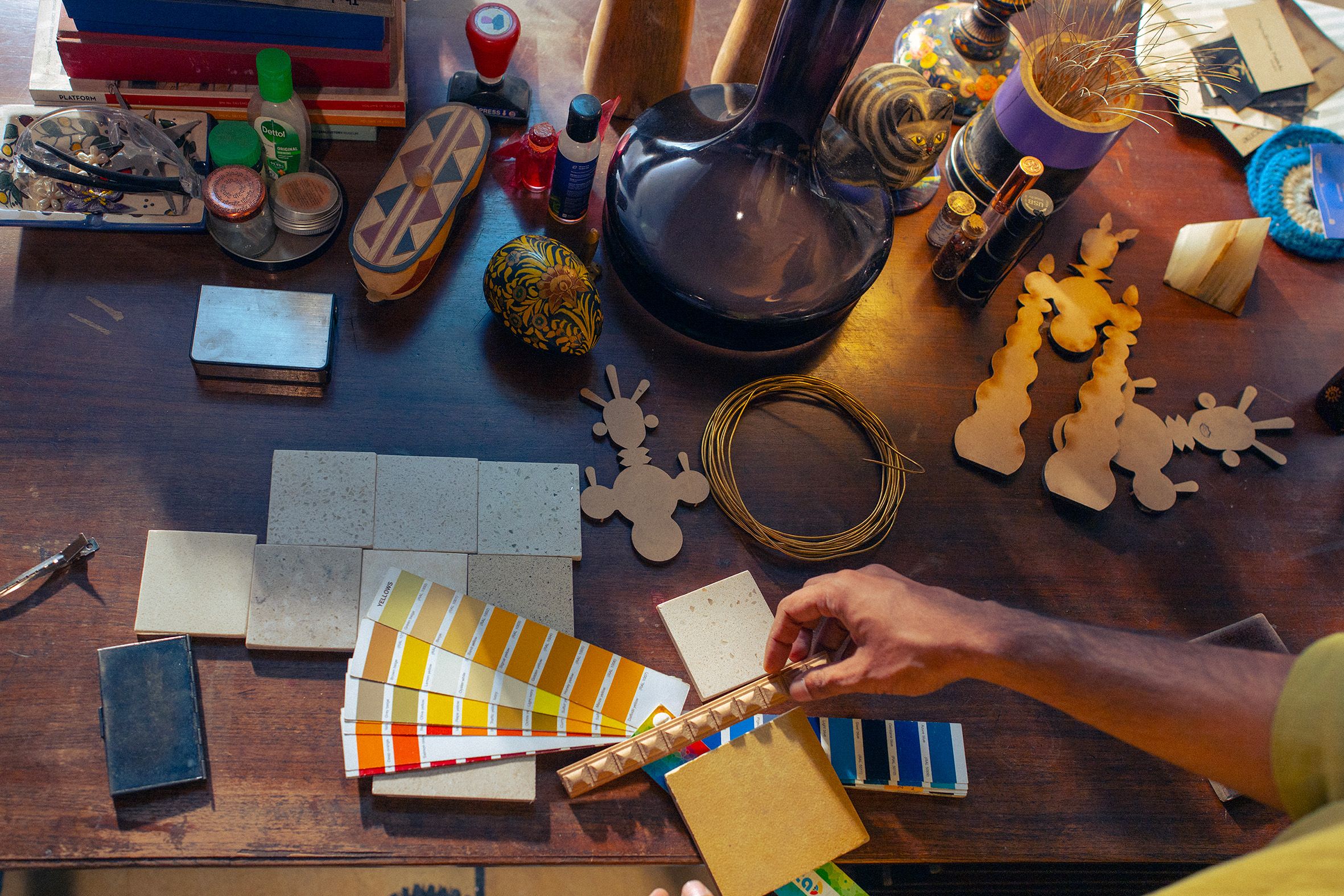
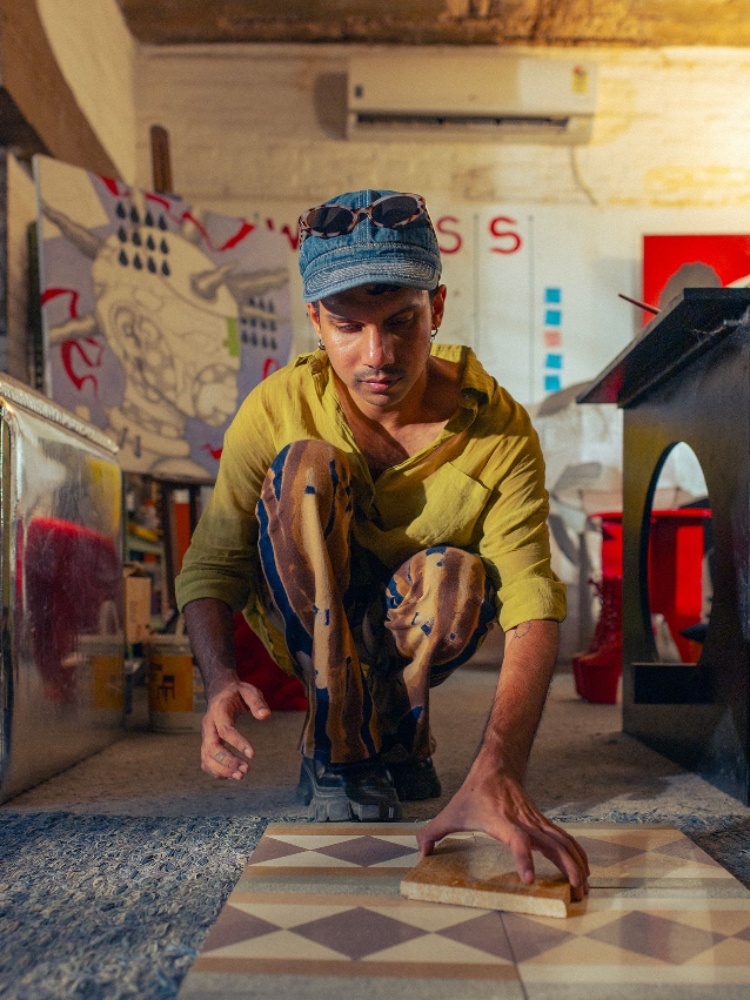
Walking into Ishaan Bharat’s home and studio in Delhi’s Saket feels a bit like watching a BTS video of a creative person’s Pinterest board come to life. The walls are unfinished, with stretches of exposed plaster interrupted by bricks painted white. Elsewhere in their studio, drag doll figurines, made of stacked wooden spheres in mannequin-like shapes, are scattered across shelves and in corners. The dolls have been fabricated using centuries-old Channapattana toy-making techniques involving wood, lacquer, and metalwork. And then you finally take in the room: your eye catches on a leopard-print rug, a silver pouffe, chartreuse drapes, and a cluster of red tasselled lamps hanging over the courtyard outside. The space is both practical and theatrical—much like its occupant—and refuses easy categorisation.

Depending on where you encounter the 25-year-old Chandigarh-born creative, they are an architect, a drag artist who goes by the name Osheen, an aerial performer, a visual artist, and the founder of queer performance collective Dragalactiq as well as of their architecture and visual design studio, Sector Form. The internet would take one look at Bharat’s résumé and classify it as ‘multihyphenate behaviour’, but the creative professional arrived at this way of living and working long before it became a trendy Instagram bio descriptor. “I felt like I had to be the master of one instead of the jack of all [trades],” they tell me, describing their twenties, when they tried and failed to get themselves to fully commit to just one discipline. It’s an anxiety that feels familiar in a very millennial way—Bharat belongs to a generation raised on contradictory advice: specialise, but also follow your passions; build expertise, but remain flexible; commit fully, but reinvent constantly.

Until 2020, Bharat was the design lead at leather goods label Nappa Dori, working a nine-to-five desk job while simultaneously painting murals, experimenting with performance, and chasing other creative fascinations after office hours.
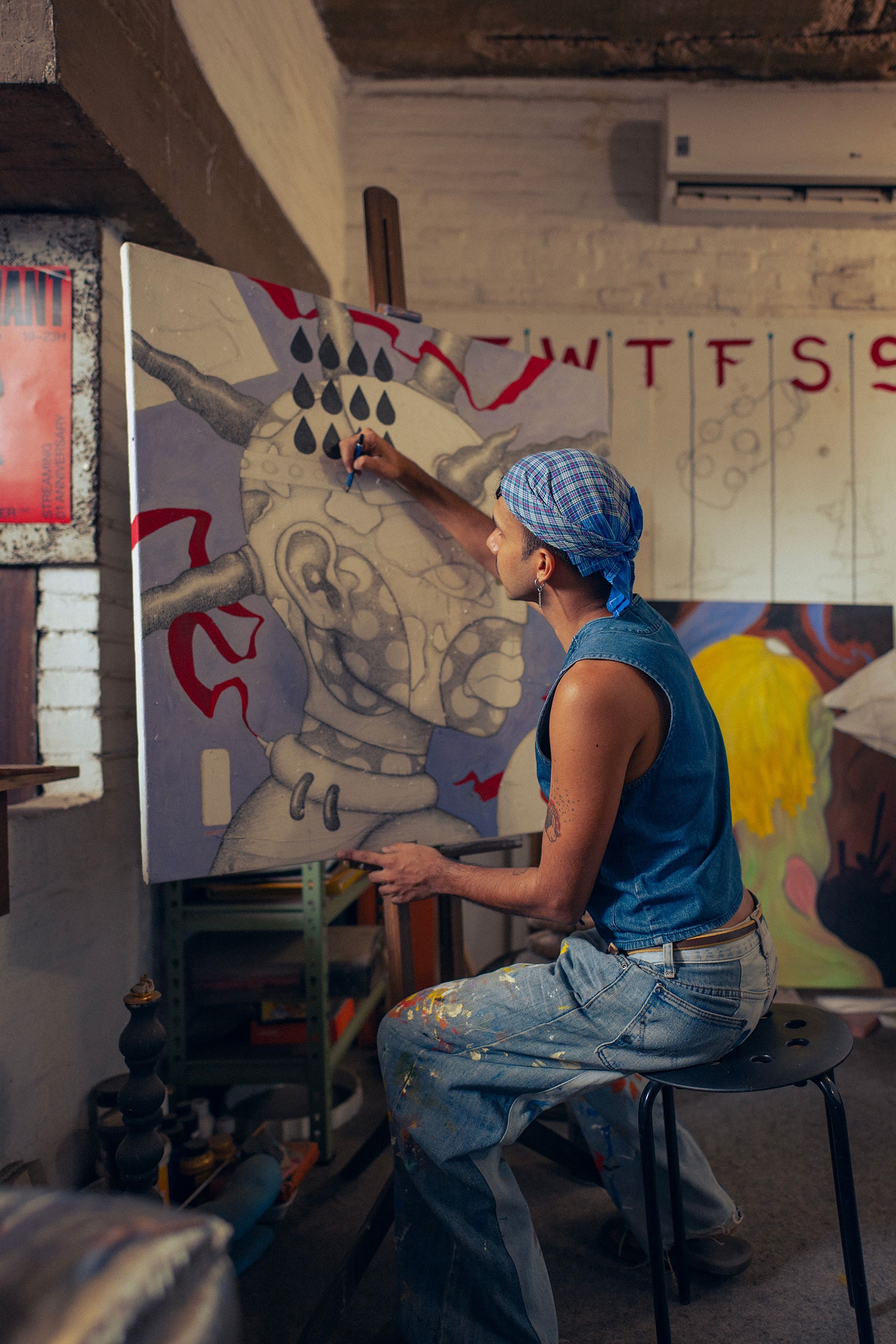
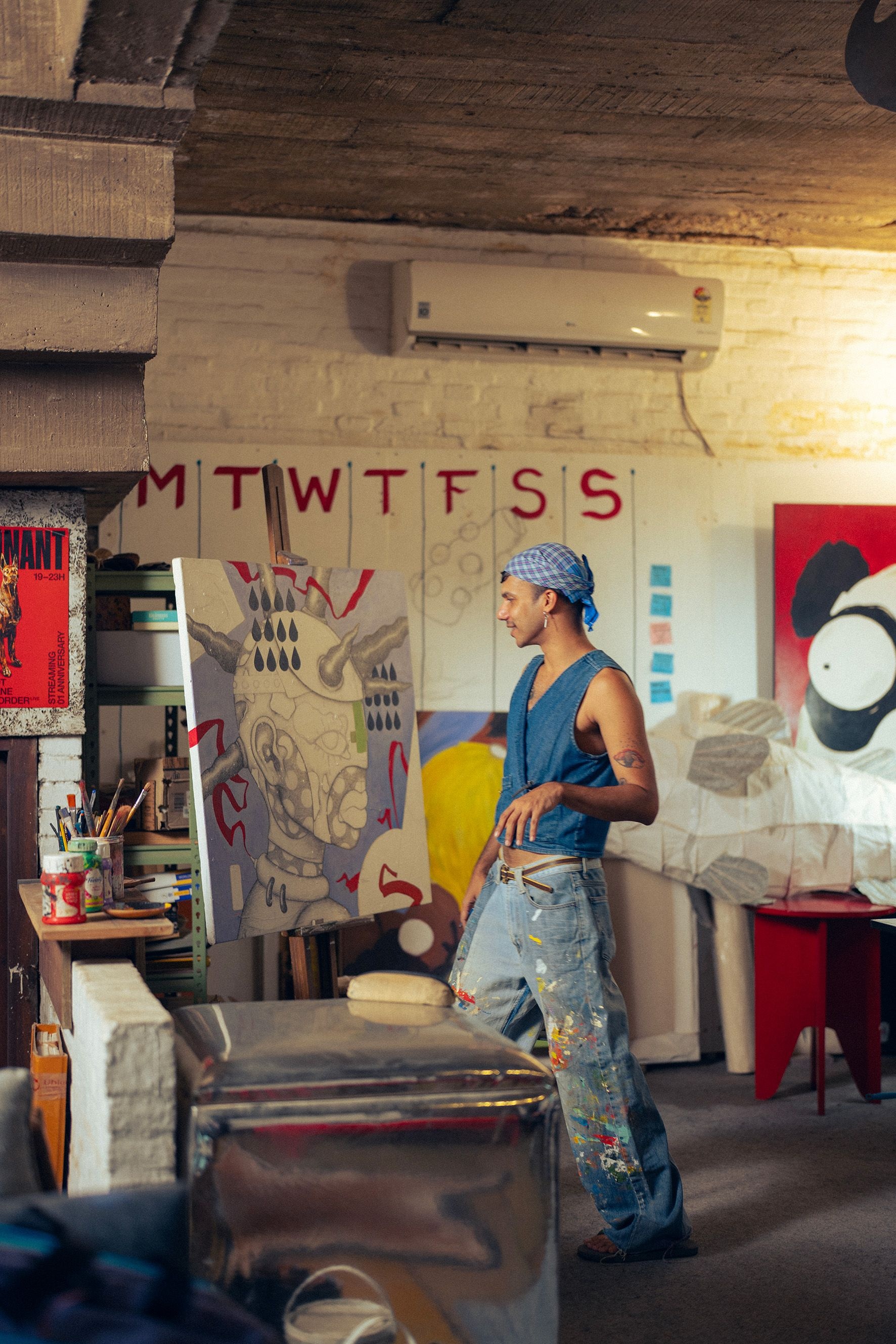
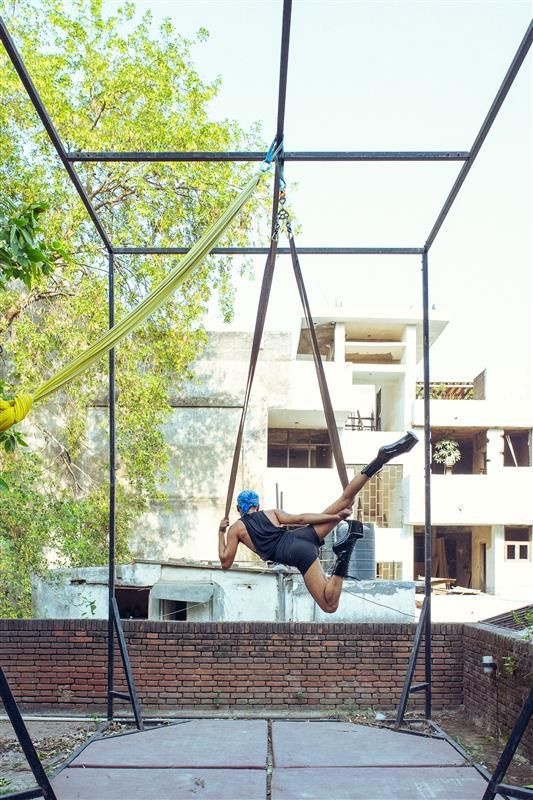
The version of them that I meet today first began to form during the Covid-19 lockdown, when most people’s work and personal lives collided into each other; Bharat just decided to lean in harder than most. Mornings were reserved for work calls, meetings, and consulting work. Evenings involved aerial strap training in the basement, where they literally ripped the fan off the ceiling to install the necessary equipment following an obsession with circus arts that began during a 2016 Goa workshop led by Cirque du Soleil performers. Nights belonged to their fine arts pursuits where podcasts played in the background, coffee was always nearby, and work stretched into the wee hours of the morning. Somewhere in that rhythm, they began to stop segregating their various pursuits and instead let the boundaries between them collapse.

What does that look like? For a taste of a day in Bharat’s life, consider the organised chaos of their last 24 hours: Yesterday, they were in town in Mumbai, discussing a potential interiors project. By afternoon, they were in Bandra, conducting back-to-back meetings with contractors for another space. Then came an impromptu dinner with their ‘drag sister’ Sushiru aka Dame Imfala, where the duo discussed a proposal for the upcoming Serendipity Arts Festival, and then—because Bharat seems physically incapable of switching their creative brain off completely—they were wandering through Mumbai’s airport terminal at 11 pm, collecting photographic inspiration for a Gurgaon hotel commission involving a 50-foot mural.

DSC_2076 copy.jpg
Until 2020, Bharat was the design lead at leather goods label Nappa Dori, working a nine-to-five desk job while simultaneously painting murals, experimenting with performance, and chasing other creative fascinations after office hours

“When I’m with clients, I’m like, oh my god, everyone here is acting their age. Then when I’m backstage with my drag friends, we’re discussing nails and lashes, and when I’m with the visual artists there’s this whole other genre of serious, pretentious artsy people,” says Bharat, describing the way they code-switch between their various worlds, characterising themselves as somewhat of a misfit in all the scenes they inhabit.

If there’s a single narrative thread that runs through Bharat’s life and work, it’s probably the idea of mutation. The word comes up often during our conversation—spaces mutate through architecture and design, bodies mutate via drag, and identity mutates through performance and queer community.

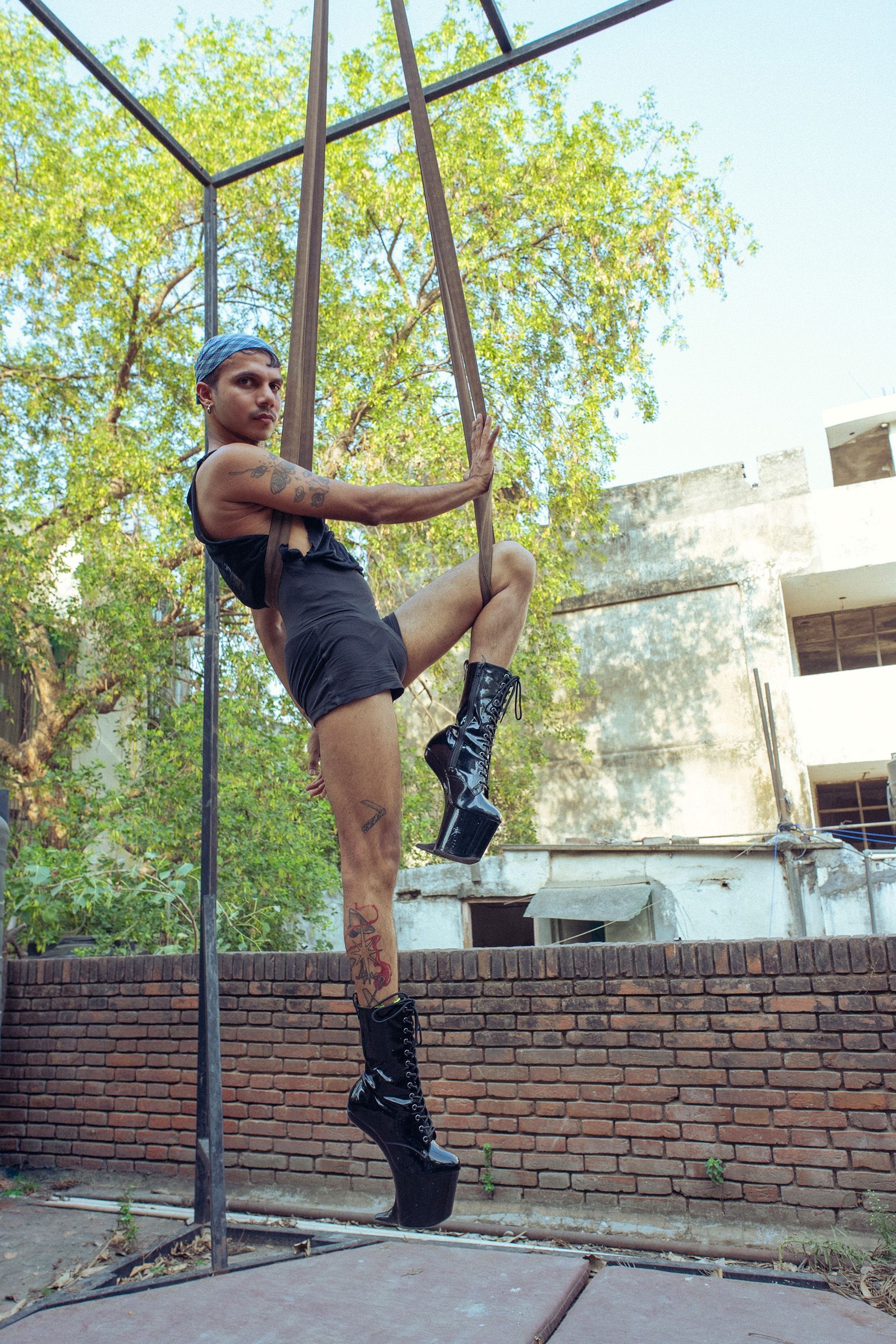
Bharat’s drag alter-ego, Osheen, rejects many of the conventions associated with traditional femme drag. They don’t wear towering wigs or prosthetic breasts and hips and have no interest in hyper-femininity as illusion. Sometimes, they even perform with a visible stubble, because it feels more honest to their relationship with gender than a full face of traditional drag makeup would. “For me, drag is my body as a structural canvas,” they explain, which is evident when you consider their monochromatic and vaguely insectile drag costumes.

Aerial performance has also changed Bharat’s relationship with drag completely, because once a body is suspended mid-air, conventional gender signifiers seem to matter less than the movement itself. “It’s more about the shapes your body makes than it is about embodying a feminine ideal,” they say.

Bharat speaks candidly about discovering, through drag performance and queer community, that their relationship to gender exists somewhere outside the categories they inherited growing up. It was backstage in greenrooms with Dragalactiq—a collective that has now performed everywhere from Magnetic Fields to Lakmé Fashion Week—that they came to a realisation: “If this is where I find sisterhood, then obviously I don’t fit into the cis-gay category.” Only recently, in their thirties, did Bharat begin identifying more closely with being non-binary. “I feel like I’m still coming out to myself,” they admit.

What makes Bharat fascinating, though, is not simply the number of identities they occupy but also the degree to which those worlds are allowed to merge seamlessly with one another. Their interiors practice, for example, approaches commercial spaces as though they possess emotional lives and personalities. A case in point is one of Sector Form’s most recognisable projects—the New Delhi store of fashion label Cord. It bypasses the well-beaten retro nostalgia aesthetic and instead channels something more theatrical: papier mâché mannequins inspired by Oriya masks, upholstery created using the brand’s own fabrics, and a revolving door inspired by Bharat’s own fascination with circus performance and aerial aesthetics.

At the same time, they are experimenting with “tech drag”, incorporating motion sensors, mocap suits, and live digital avatars to create what they describe as a “3D version of [themselves] on screen”. Bharat’s work moves breezily between hyper-digital futurism and deeply traditional craft practices as if it were second nature.

But don’t let the aesthetic fluidity of the world that they’ve built let Bharat fool you into thinking that any of it would be possible without routine and ritual. The fantasy surrounding creative polymaths rarely involves practical concerns like budgets, contractors, payroll, WhatsApp groups, or the occasional unpractical panic attack. But they have been in the midst of it all for long enough to work around it.

“I don’t check my phone first thing in the morning,” they tell me, talking about newly found boundaries with the seriousness of someone who maybe arrived at them slightly later than they would have liked. “I water my plants before I look at my WhatsApp.” Their weekends, which were once swallowed by deadlines and admin work, are now reserved for Netflix and takeout. In Bharat’s world, even something as amorphous as mutation needs structure to survive.

“I like dreaming,” admits Bharat, revealing that they are more process-oriented than goal-driven. “Once I actually see [my dreams] take shape and form I’m like, okay, what’s next?” Again and again, they describe finally achieving fantasies they once deemed impossible—performing a solo aerial-drag-animation piece at India Art Fair in 2023, building their own studio in Dehradun, staging elaborate multimedia performances—only to feel completely ready to move on once they materialise. Bharat, it’s clear, cares more about the feeling of constant momentum than they do about resting on their laurels.

Tomorrow, Bharat heads to Gurgaon for one last site visit, before finalising details on a client call for another upcoming project in Dubai. Later that evening, they will pack and head to the airport to catch a flight to the Philippines for a much-needed break. But once they’re back, there will be more contractors, samples, flights, and ideas to come back to.

The Nod Newsletter

We're making your inbox interesting. Enter your email to get our best reads and exclusive insights from our editors delivered directly to you.