


Music21 Apr 20266 MIN

On Saturday night’s set list: Techno with a side of tabla

Going from baithaks to bass drops, the Indian classical percussion instrument is now finding a spot in the DJ booths

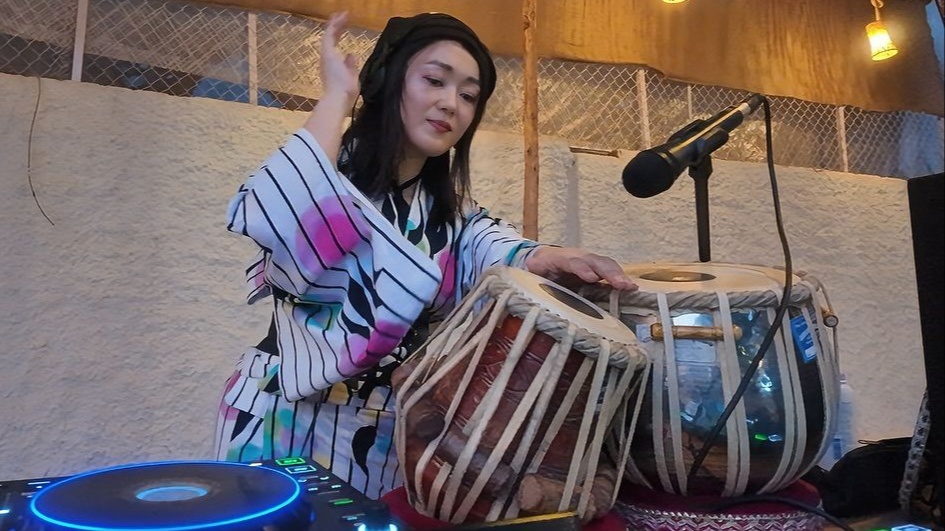
DJ Noriko Shakti

Goa-based DJ Noriko Shakti integrates tabla grooves with contemporary bass music

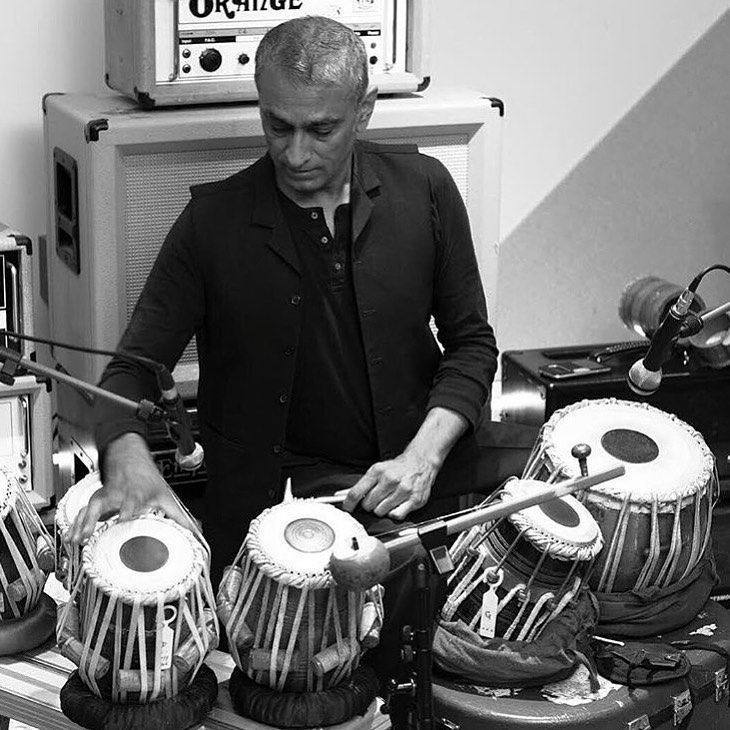
On a Sunday night in late December, Raghav Mani was spinning records at Idoru, a cosy, music-forward bar in Mumbai. But this particular DJ set had a twist. An elderly man sat on a stool in front of the console, an electronic tabla in his lap. As Mani played disco and global funk tracks, Kuljit Bhamra—legendary Bhangra producer, composer, and percussionist—filled in the empty spaces with improvised tabla grooves, his wrists loose and fingers flying.

He quickly became the centre of everyone’s attention, his presence and virtuosity turning a regular night out into a “you had to be there” moment. After the set concluded, Bhamra was surrounded by a crowd of 20- and 30-somethings eager to shake his hand or talk to him about his performance. As he spoke, the musician’s fingers gently caressed his tabla, undoubtedly the star of the night.

The tabla—a musical instrument that, according to legend, was invented when Krishna cut a mridana drum in half—has long been associated with Indian classical music, especially Hindustani classical. It brings to mind kurta-clad maestros sitting cross-legged in genteel baithaks. It also makes appearances at devotional events, in old Bollywood songs, and the occasional tea commercial, most notably one featuring the late tabla maestro Zakir Hussain. But it’s always worn the garb of tradition, moving in polite, well-heeled company. It’s not something you plug into a DJ mixer and play over four-to-the-floor beats at a Bandra bar.

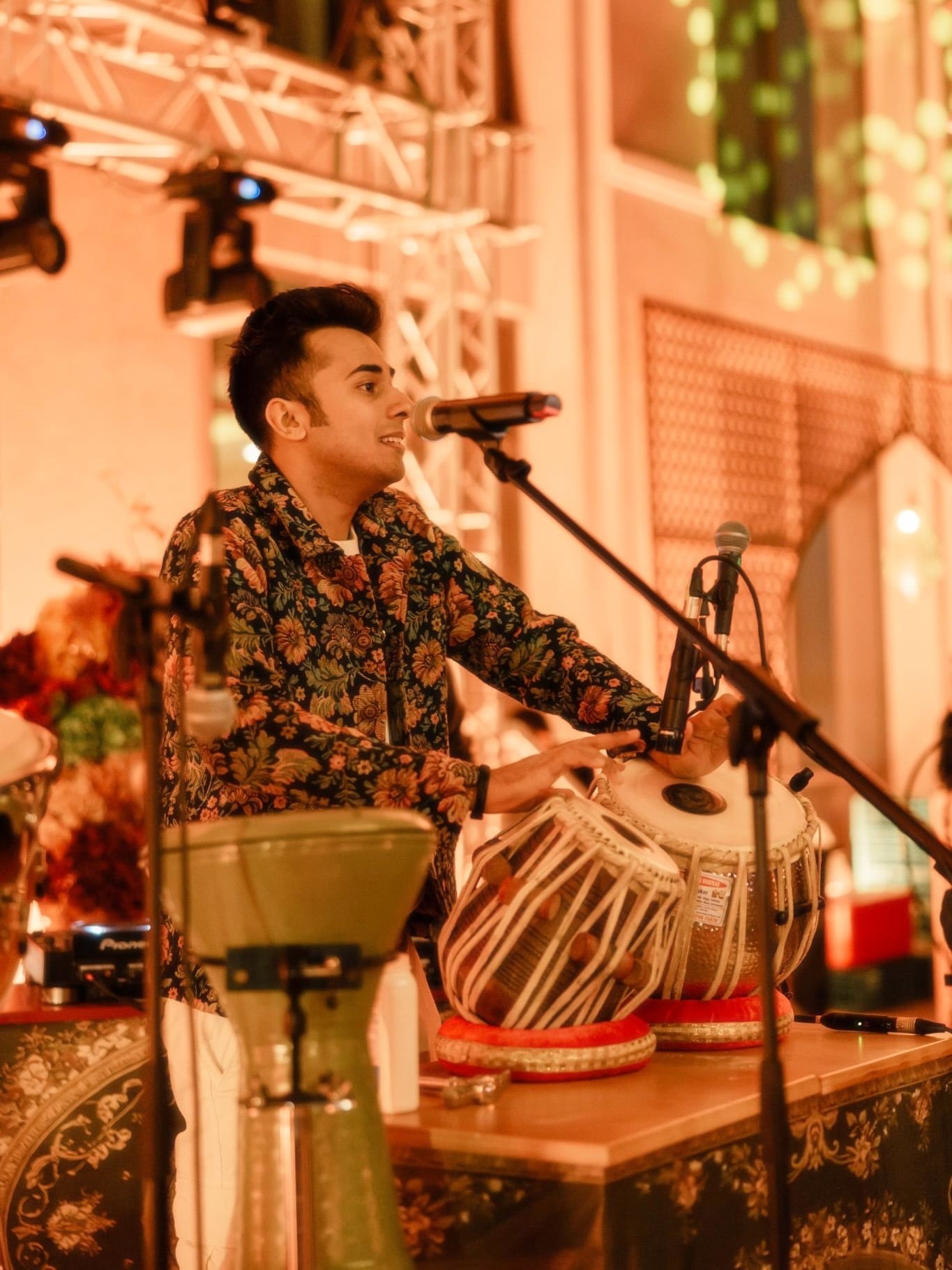
And yet here we are. Amir Khusrau’s tabīra-i Hindī is now making its presence felt in the club, at weddings, and on your social feeds. Percussionists like Nikhil Paralikar (better known as The Tabla Guy) and Noriko Shakti are blending tabla rhythms with electronic textures on concert and festival stages across the country. On Instagram, a host of young tabla players are adapting their instruments to cover or reinterpret pop, hip-hop, and electronic songs (you have to watch @this_is_tablagram’s cover of ‘Bella Ciao’) and introduce the tabla to newer sounds and audiences.

From club nights to wedding receptions, from studio EPs to festival stages, the tabla is having a moment in electronic music—and this time, it might actually stick. Karsh Kale brought his “liquid tabla” experiments to the Lollapalooza stage this year, while Talvin Singh performed his trademark tablatronic sound at two sold-out shows at Mumbai’s NMACC last year. Nihal Singh, another US-based artist, who blends the tabla and the dhol with EDM, has performed at Coachella, toured India (with stops in Bengaluru, Mumbai, and Delhi), and also taken to the stage at some high-profile desi weddings (including the much talked about one at Italy’s Lake Como).

“People love the sound of the tabla because the sound is so distinct and beautiful,” says Bhamra. It’s a resonant drum that has a pitch quality. And you can use it to play grooves that make people dance.”

“It’s probably the only percussion instrument that is so expressive,” adds Tokyo-born, Goa-based musician, composer and DJ Noriko Shakti, whose work integrates tabla grooves with contemporary bass music. Rolling Stone India described her 2020 EP Within the Time and Place as “mellow but cerebral”. She’s collaborated with the likes of Apache Indian, Purbayan Chatterjee, and UK grime star Killa P. “It lets you explore so many different expressions with just one or two drums,” she elaborates.
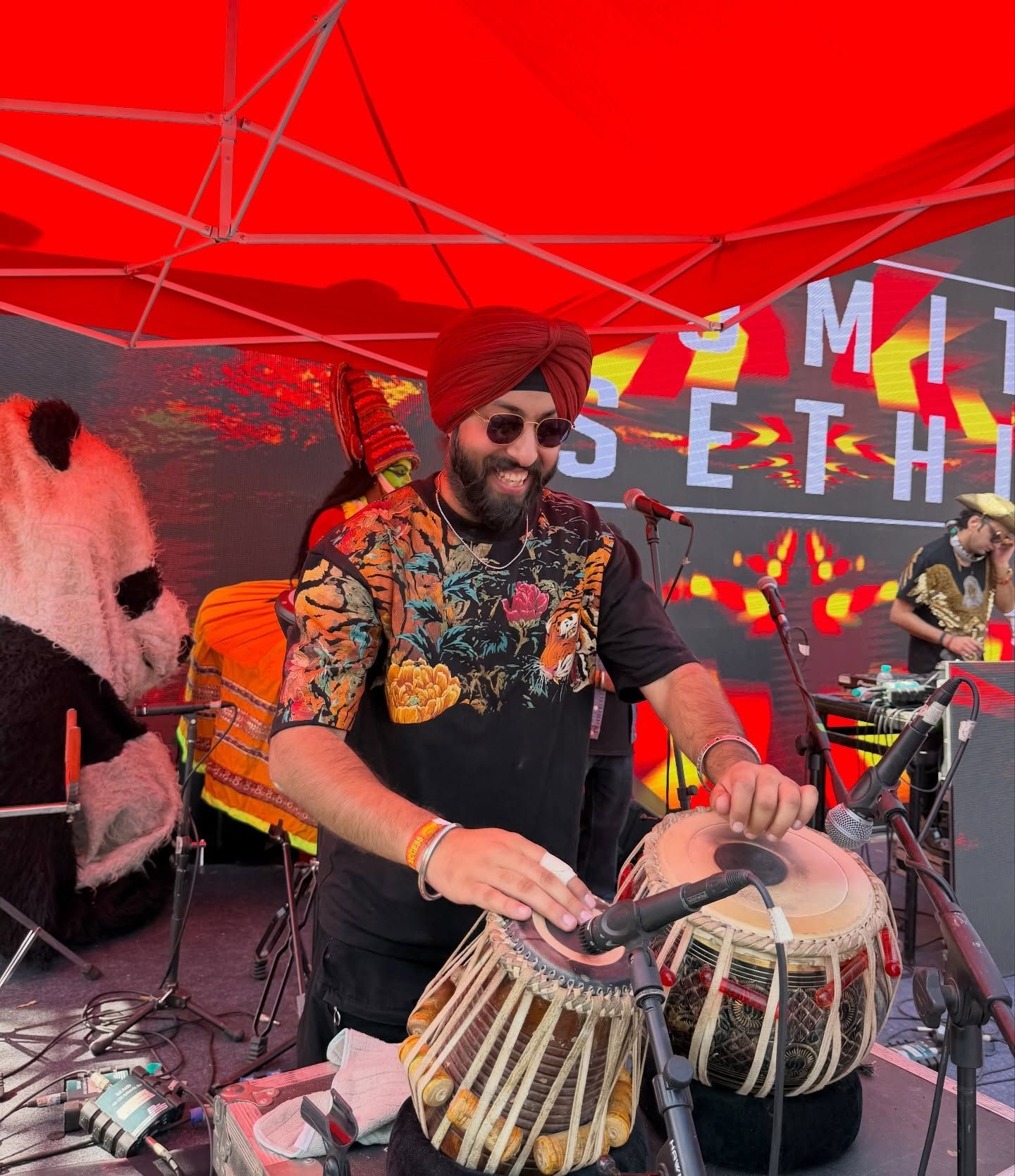
However, this isn’t the first time the tabla has caught the musical imagination. In the 1960s and 1970s, Allah Rakha Khan toured the US with Ravi Shankar. His son Zakir Hussain would be especially influential, jamming with jazz and rock greats and inspiring a whole new wave of fusion music. It made its way into the club with the Asian Underground scene in 1990s London, with Talvin Singh playing amplified tablas alongside drum-and-bass and jungle at the iconic Anokha club nights. Of particular note was Tabla Beat Science, a supergroup consisting of Zakir Hussain, Bill Laswell, Karsh Kale and Trilok Gurtu, that created some of the most innovative fusions of tabla with dance music ever made.

Now, a new generation of musicians are taking up the baton. Take Shakti, who was so inspired by the Asian Underground’s alchemical amalgamations of Hindustani classical and bass music that she moved to Kolkata in 2012 to study the tabla, eventually earning a Master’s and a PhD in Indian classical music. Similarly, for Aditya Malve (aka DJazz), Tabla Beat Science was a key inspiration for Shaastriya Sangeet Vol. 1, his 2005 collaborative EP with tabla maestro Unmesh Banerjee, which brings the ancient drum in conversation with contemporary electronic music.

“We as humans just naturally respond to percussion,” says Malve, explaining why the tabla finds it so easy to make a new home on the club floor. “That means there’s a lot of potential for us to play around with tabla rhythms in electronic music.”

There's also a visual element at play. Made of wood and goat hide, the tabla—and its player—are obvious signifiers of ancient tradition. The contrast with the plastic and metal DJ equipment and electronic music's shiny, futuristic sounds couldn't be more stark. It's Instagram gold. No wonder The Tabla Guy’s Reels—which include reinterpretations of Bollywood and Hindi pop tracks such as Arijit Singh and Ed Sheeran’s ‘Sapphire’ and Nadeem-Shravan’s ‘Dulhe ka Sehra’—keep going viral with millions of views.

It's also, unfortunately, a very tough act to pull off. The tabla is an instrument that can take years to master, particularly within the guru-shishya system of Hindustani classical music. More importantly, the traditional acoustic tabla isn't particularly amenable to the needs of electronic dance music.

“The traditional tabla can only be tuned to one key at a time,” explains Bhamra. “So, if you want to play music in a bunch of different keys, then you need to carry 10 to 12 different drums, which can be logistically challenging.” The soft instrument also requires careful microphone placement to capture its sound properly. With the high volumes and limited space of club and festival stages, this presents a technical conundrum.

“You have to be a sound engineer, a tabla player, and a DJ all at once,” says Shakti. “It’s very busy and technically challenging.”

Frustrated by these issues, Bhamra, who has played the tabla alongside artists such as Ringo Starr, Shakira, and Sugababes, looked to technology for a solution. Using his engineering background, he created Tabla Touch, an electronic tabla that retains the ergonomics of the traditional instrument but solves all the tuning, transport, and amplification issues. It also allows artists to turn the tabla into a MIDI controller, using their finger and palm strokes to trigger effects or samples.

It allowed Bhamra to take his tabla to unlikely spaces, performing at nightclubs alongside artists such as Indian-American club music innovators Baalti and UK experimental electronica artist Beatrice Dillon.

Plenty of his clients, such as UK-based multi-instrumentalist Sarathy Korwar, are also using the Tabla Touch in similar ways, not as a replacement for the traditional tabla but as a bridge between Hindustani classical and contemporary electronic music. “I want to make Indian drumming accessible for everyone,” says Bhamra, a self-taught percussionist. “Anyone can play and have fun with it rather than having a finger wagged at them by a guru for doing it wrong. You can just enjoy the tabla at your level, at your pace.”

That invitation, extended through club nights and Instagram Reels and MIDI-enabled drum pads, is now reaching people who would never have set foot in a baithak. The classical establishment may still debate whether any of this counts, but out on the dancefloor, in wedding halls, in the comments section of a viral Reel, the verdict is already in: The tabla is back in fashion.

The Nod Newsletter

We're making your inbox interesting. Enter your email to get our best reads and exclusive insights from our editors delivered directly to you.