




Chicago is submerged in a torrential downpour. News channels declare climate catastrophe. Cigarette butts, dead leaves, and dirty water swirl and bubble around a clogging drain outside a familiar restaurant. Inside, in hell’s kitchen, biblical doom awaits. Welcome to the final season of The Bear.
The slow burn of the previous four seasons—intense, stressful, even sadistic—had kept expectations simmering. The Bear has always gone to great lengths to please its fictional restaurant guests while treating its viewers like a side of stale coleslaw. It seemed like we just didn’t matter. At different points during the show, I’ve felt frustrated, disappointed, and short-changed. At this point, I don’t know whether I’m throwing good hours after bad, passive-aggressively willing it to downright fail. Like me, so many arrive at the final season with a sense of trepidation, primed for punishment. Especially after that surprise standalone flashback episode, Gary, featuring a work trip Richie (Ebon Moss-Bachrach) and Mikey (Jon Bernthal) take to Indiana, which ends in tears, blows, and a car crash.
Instead, you’re served a top-notch writerly season perfectly complemented by the show’s usual tricks: atmospheric photography, tense pacing, lived-in performances. You see the kitchen tempest reflected in an actual, city-stopping storm outside. You see circling character arcs land. You see loose ends tied up. You see resolution where there once was repression. You see how “doing what you were born to do” is sometimes a dangerous cliché worth discarding. You see how a sinking restaurant can stay afloat with duct tape, a franchise model, and family.
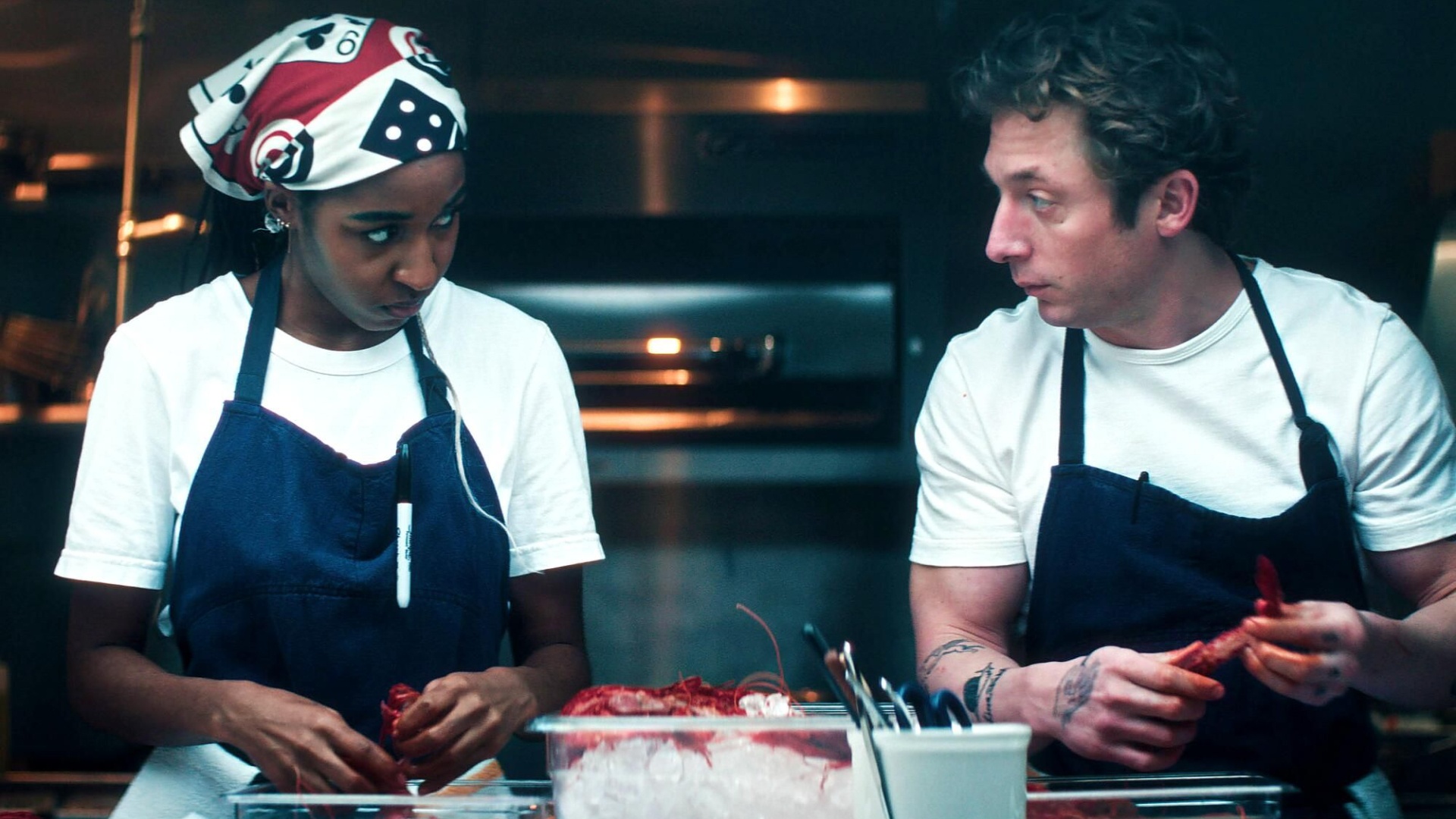
Family, as we all know, is where it all began. A most dramatically dysfunctional one that ran an earthy sandwich joint called The Beef for many years. Then the troubled son and heir, Mikey, kills himself, compelling his younger brother, the posh gourmet chef, Carmy (Jeremy Allen White), to take over. The Bear is born. A fancy restaurant where he endlessly frustrates his poor kitchen staff, especially alienating young and talented chef Sydney (Ayo Edebiri) with badly timed silences and poorly chosen words. At long last, we reach a finale where he is made to chop onions as penance. It somehow brought happy tears to my eyes.

It’s the family card that season five plays so well, whether it’s the hard-talking Uncle Jimmy (Oliver Platt) trying to keep the restaurant running with money he doesn’t have; the empowered chef Tina (Liza Colón Zayas) making a brussels sprouts dish for the family meal that finds a place on the main menu; or Donna the mad mother (Jamie Lee Curtis) coming good as grandmother. Perhaps the most gratifying family moment is melancholic pastry chef Marcus (Lionel Boyce) trying to please his distant father with a retro banana split made new with a caramel topping hiding in a candle. Masterful. How can his father’s cold heart not melt like wax?
But today, we live in the aftermath of the Roy kids having a billion-dollar rug pulled from under them on the Succession finale. It was the kind of show ending that made the audience discover how they were actually rooting for one of the disastrous siblings without even knowing it. The Game of Thrones ending killed the fantasy for many. Even the compulsively quirky Sex Education lost its mojo by the end.
My mind goes to the finale of Mad Men; Don Draper, too, was a brilliant man who excelled at his creative profession while being an emotional train wreck. In that show’s unforgettable finale, Draper is shown as being incapable of redemption at the spiritual level. He’s a (m)ad man for life. I expected something similar from The Bear. Instead, this was a satisfying end not just at the narrative level but also in terms of its optimistic worldview. A prestige show right from the start, it revelled in tormenting its audience for four self-indulgent seasons while calling itself a comedy. But episode seven, around which the final season hinges, is the Michelin star-worthy banana-split reward for sticking around.
Season five’s plot revolves around a potentially restaurant-saving Michelin star even as subplots thicken like the sauce of Sydney’s Coca-Cola short ribs. (It’s the fish sauce that Carmy recommends that does the trick. He knows his cooking; I’ll give him that.) Like Somalian chef Ebra’s business plan to franchise the sandwich counter. Right through the season, the cooking is hectic with last-minute switches and saves necessitated by rapidly multiplying constraints. But it’s the opposite with the evolution of the characters; these resolutions have been a long time coming. By the end, everyone gets what they deserve in the best way possible. Hard work pays off. Cynicism and conflict give way to hope. Carmy smiles. Multiple times. He even cracks a joke or two. The kitchen is finally a safe space.