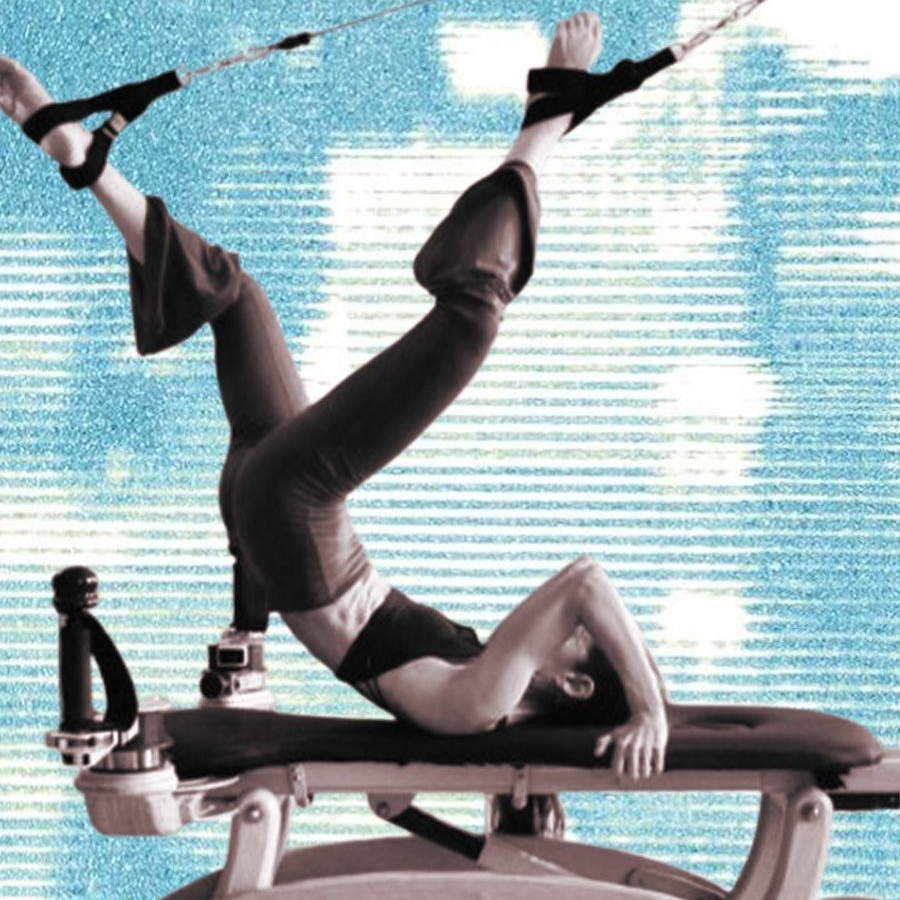





If femme internet in 2025 had to be compressed in two words, they would probably be Pilates and matcha. The algo was awash with girlfriends mastering the swan and flexing their strong core, only to then hehe over strawberry matcha about how men could never. While this may have been the headline visual, another fitness movement has quietly been gaining fame in recent years.
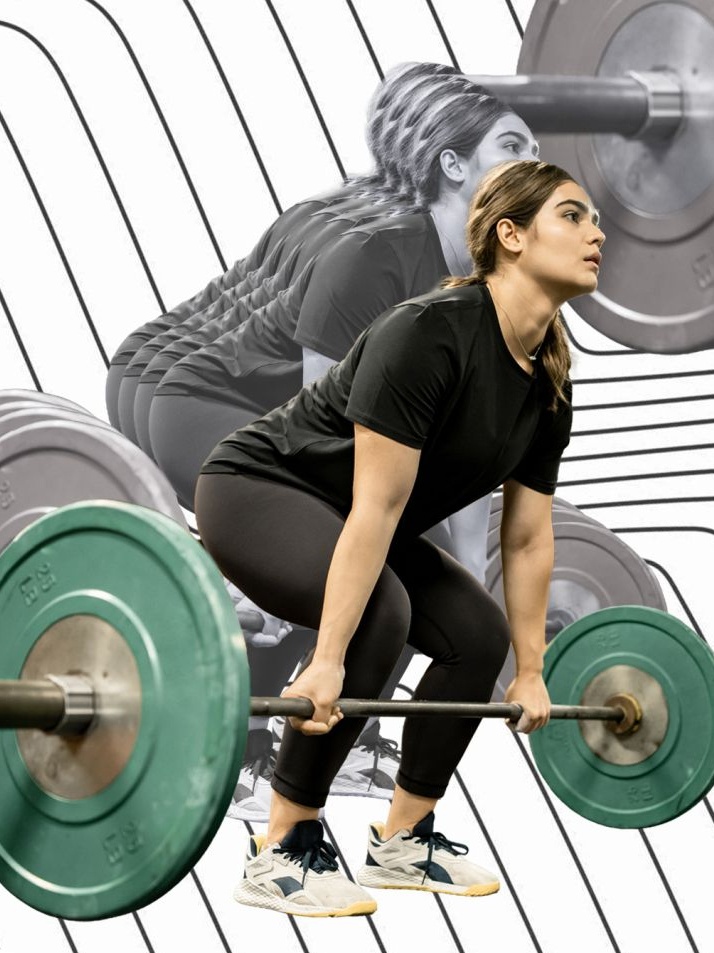
This one isn’t “soft” by any means. Here, women bench-press and deadlift between goblet squats, adding heavier plates to their tower of accomplishments. The girlies nonchalantly take turns to spot each other, shocking the gym bros by refusing their help to lift the 20 kg bars. (What, like it’s hard?) And no, it’s not just highly motivated athletes; it’s women like you and me who often have to drag ourselves out of bed in the morning that are propelling this shift to the mainstream. Even numbers show a 50 per cent spike in women signing up for strength-based workouts in 2025.
“For over a year, I was only doing barre because I liked the space and the trainers. But in 2026, I have added three days of strength training to my routine,” shares Udisha Madan, 27. The Bengaluru-based brand designer is slowly watching her social life change as well: friend hangs are now planned around workouts followed by brunch. Why, you may wonder? “I’m seeing research online about how women should lift because we are more predisposed to bone health degradation, osteoporosis, even arthritis, and weights promise to help,” she adds.
You have probably witnessed this stream of thought before. Pause on one fitness Instagram Reel and soon your feed will be flooded with emphatic claims on how strength training is the preventative workout that women need. But amidst all the unverified and false health information online, this statement holds wholly true.
Aparna Punnakkal, a strength coach from Bengaluru, has seen a massive influx of female clients requesting more weights for this very reason. “From our mid-thirties onward, we begin losing muscle mass. This loss accelerates around perimenopause,” she explains. “Strength training slows that decline. It improves insulin sensitivity, protects the bone, supports cognitive function, and reduces the risk of frailty.” In an era where anti-ageing remains top of mind, keeping your body young (and healthy) is only growing as a priority. Sure, men like Bryan Johnson may appear as the flag bearers of the postmodern longevity movement, but this desire for youth has afflicted women for centuries.
A central question then looms heavy: if weightlifting is such a net positive for women, why does this information feel so new to common folks? For starters, research on women’s health remains dubiously scattered. Major studies have built sample sizes on male bodies and copy-pasted it for the female physiology. Take for instance wellness practices like ice baths, which are revered for recovery. Most premium gyms in the country now offer the amenity as a plus. However, developing research reveals that cold plunges disrupt women’s hormone cycles.
As with other things gatekept by men, the anti-weightlifting propaganda is rooted in patriarchy. “I’m certain some man many years ago spread a rumour about how weights are dangerous for girls, how it will impact fertility and make us look bulky,” says Pranati Joshi, a business analyst from Gurugram. “It was probably just to keep us weak and pick-me. We’re still sold that urban folklore as fact, but thankfully now none of us are listening.” The 26-year-old is fresh on the strength-training bandwagon, having joined a gym in late 2025.
Of course, it helps that weight training for women underwent a severe PR makeover in recent years. Think of Miley Cyrus’s toned-arms at the 2024 Grammys, where they created a fandom of their own. Women all over were vying for a similar look that prioritises strength over skinniness. Earlier in Jan, FT reported how toned arms are now being viewed as a status symbol, a subtle signifier that you have the time and money to invest in yourself. Meanwhile, Surbhi Shukla, a 34-year-old stylist from Mumbai, says, “The [success] and popularity of women in sports in India has normalised athletic bodies, inspiring women to be stronger over chasing a shape marketed by the algorithm.”
Tangentially, pop culture plays a subtle role. The glossy bubble of the Pink Pilates Princess aesthetic is finally shattering. The early 2020s were dominated by slicked-back-bun-donning, no makeup-makeup-wearing, ruffled-bow-loving, Stanley-sipping clean girls who romanticised hot-girl walks and Pilates mats that matched their Alo co-ord sets. This picture-perfect image is (thankfully) in flux. Maximalist weird-girl makeup is back, hair is big and wild again, and workouts now have you swearing, grunting, and sweatily building muscle.
Punnakkal also recognises a shift in mindset. “For years, fitness culture told women to burn more, eat less, and weigh less,” she says. “Strength training flips that script. Goals are now changing from wanting a flat stomach to acing pull-ups, push-ups, and adding more weights.” It’s integral to highlight the influence of competitive races here. With Hyrox becoming a clout-magnet, women don’t just want to cheer on the sidelines; we want to ace a 50 kg sled push and land on that podium.
Another advantage is that Instagram is full of aspirational strength creators who remind you that fitness can be accessible, irrespective of your previous relationship with working out. This new fervour does not urge you to discard your discounted 35-class Pilates package to bring in weightlifting. No, none of that. Instead, it lures you in with versatility, a classic case of ‘why pick one when you can have them all?’.
As fun as it would be to tie this conversation up with optimism, the game-changing caveat remains that women who lift are growing but still remain a small number, a very privileged group who can access the handful of gyms that feel safe enough to squat in without looking over their shoulder. The fear and discomfort often pushes femmes to exercises like Pilates, yoga, spin cycle, and Zumba, classes that are largely populated by women. In fact, only 3.9 per cent of Indian women under 29 exercise daily, and this number drops further with age. In truth, for strength—and movement at large—to become a norm among women, it’s essential to demand and create equitable workout spaces.