
Following a protest from another city can make you feel helpless. You can keep up with the action on ground—the detentions, the blocked access, the slogans and the placards—but there is only so much you can do from your phone.
During the last round of student protests in India, the internet turned to memes and developed a newfound love for Gen Z. During the recent protests in the national capital demanding a rollback of the SIR and the ouster of the Chief Election Commissioner, some people found their own way to be useful.
When detained protesters were released at police stations far from home, 25-year-old Rajiv Choudhary began tracking them on a Google Sheet so volunteer drivers could pick them up. The sheet eventually became Detainee Gharwapsi Yojana, a private dashboard matching released detainees with people who could get them home.
Others responded by creating things. Artist and technologist Alida Sun has been using code to make art every day for years, and her posts during the protests explored ideas around resistance and solidarity. Posters were created. In another corner of the internet, parody games—inspired by the protests or simulating them—became a medium to connect and express solidarity. Within days, browser games built around the protests began showing up online—some elaborate on strategy, some frivolous, but all satirical.
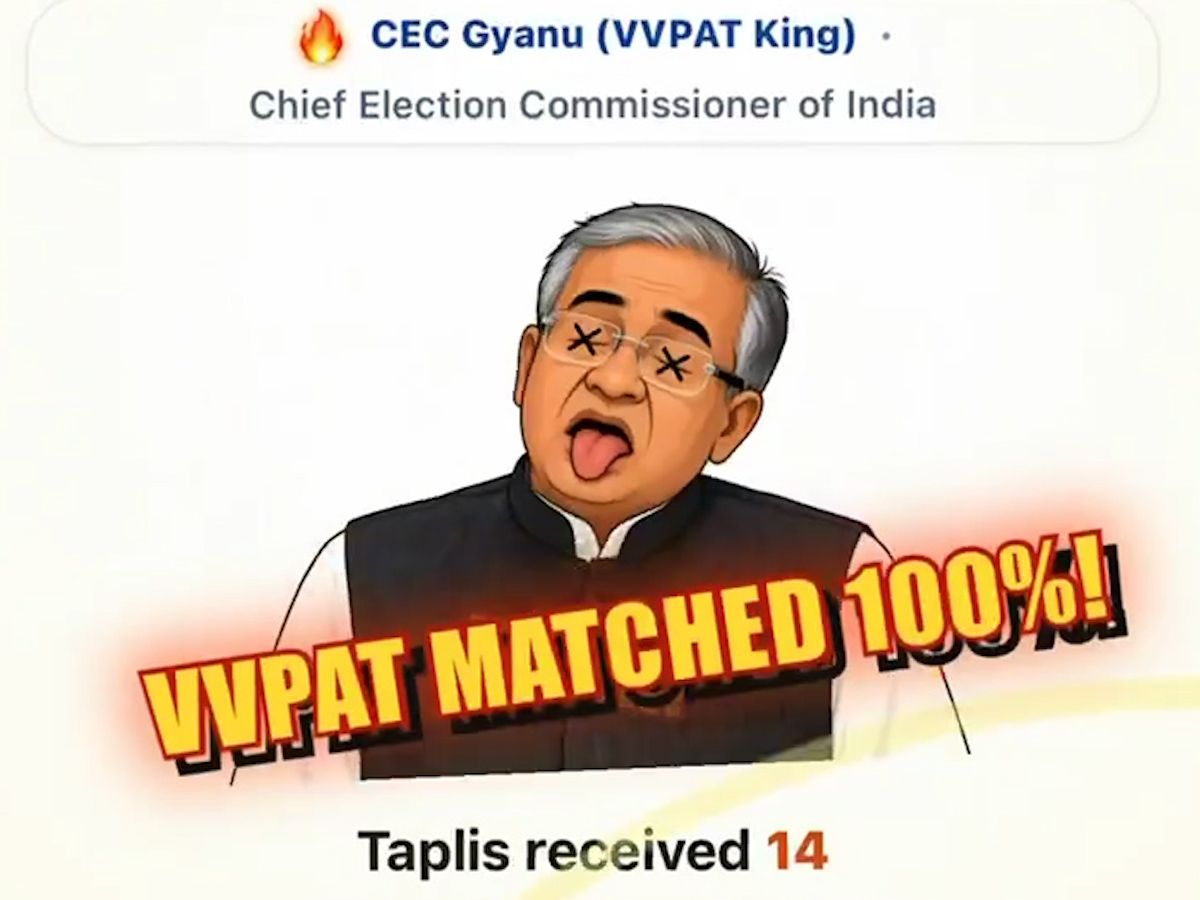
Digital Tapli, whose creator remains anonymous, asks players to tap the screen to deliver a virtual tapli to a character resembling Chief Election Commissioner Gyanesh Kumar. Within days of its launch on October 14, its tapli counter had crossed 73 million taps.
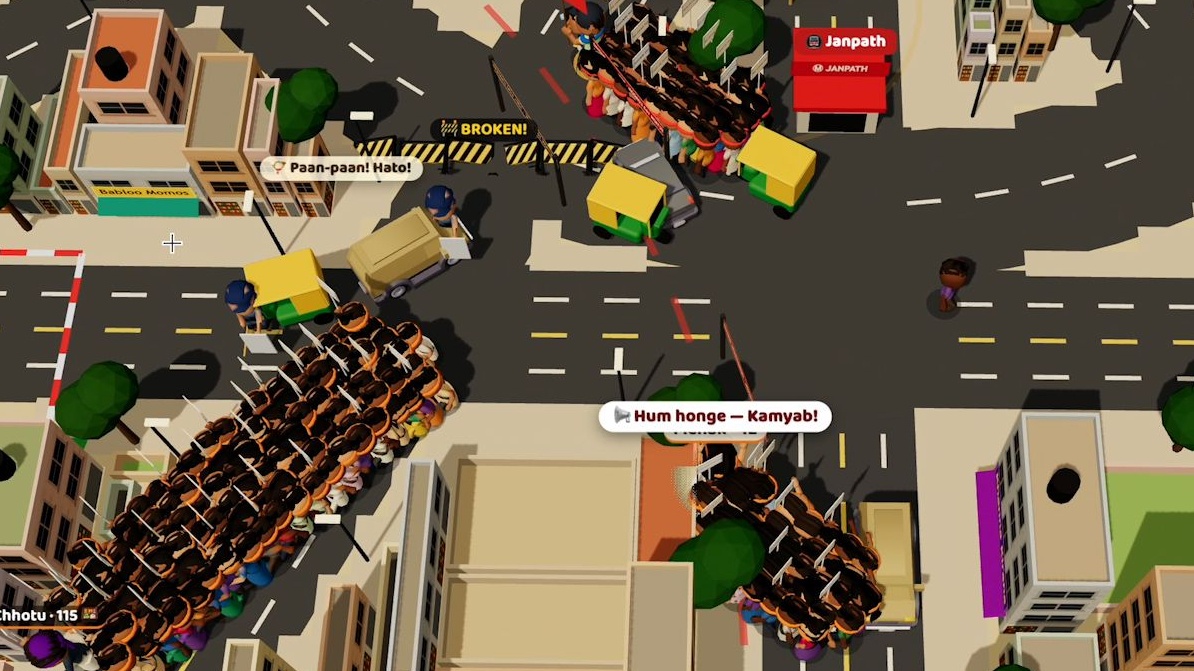
The web-based parody game Jantar Mantar Chalo released around the same time. Created by Suraj Kushwah, the game turns getting to the protest into the challenge itself. Players gather a kafila, dodge CCTV cameras and police, and try to reach Jantar Mantar without being detained. They can also play as the police trying to stop the protestors from reaching the site. At one point, around 2,000 people were playing the game simultaneously. Built in about a day and a half using AI tools for coding and other software for the artwork, the 27-year-old IT professional and DevOps engineer has made an offline version available too. Kushwah wanted to make a browser game when the protests gave him a subject. “I wanted to make a game and I chose Jantar Mantar,” he tells me. Watching people repeatedly try to reach the protest site only to run into barricades and detention gave him the setting. He describes the game as dark humour but was particular about keeping its world “accurate and detailed”.
That meant borrowing liberally from what was happening on the ground. CCTV cameras could catch players, a gamchha could help them evade detection, and golgappas restored stamina. Internet shutdowns disabled the minimap; detention could leave a player at Narela Stadium or the Kapashera border. Media interactions could add people to your kafila or make some of them leave.
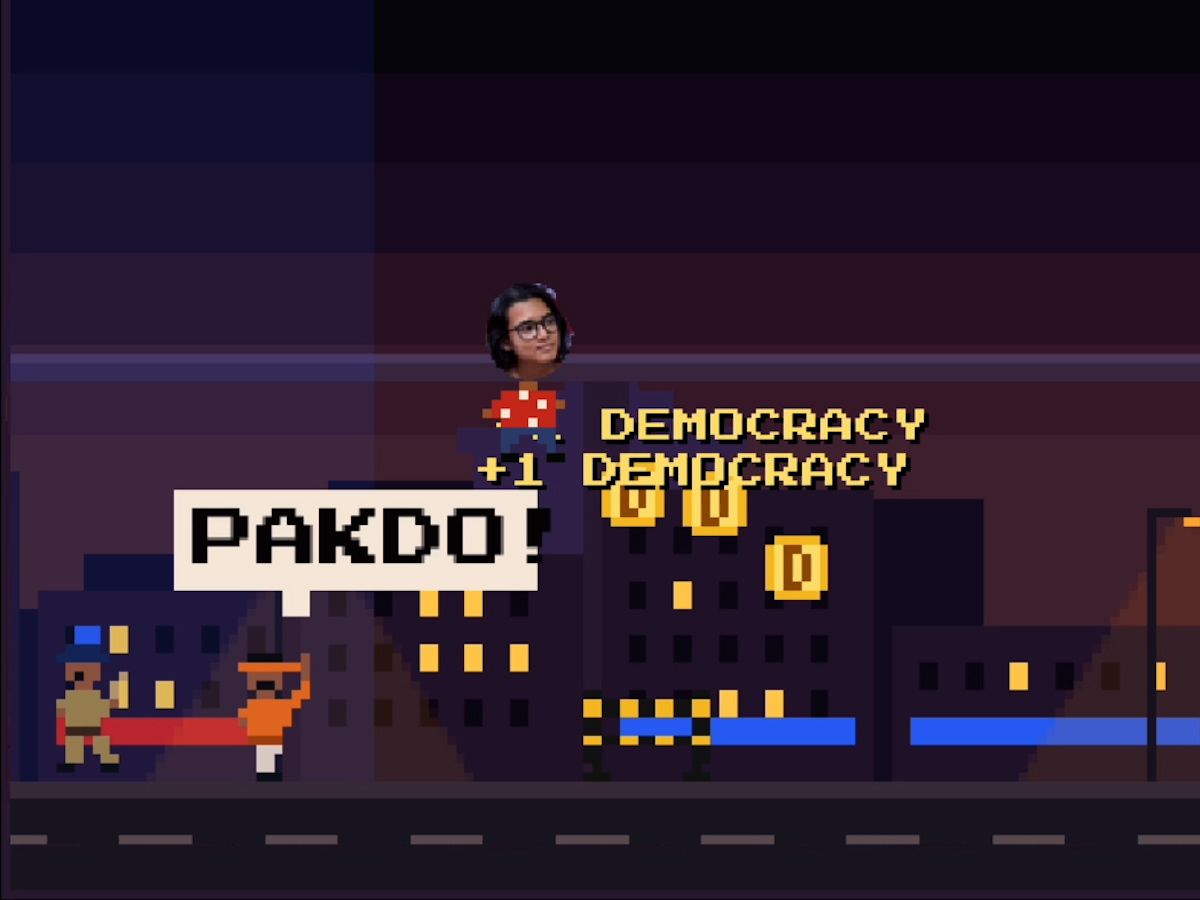
Then there is Bhaag Neha Bhaag by filmmaker brothers Akshay and Anav Nayar of Wizloop Studios. The cue? Videos of student leader Neha Bora running from the police that filled their feeds. The endless runner, modelled like Subway Surfers, lets you play as Bora, jumping past police and barricades as you go.
“The way Neha was running from the police, in the middle of scuffles and everything else, made for some very strong visuals,” they say. “We were following what was happening in the news, and at some point it clicked that this could be a game.”
They started with a rough prototype: Neha ran, the police followed. Using AI, they were able to turn the idea into a playable game in a day, drawing on experiments with AI-assisted storytelling they had already been doing since 2023. “We approached it like making a meme but one that you could interact with,” they say.
The brothers hadn’t set out to become game developers. “At the end of the day, we’re storytellers,” they say. “Whether it’s a film, an AI-generated video or a game, they’re all different ways for us to tell a story or express a point of view.”
What happened after they put the game online began shaping it too. Friends sent them scores, which led to a leaderboard. Players used their leaderboard names to air their own views.
“It was only after people started playing that we realised this could be its own kind of interactive content,” the brothers say. “It was a format we hadn’t really explored before.”
Some players now open Bhaag Neha Bhaag during work breaks instead of doomscrolling, the Nayars say, although they don’t expect that attention to last forever. “There’s a sudden spike, something trends for a while, and then it’s forgotten.”
Kushwah, too, doesn’t necessarily think these games need to do more than that. He is wary of expecting games or memes to educate people politically in the first place. “Why does awareness need dopamine?” he asks. He plans to leave Jantar Mantar Chalo online “just so history remembers”.