




“I’m finally free for the first time in my life,” asserts environmentalist Dr Claude Alvares, seated in the balcao of his unassuming home in Goa’s Parra, where the only sound is that of his chickens clucking in the front yard. You’d think this fiercely moustachioed man with a generous smile was already living his best retired life, but it’s only recently that the 78-year-old living legend announced that he’s taking a step back from the activities of his formidable organisation Goa Foundation.
For 40 years, Alvares, with the help of his wife, the Padma Shri awardee Norma Alvares, has energised youth, sounded alarms on the state’s perilous and unplanned development, and filed successful public interest litigation cases to fight off sand miners, challenge beach resort developers flouting rules, and help preserve the state’s forest cover and biodiversity. A central figure in Goa’s environmental battles and an indomitable force in the activism space, he has helped protect over 750 square kilometres of Goa’s green cover. Which is all to say that the state’s landscape would have been a lot less greener and a lot less appealing to the hordes of tourists that visit if it weren’t for his trailblazing work.
But the humble Alvares dismisses his role as a green crusader and, instead, recognises the locals’ efforts and involvement in the good run they have had in keeping “destructive developmentalism” at bay. “Goans are reasonably well-off in the sense that they can fight for any length of time because they have got rice in the house and fish is always available—if it is not in the sea, at least in the rivers or in some other place. They will always get it...” Alvares continues in his roundabout way. “So, once a man has that economics behind him, then you get very good fighters,” he adds.
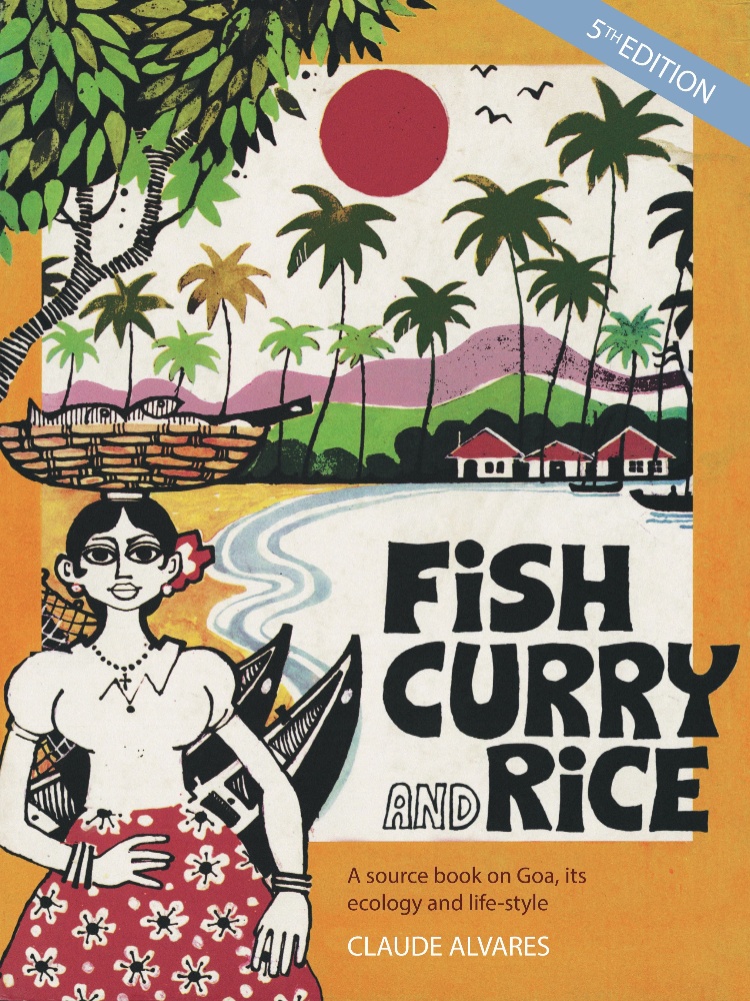
This thought is perhaps what inspired the name of his seminal book Fish Curry and Rice, which first came out in 1993 and became a bible of sorts for the state’s academia, activists, and anthropologists. Now, more than 30 years later, it gets a much-needed update with revised data, well-researched articles, and coloured photographs that document how the state has changed over the years.
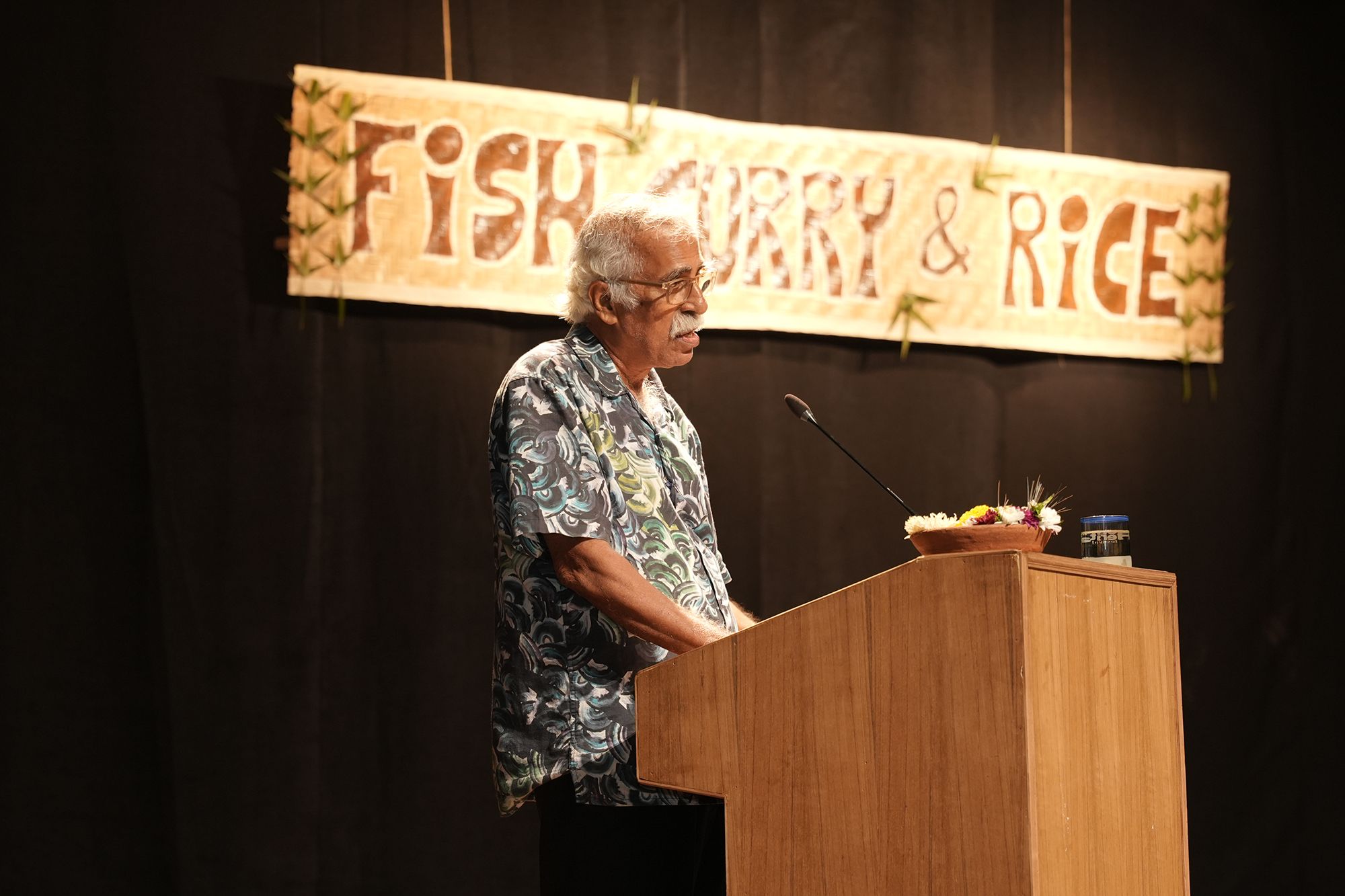
“It’s a sort of entry point to Goa. It introduces you to Goa in a way that no other book can,” Alvares says of his 400-page tome. With the latest edition, what he’s tried to do is summarise “the entire mentality of Goa”.
Put together with the help of 170 contributors, the fifth edition features the works of artists, conservationists, life scientists, photographers, writers and activists, among others, who have lent their expert insights and creativity. The book consists of 16 chapters holding stories, visuals, and realities of the land tucked between the Arabian Sea and the Western Ghats. The cover remains the same—an iconic print by Goa’s most beloved artist, Mario Miranda—but the chapters inside reveal a brief history of old Goa, industrialisation, mining activities as well as the green victories through the years. In its current iteration, the book is less esoteric and more reader-friendly in its approach, with subjects ranging from artworks and biodiversity to photo features and chapters dedicated to the state’s diversity.
“This book is a link to the real world of Goans. You don’t have to read the whole 400 pages. If you’re interested in wildlife sanctuaries, there’s a section on that. If you’re interested in cartography, there are interesting maps in it. For a creative person, there are so many artworks…,” Alvares says. The data-obsessed will dive into the stats on tablelands, wilderness, Goa’s rivers, and mining belts, while history buffs will gravitate to the well-researched chapters on the ancient Khazans and Communidade systems that continue to prevail in the state today. There are even recipes (including one of the famous fish curry), but Alvares resisted putting together a compendium of the best fish thali spots around. “We thought of adding that to the fifth edition, but it’s such a personal choice and, more often than not, the same places are good one day and not so good the other, so we decided against that,” he adds.
Between chapters on poder (Goa’s iconic bread makers) and key environmental laws in the state, there are wide-ranging subjects lying within these pages. “It’s an encyclopaedia on Goa’s environment, be it about tigers, paddy fields, fishing or Khazan lands. Everybody living in Goa should have a copy of it,” says Goa-based author Michelle Mendonca Bambawale.
Flip through and you may land on photos of its beaches, a directory of environmental NGOs working in the state or a spotlight on the most hardworking organic farmers in Goa today. A section most relevant to Goa today—about the rampant villa construction and real estate boom—comes illustrated with faux real estate ads that will make you chortle. The book traverses through a fleet of topics and, depending on who has it, can serve as a travelogue, a cultural commentary or an ecological guide.
As Alvares puts it in the intro: “Fish Curry and Rice is not solely a critique. In the midst of providing context for that critique, lies the obvious proposal to ensure absolute protection to what is left… Fish Curry and Rice would fail therefore if it conveys the message that it is a cry of despair instead of being a beacon of hope and light, especially for the next generation—a guide for the younger people of the state who stand to inherit it.”
In the wake of the post-pandemic frenzy that saw all of India descend upon the country’s smallest state and claim a piece of its green pie, this book presents hard evidence of what is at stake, but not through the lens of despair. “There’s no question of losing hope. Interestingly, activism is no longer limited to the coastal belt. It is flourishing in the hinterlands as well,” he says, referring to a slew of government and private projects that are environmentally detrimental and vehemently opposed by locals today.
So, what’s he going to do with his time, now that the book is out? Alvares hopes to spend it planting trees and tending to his chickens while every now and then guide and course-correct the younger lot that has taken over the harness of Goa Foundation.
The fifth edition of Fish Curry and Rice is available in a collector’s edition (₹5,000) and hardback edition (₹3,000) at https://ocotillobloom.com