


Fashion14 Dec 20256 MIN

From merkins to mullet logic: Hair was the real main character of 2025

This year, designers pushed us to rethink our ideas of the macabre, the grotesque, and the rebellious

Hair was in fashion in 2025

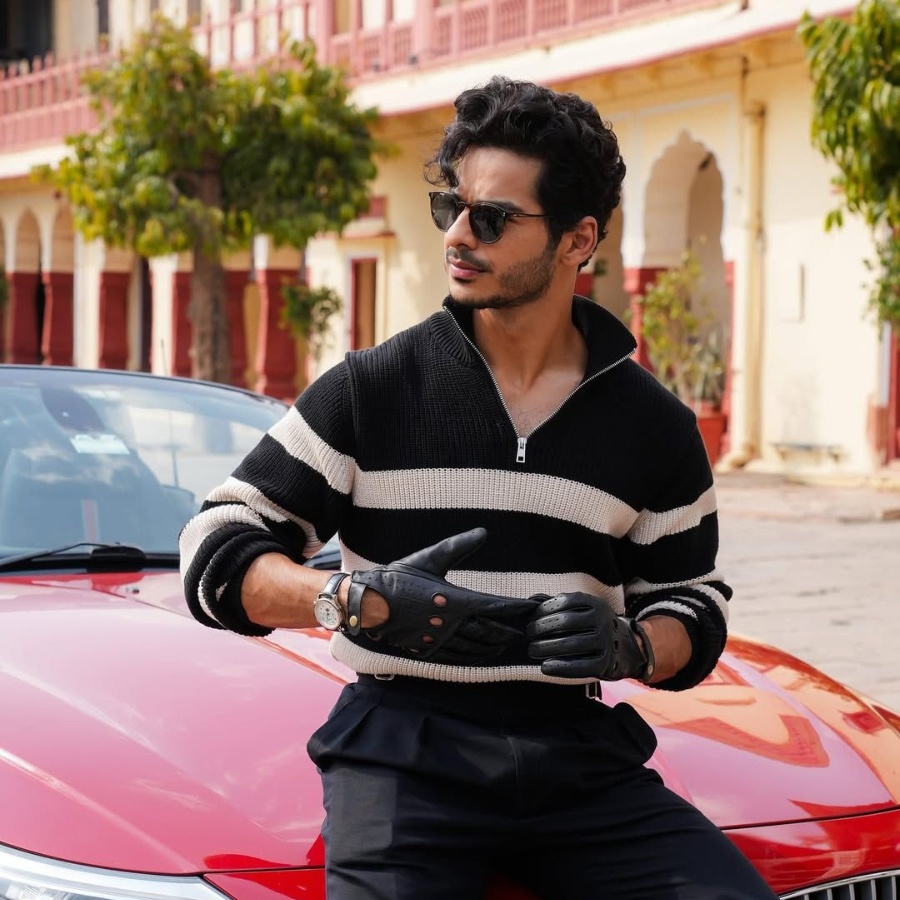
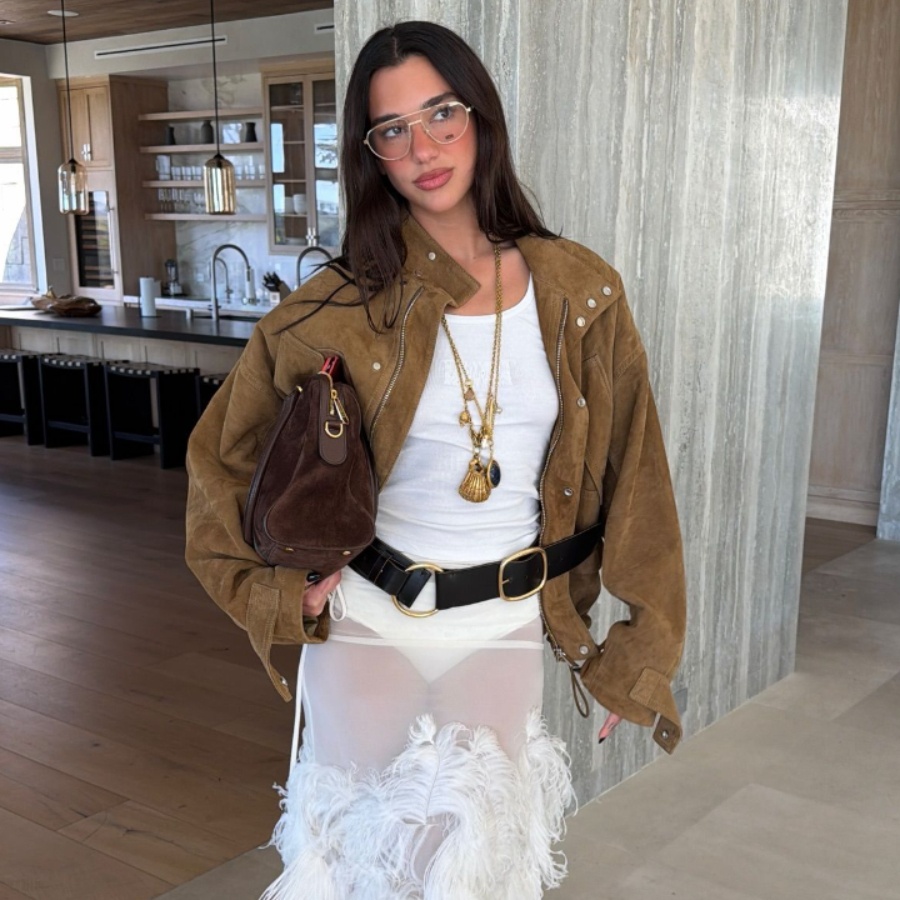
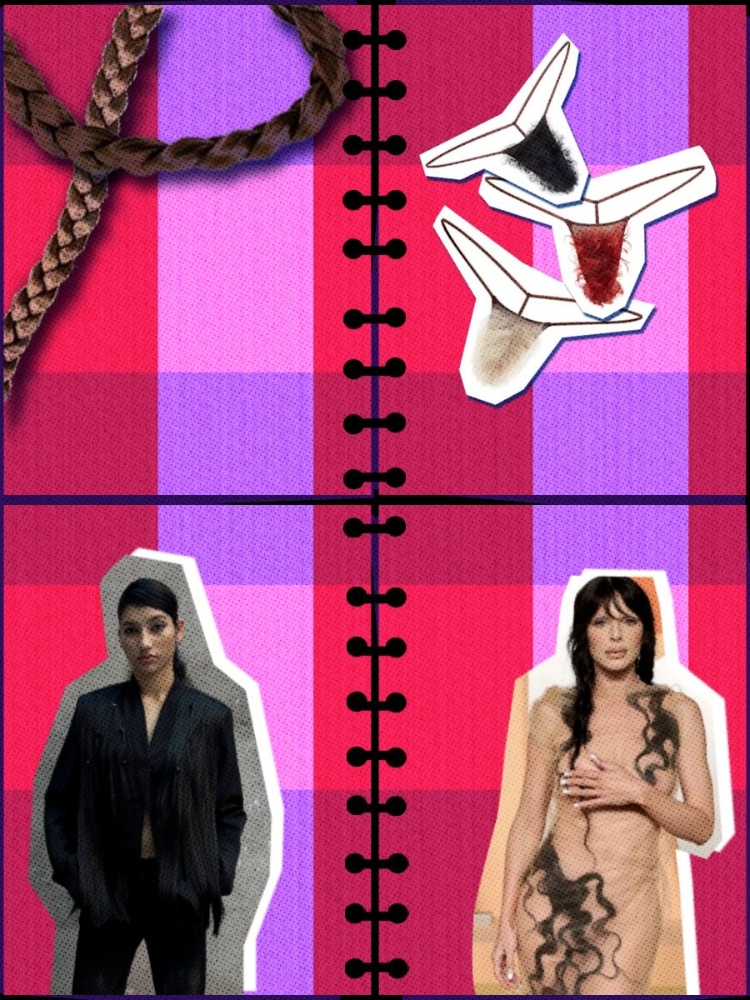
Faux hair braids, the Skims merkin thong, Julia Fox on the red carpet, and a jacket made of hair extensions by the Delhi-based label Million Dollar

Something in the AQI+++ metro-city smog we’re collectively inhaling has rewired the zeitgeist’s relationship with grooming. Somewhere between political burnout, short skirts, and shorter attention spans, we have been witness to the re-emergence of hair as this versatile accessory that can travel beyond the scalp. Is your chosen hair-to-body ratio the new status symbol? Or a feminist reclamation of softness, autonomy, and “POV: I actually don’t care what that avoidant red flag of a man thinks”? Or is it simply proof we’re living inside an absurdist reboot of civilisation where nothing means anything and, therefore, everything does?

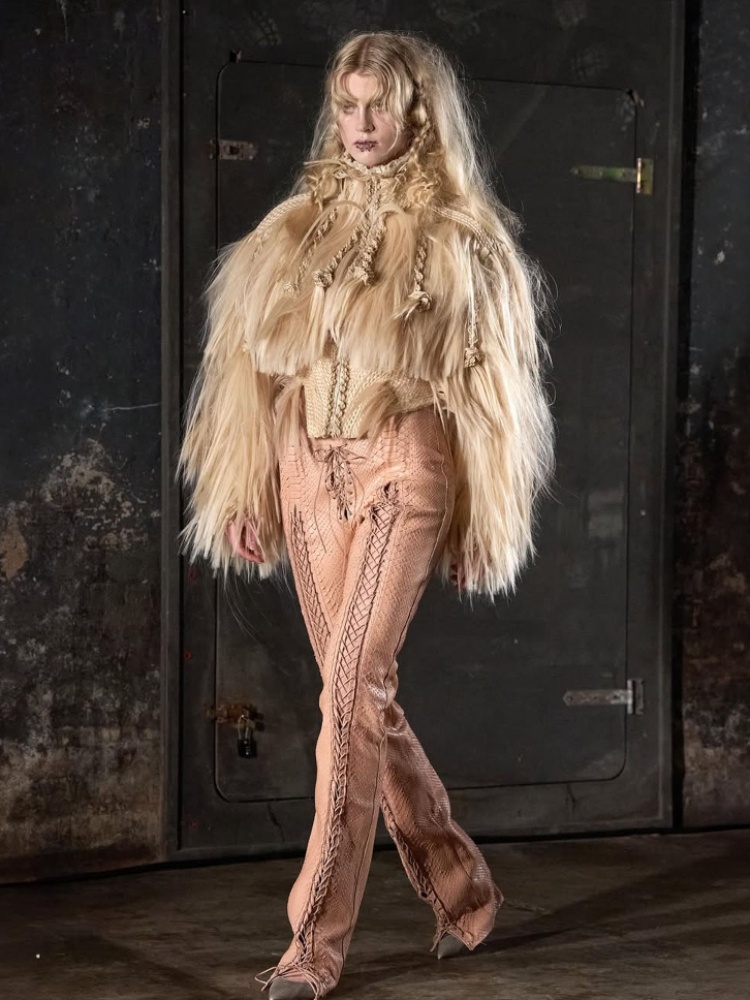
In February this year, UK-based Turkish designer Dilara Findikoglu’s fall/winter 2025-26 collection sent out a few furry eerie blonde jackets. Eerie because they looked suspiciously like several Pilates blondes were harvested to upholster them. As a longtime Margiela disciple, I couldn’t help but think of the blonde-lock jacket from his spring/summer 2009 swan song. I wasn’t alone: Berlin-based archive collector Angelina Nagornova recently crafted a chair out of 17 blonde wigs, explicitly referencing the Margiela piece. Her video clocked 374k views—a seismic leap from her usual 70k. Cousin Itt (of Addams Family legend) is enjoying a renaissance in 2025, and the internet cannot look away.

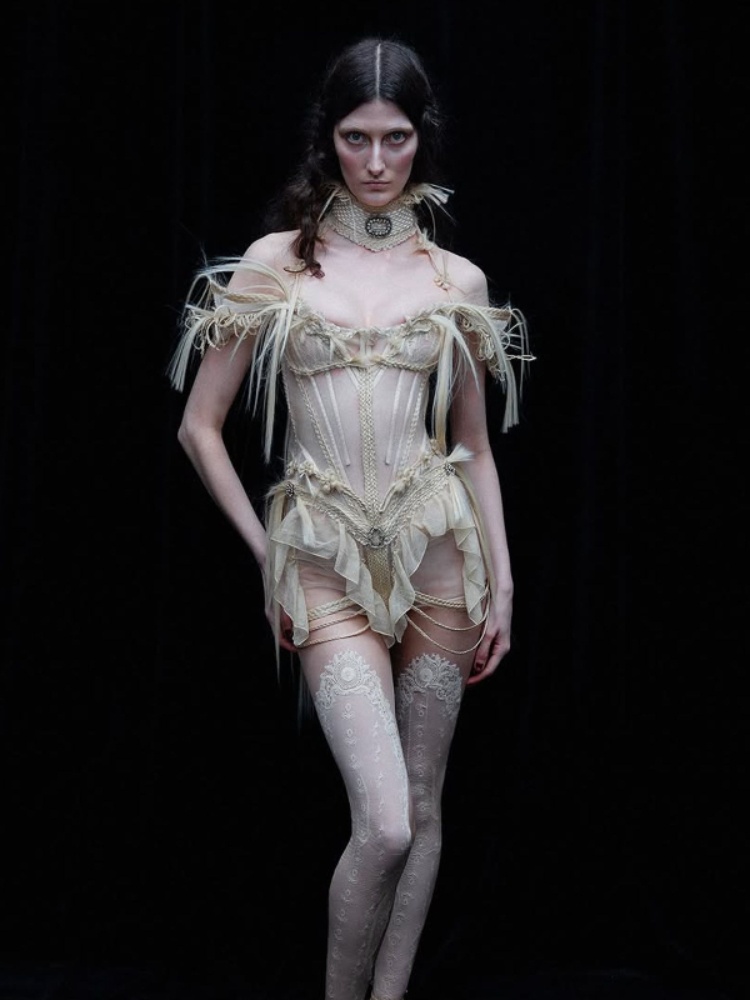
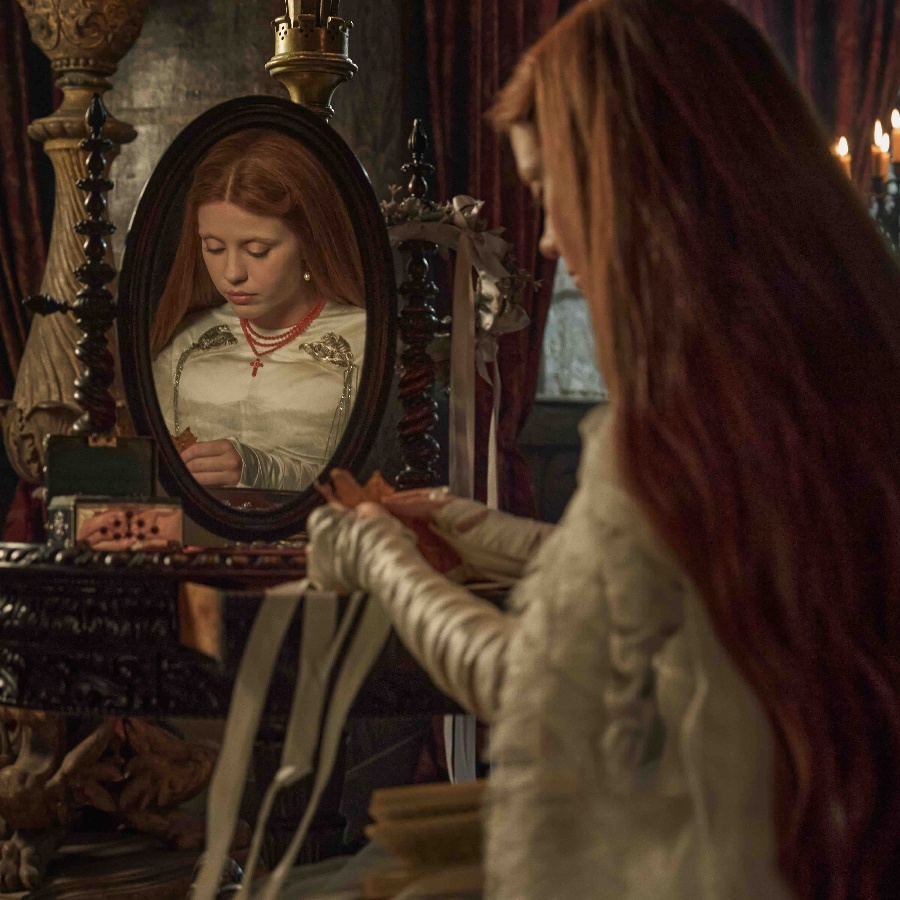
Hair, after all, holds memory. Across cultures, locks have been kept as relics of love, loss, mourning or pure witchcraft. In the Victorian era, wearing a loved one’s hair in jewellery, in brooches—literally at your bosom—bordered on beautifully macabre. But who doesn’t love a little goth sentimentality? It brings balance back into the universe, where every tradwife has a brat loyalist to counteract it and restore cosmic balance. Art that triggers repulsion rather than awe might be the most accurate reflection of the times; fashion has always been our favourite cultural mirror, and it shows the perfect aesthetic for a generation that believes in manifestation and taxes their emotional stability to Mercury retrograde.
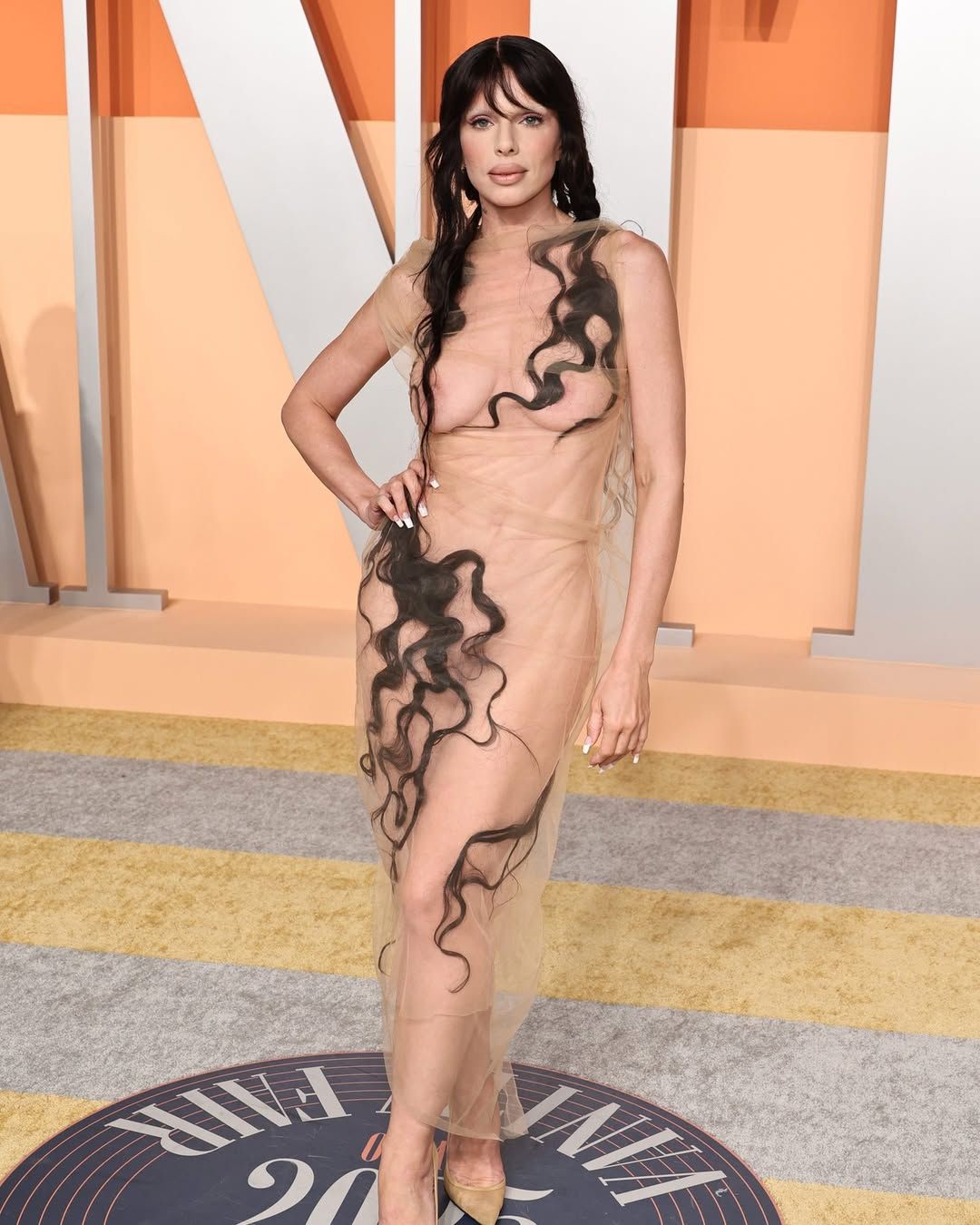
Julia Fox at the Vanity Fair Oscars party in a look by Turkish designer Dilara Findikoglu

Julia Fox at the Vanity Fair Oscars party earlier this year in a look by Turkish designer Dilara Findikoglu

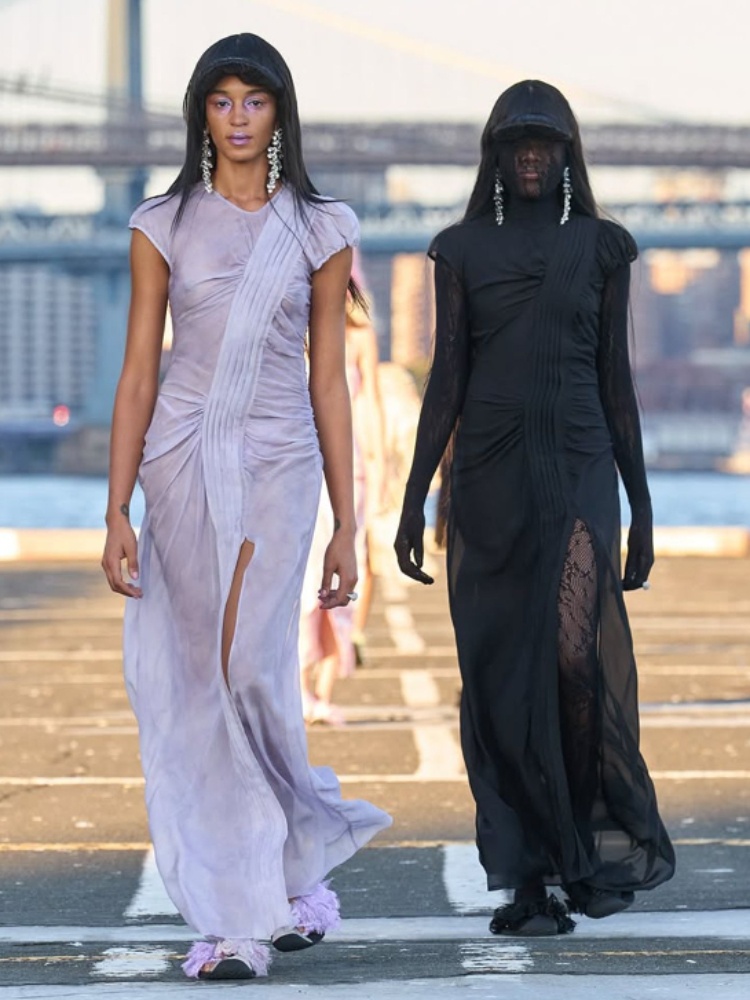
And what cursed times these are. In the midst of war, world politics, and fallen economies, luxury prices still rise, while the creative industry grapples to find stable ground under the weight of its authoritarian hangover. Now more than ever, we can witness a messy reality that is far from the sanitised version we have become accustomed to. Instead of luxurious fur, we’re seeing the use of an element taken straight from the body as decoration for it. Perhaps that’s why designers are abandoning polished pelts and turning to the human body itself for decoration. Collina Strada’s spring/summer 26 collection sculpted hair into caps that clung to the skull. If the hemline index claims skirts rise when economies fall, then maybe hair-as-accessory is our recession indicator, signalling scarcity, chaos, and a willingness to get weird with it.
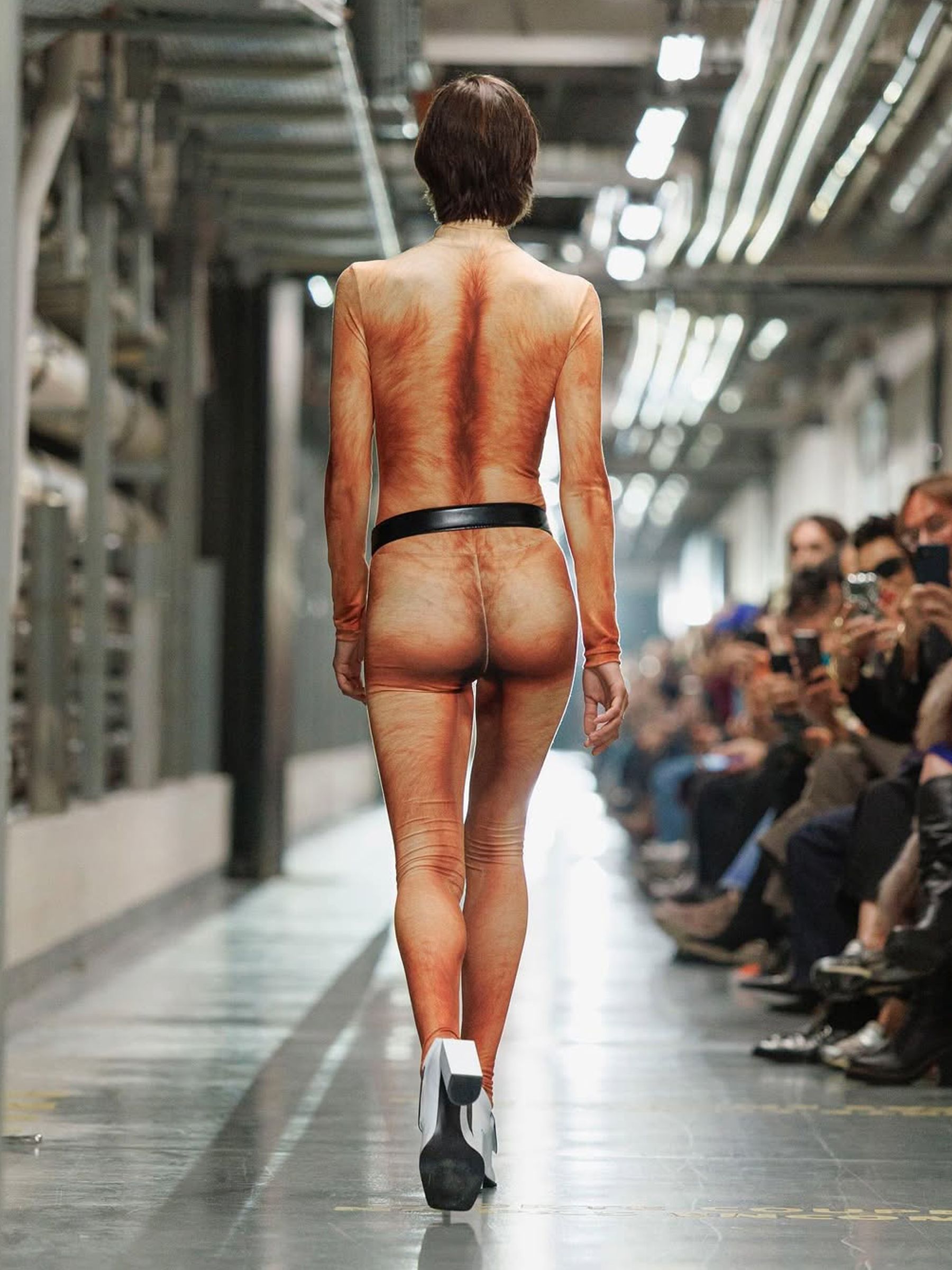
Duran Lantink’s debut as creative director for Jean Paul Gaultier unleashed one of the most polarising fashion moments of 2025. The pièce de résistance—or repulsion, depending on whom you ask—was a bodysuit printed with the image of an extremely hairy nude male body. It was less erotic, more “your uncle just walked out of the bathroom without warning”. The internet recoiled, deeming it grotesque, rather than JPG’s original proclivity for injecting comedic potential into his clothes. But we abhor following the consensus, so the look resurfaced on the 2025 British Fashion Awards carpet courtesy of It-boy Lyas, or Elias Medini. Instagram critic Ayò Òjó, better known as Fashion Roadman said, “Obviously, I absolutely hate this look—I can’t stand it. But Lyes is very smart as a content creator. He knows this will get attention. From that perspective, it’s a 10/10.” And he’s right. Shock still works. Outrage still sells. Hair is the perfect medium for both.summed it up perfectly: “Obviously, I absolutely hate this look—I can’t stand it. But Lyes is very smart as a content creator. He knows this is going to garner attention...From that perspective, it’s a 10/10.” And he’s right. Shock still works. Outrage still sells. Hair is the perfect medium for both.

A hirsute bodysuit at Jean Paul Gaultier spring/summer 2026

A hirsute bodysuit at Jean Paul Gaultier spring/summer 2026

Body hair has been a subject that sees constant dialogue every year. Although we live in much progressive times where body hair, especially in places traditionally considered distasteful, has become more normalised, something about the Lantink bodysuit triggered genuine discomfort. A hairy armpit on a woman can be framed as political. A shaved chest on a man can be called metrosexual. A deliberately grotesque hairy print, however, draws a different reaction. Not prudishness—we’ve seen worse—but a kind of existential squeamishness. Like the uncanny valley but for follicles.

But there’s more hair-centric discourse for one year. Kim Kardashian launched a merkin. Yes, a luxury pubic wig, into the cultural ether. As somebody who influenced an entire era and world population to reject 2000s skinny in favour of the BBL, Kim K’s focus on pubic hair is almost prophetic. Is the full bush getting a rebrand as erotic luxury? And what happens to us laser-smoothed women, slick as newborn babies from the scalp down, who spent years and several GDPs to smooth our bikini lines into airport landing strips? Now we’re meant to buy a wig for the very thing that we paid to remove? The idea of the ungroomed bush in this case is one part a rebellion of the male gaze, a refusal to bow down to regressive grooming codes. The other part, however, is very much a celebration of a bourgeoisie attitude attributed to the concept of lifestyle upkeep. Call it the new money flex disguised as “effortless”.

2025 most certainly reflected a bizarre obsession with hair as a fetishised accessory sweeping the old establishment of egalitarian puritanism from creative rooms. Even haircuts in general became entire personality types. Take the mullet-and-porn-’stache combo: the unofficial uniform of men who say “I’m alternative” but still order a Budweiser at their most-frequented dive bar. You know cultural tides are shifting when men stop returning from the salon looking like freshly shorn street cats and instead begin insisting on “intentional layers”. Or the artsy baddie archetype, identified by the length of her microbangs. My best friend Lisa, who clung to her platinum bob through unemployment (she does have a job now), heartbreak, and a full pandemic, suddenly woke up and chose chaos. Specifically, a pixie mullet. And honestly? It’s the most accurate 2025 energy I’ve seen.

If a girl got a new drastic haircut, it’s probably the end of his timespan for wriggling back into her life. She has let go and moved on. But this year, there have been fewer chops and more remodels. Hair is not just decoration but also diagnostic, revealing our crises, coping mechanisms, and plot twists. According to Chinese astrology, it’s also the year of the snake, a time of great shedding. But shedding only shows you your true identity when you take along the lessons you have learnt on the way, as opposed to covering the cracks. In a world where everything feels slightly fraying—geopolitics, the economy, our attention spans—hair has become the most honest medium we have. Messy, strange, symbolic, ungovernable.

Which brings us to the real point: we are collectively abandoning this antiseptic fantasy of perfectly groomed, glossy manes and spotless bodies. The era of sanitised beauty, of filtered, polished, poreless perfection, is losing its grip. If the 2010s gave us wind-tousled blowouts and the 2020s gave us hair oiling tutorials, then 2025 feels like the era that finally asked: what if we stopped pretending to be clean and let the chaos speak instead?

The Nod Newsletter

We're making your inbox interesting. Enter your email to get our best reads and exclusive insights from our editors delivered directly to you.