



Food29 Jan 20265 MIN

Every three months, Bengaluru’s Nila changes its menu 

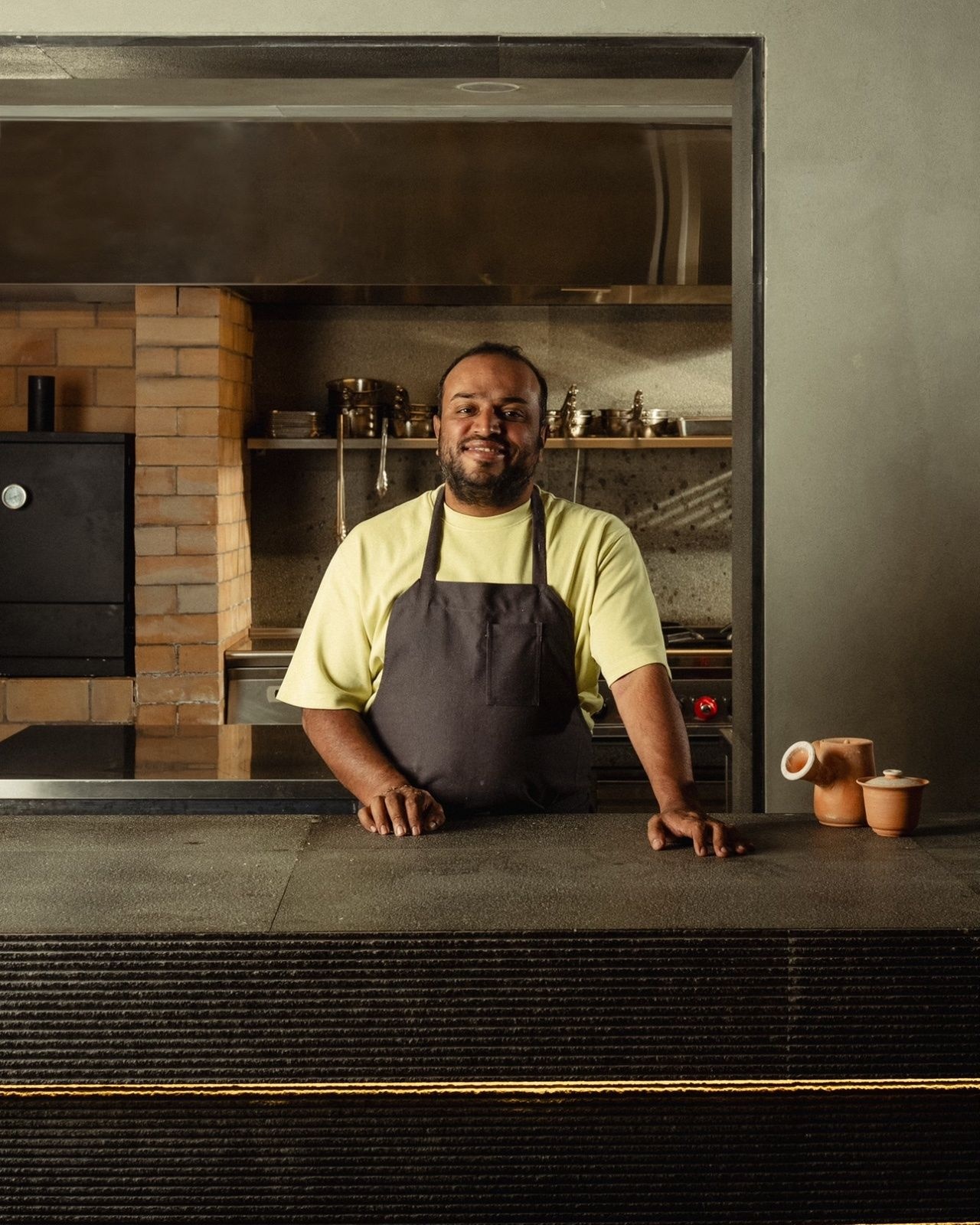
Chef Rahul Sharma’s new restaurant brings you a taste of a different Indian region every few months. First up: Nagaland 

Image

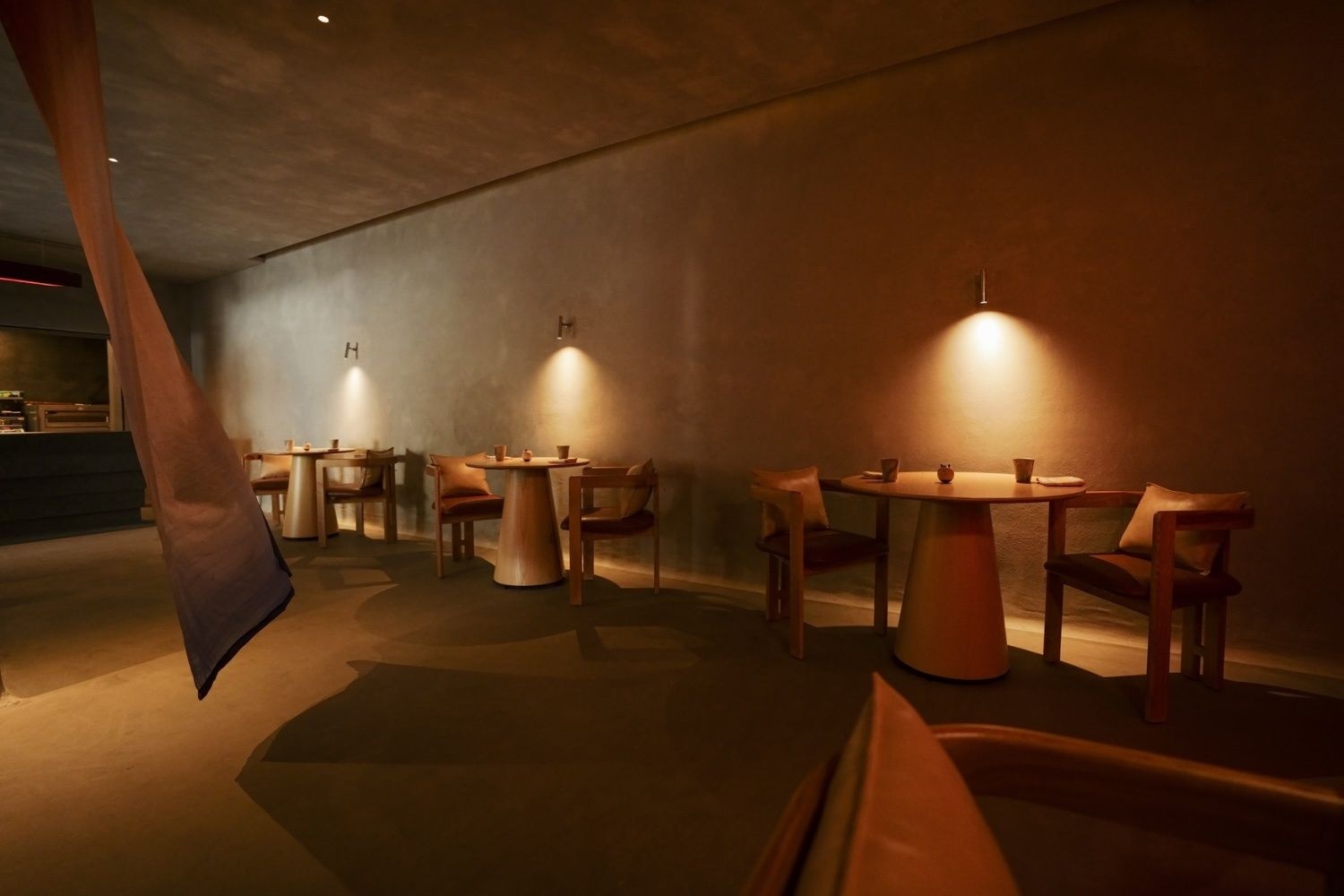
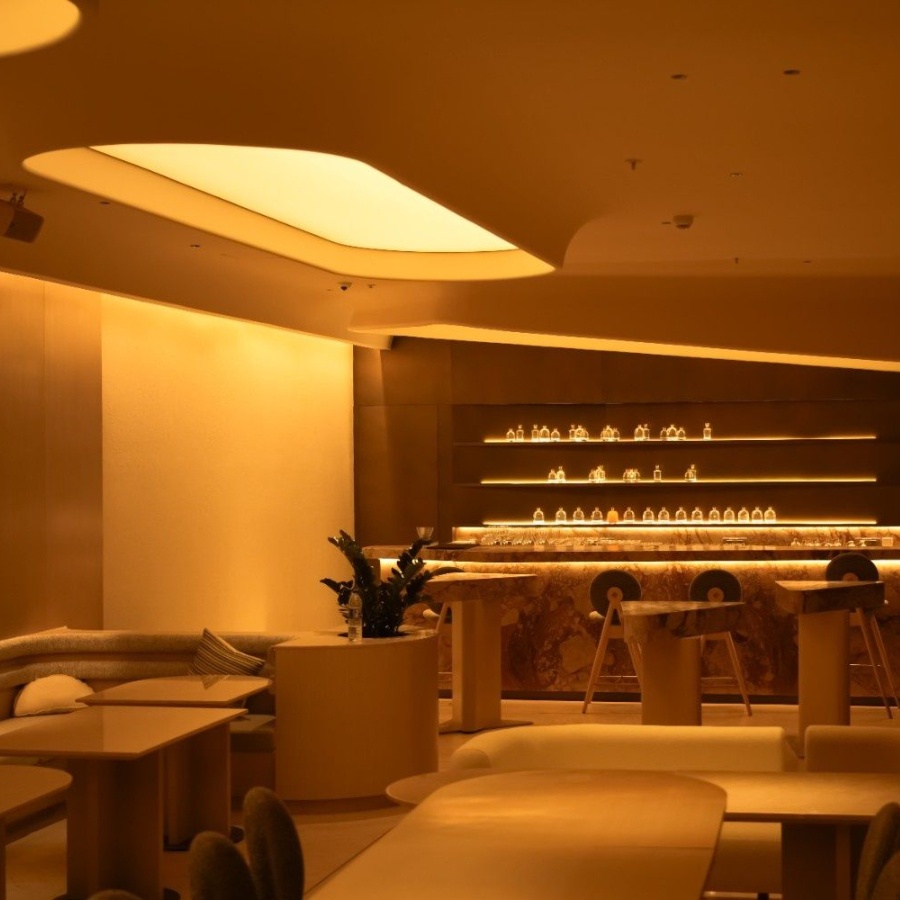
Nila’s calming interiors are designed by Prachi Joshi’s interiors studio, Designworx

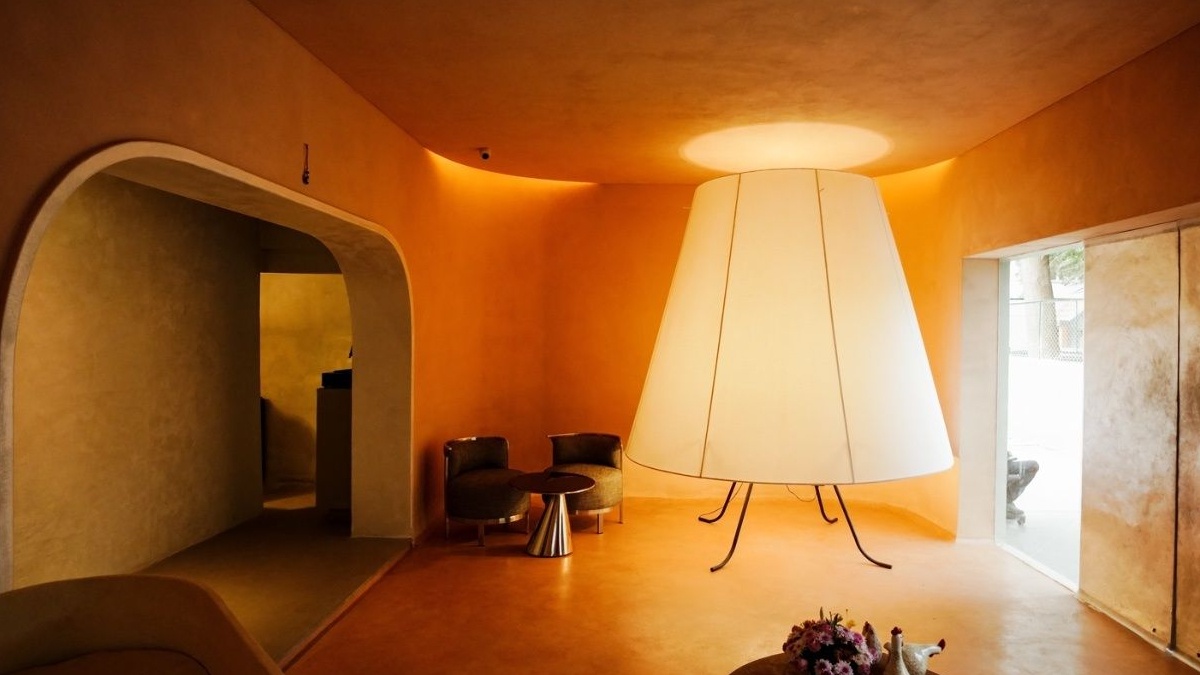
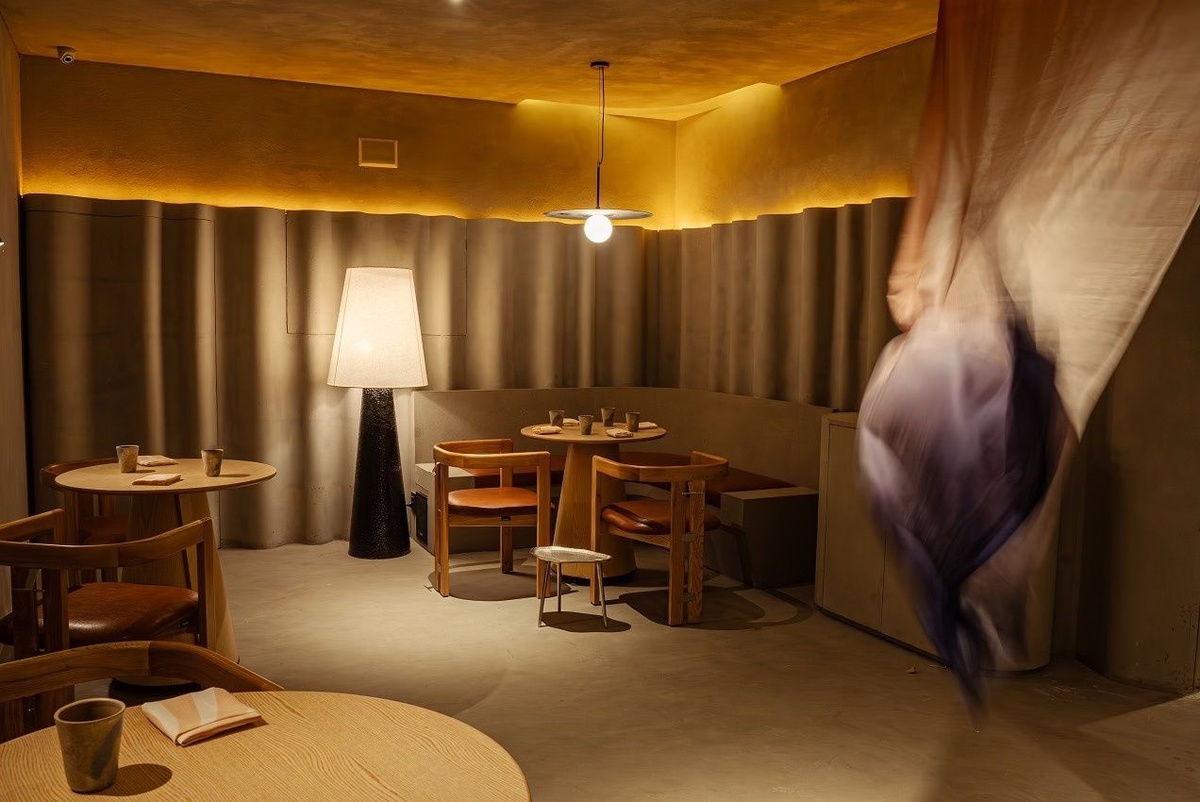
A spa-like calm hits you the moment you step into Nila, Bengaluru’s newest fine-dine outpost. The inside holds a soft, Scandinavian dream: cool neutrals colour the corrugated walls, demanding a caress as you walk past. Crafted by Prachi Joshi’s interiors studio, Designworx, the 24-seater urges you to leave the rush at the door. The circular tables and warm wooden chairs invite you to sink in. This is punctuated with statement lighting that will undoubtedly fill Instagram feeds in the weeks to come. Picture an old-style lamp shade—yes, the one that looks like an inverted umbrella—but blow it up to run from floor to ceiling. 

Perhaps it’s the eccentric proportion, or the James Turrell-like mood in its entirety, but the restaurant exudes an otherworldly quality that’s far separated from the chaos we live in. Right on cue, chef Rahul Sharma reveals that his venture is titled Nila, not for its Hindi translation to ‘blue’ but its Tamil meaning, which is ‘moon’. Don’t jump to conclusions yet; the language isn’t telling of the food. Giving us a tour, Sharma explains that the restaurant serves up a 12-course cuisine-agnostic feast that celebrates how culturally diverse India is. 

Why the moon, though? “Almost every 250 km, the kind of cooking oil used in India changes; even the language differs,” Sharma explains. “Despite all the differences, most Indian cultures have festivals and celebrations that centre the moon; it ties us together.” It also becomes the ideal blank slate to present the restaurant’s ever-changing menus—every three months the chef will dream up a new tasting menu inspired by a different region of the country. He emphasises that it is terrain, not a state or a city, that fuels him. 

The first menu is an ode to the dense forests and many tribes of Nagaland, influenced by the chef’s years of travel to the state and attuned by a final team trip. “We visited Nagaland and ate absolutely everything to understand their ingredients,” Sharma tells me. “Even though the internet has opened borders across India, people still don’t know how to cook with north-eastern classics like bamboo or anishi (dried colocasia leaves).” The premiere offering is then a chance to bring these flavours to the forefront. 
A similar attention to detail will inform the menus to come, which promise to spotlight backwaters, oceans, mountains, and more. Interestingly, Nila is Bengaluru’s second new opening that offers a rotating menu. The Hood, located a quick drive away, also brings a fresh neighbourhood to your plate every quarter. In a city where people crave novelty in every bite, perhaps this innovation keeps things interesting. But unlike other hyperlocal restaurants, Nila doesn’t attempt to serve authentic location-specific cuisine to diners. Instead, the menu focuses on ingredients that are native to the region, in this case Nagaland’s black rice, the local taro, and the persimmon, among others. 

The chef experiments with, innovates, and reimagines existing flavours to combine them in a never-seen-before way. This promise alone is exciting but more so with Sharma delivering it. The chef has sharpened his knives at world-renowned restaurants, including Copenhagen’s three-Michelin-star holder Noma. If you’re familiar with Jeremy Allen White’s The Bear, you know the chokehold that name has over the bougie culinary world. 

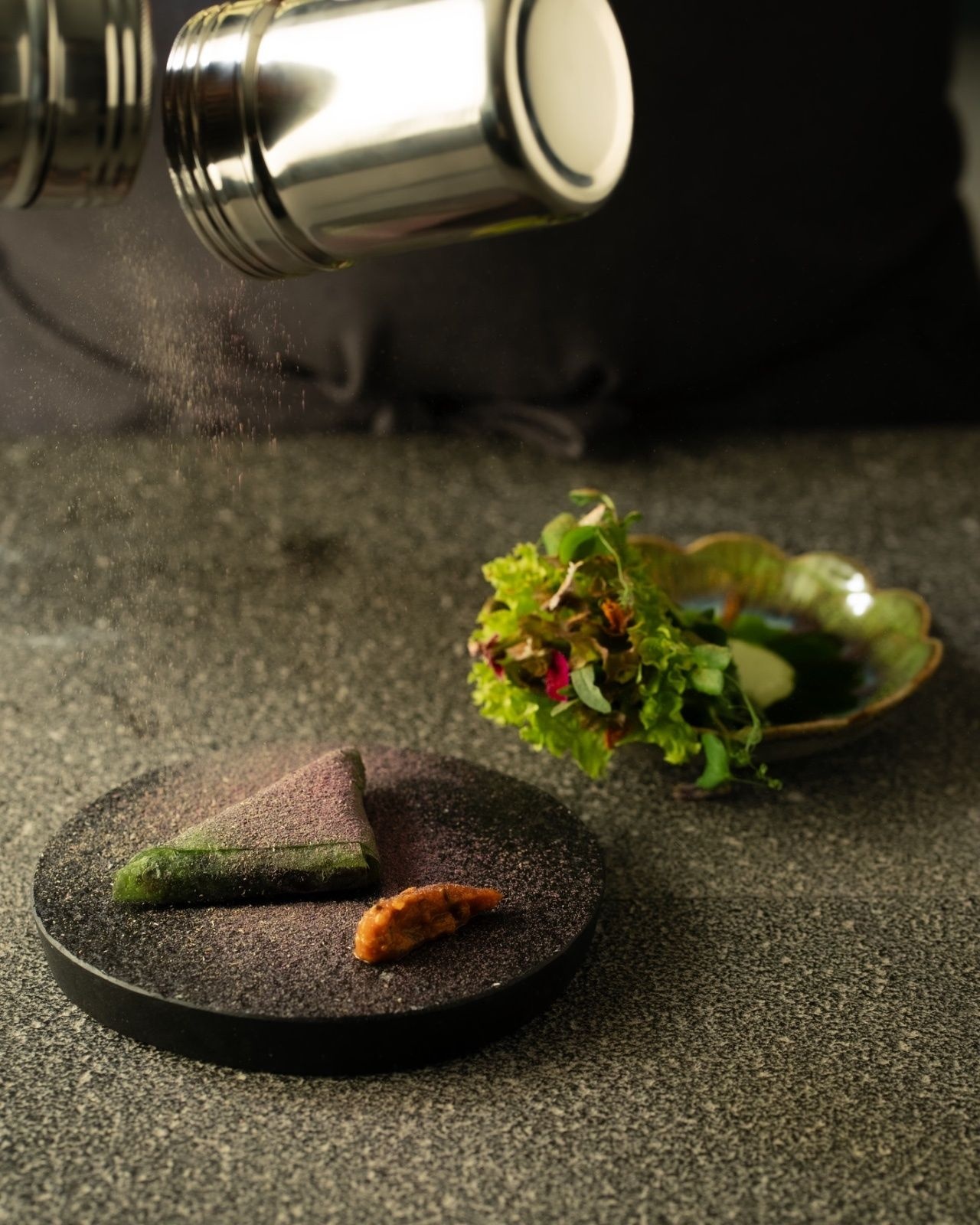
My friend, who is my plus-one for the evening, and I are acutely aware of this and understandably have stratospheric expectations from our meal. Sharma brings out the first course, black rice momos, on charcoal-coloured platters, explaining that the black rice, the native Naga ingredient, is wrapped in house-made tapioca skin. Surprised by the lack of cutlery on our table, I ask the staff for two pairs, thinking this must be a teething glitch. 

But he reassures us this choice is intentional; most of the small plates are best eaten by hand. This becomes the first glimmer that Nila’s approach to fine dining is not intimidating or formal; you don’t have to expertly pick between three- or four-tine forks to reveal your status. It’s more chill. The flavours embody a similar warmth. 

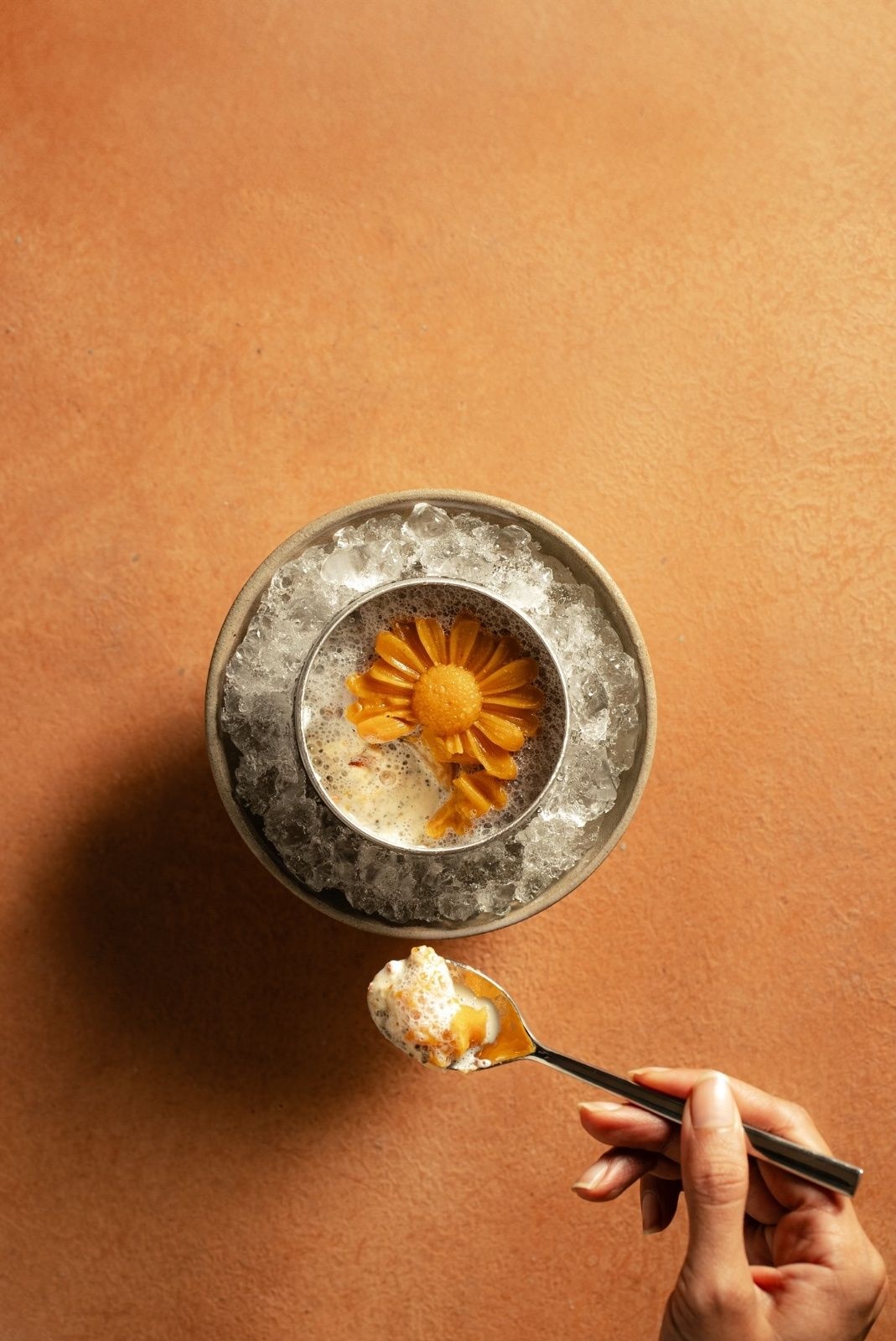
Take the tree tomato custard, where the GI-tagged tree tomato is roasted into a sauce and shaped like a sunflower. It’s then placed over a bed of foamy cheese custard and blended with perilla seeds to create a piece of art that settles on your tongue with salty, tangy familiarity. Sharma adds, “Perilla is now seen as a superfood around the world, but it has been popular in the north-east for ages.” 

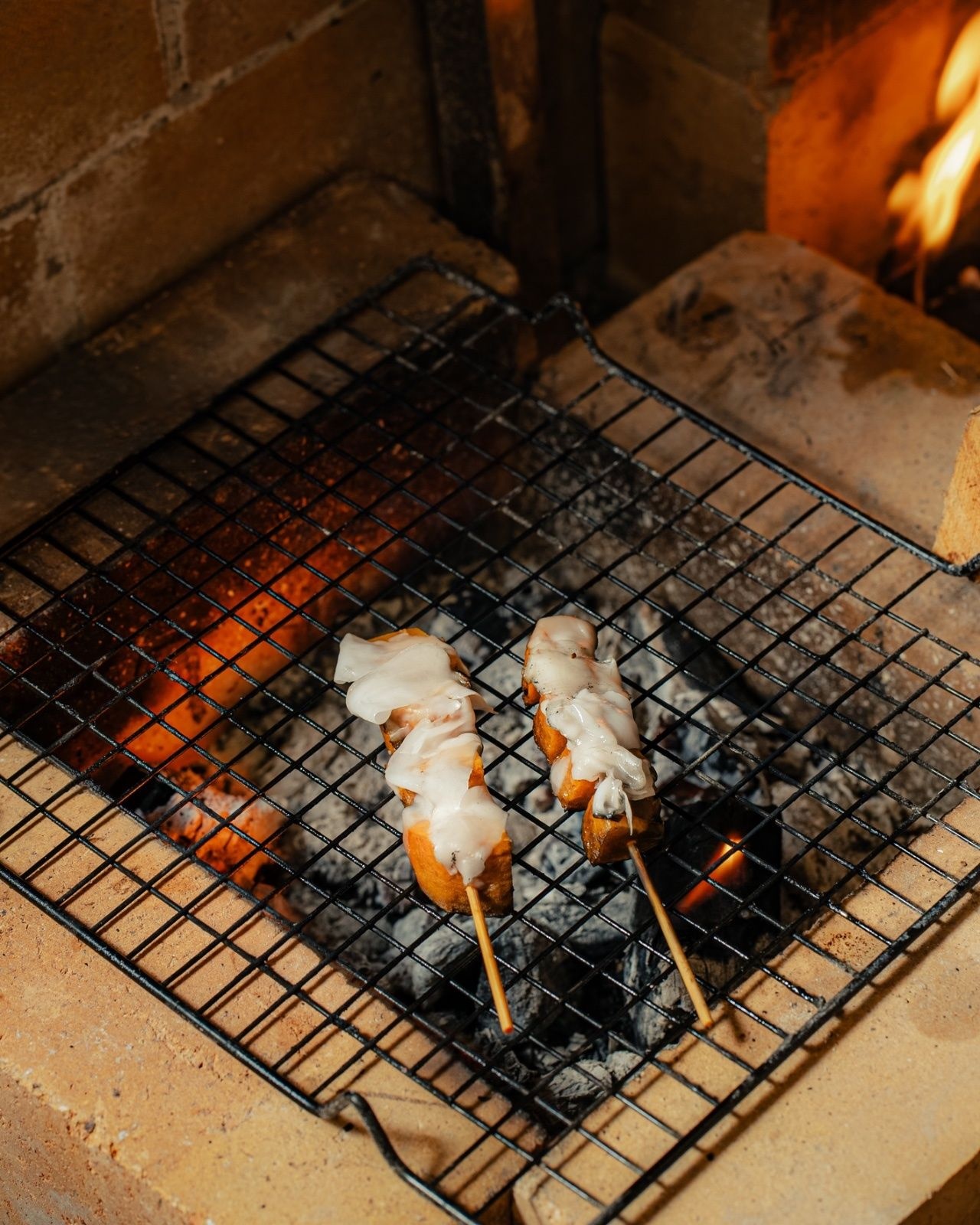
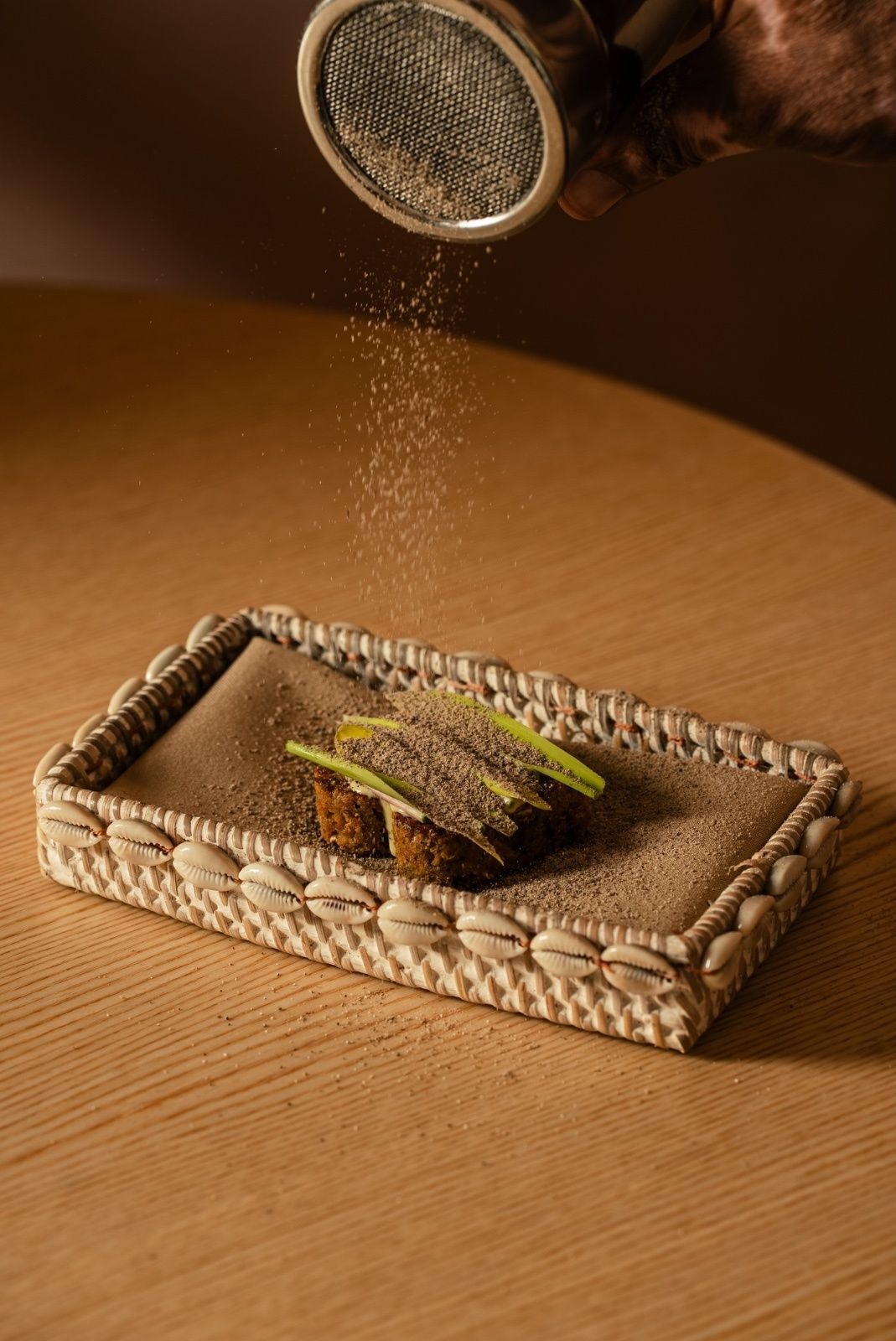
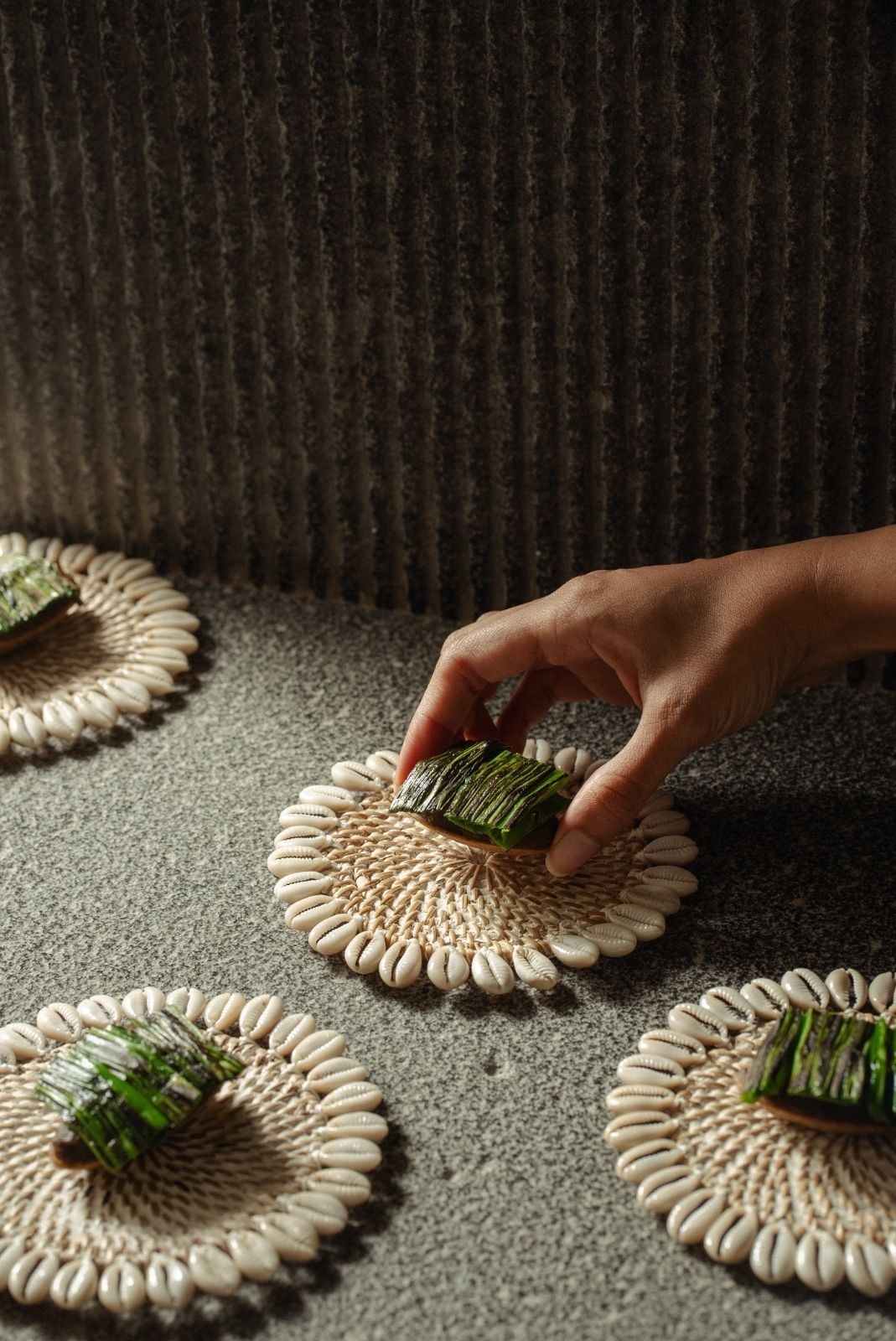
Meanwhile, the pickled persimmon kebab comprises 30-day fermented fruits layered with coconut malai (or pork larder), bhut jolokia (fondly called Mao Market chilli), and onion pickle. One bite and you’re transported to the chilly hills, letting the smoke and sourness fill you with heat. Among my favourites from the evening is the jewel corn toast, primarily for how Sharma explains it: “The jewel corn is unique to the region because yellow and purple corn grow on the same plant. We’ve made corn bread with a corn custard on top; the sticks you see are young corn leaves. We used the purple corn to make snow,” he says, dusting lavender magic on each slice. I could (and would) break into the kitchen for more bites of this gooey, golden goodness. 

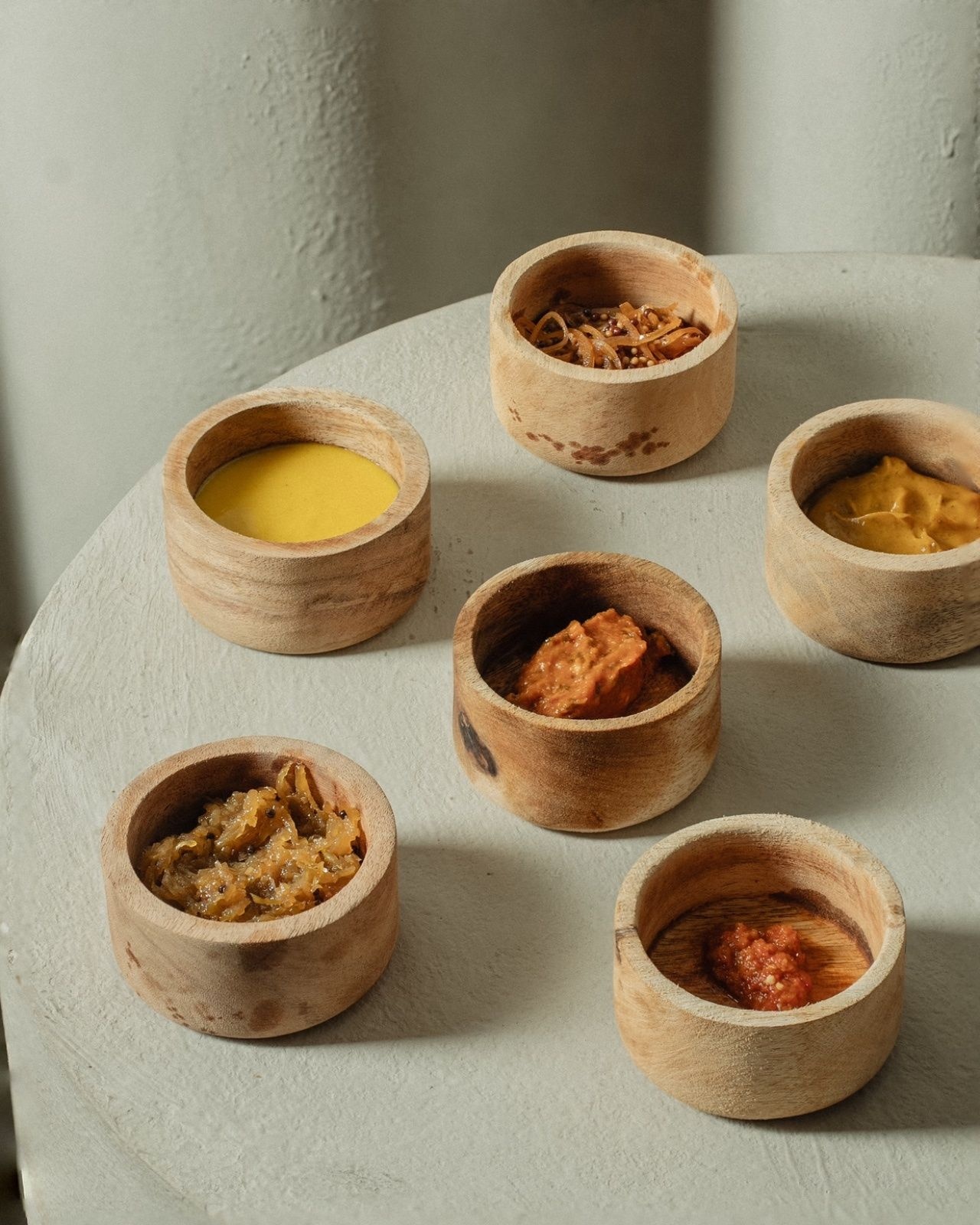
The mains arrive with as much theatre. The staff bring out a tray of house-made, twice-fermented bread with a side of five condiments ranging from extra-spicy Naga chilli chutney to caramelised onions. Then bowls of aromatic white and red rice are brought out. “If you think of any Indian meal, irrespective of the culture, there is bread, a bowl of rice, and something to dip in. We have retained that,” Sharma says. 

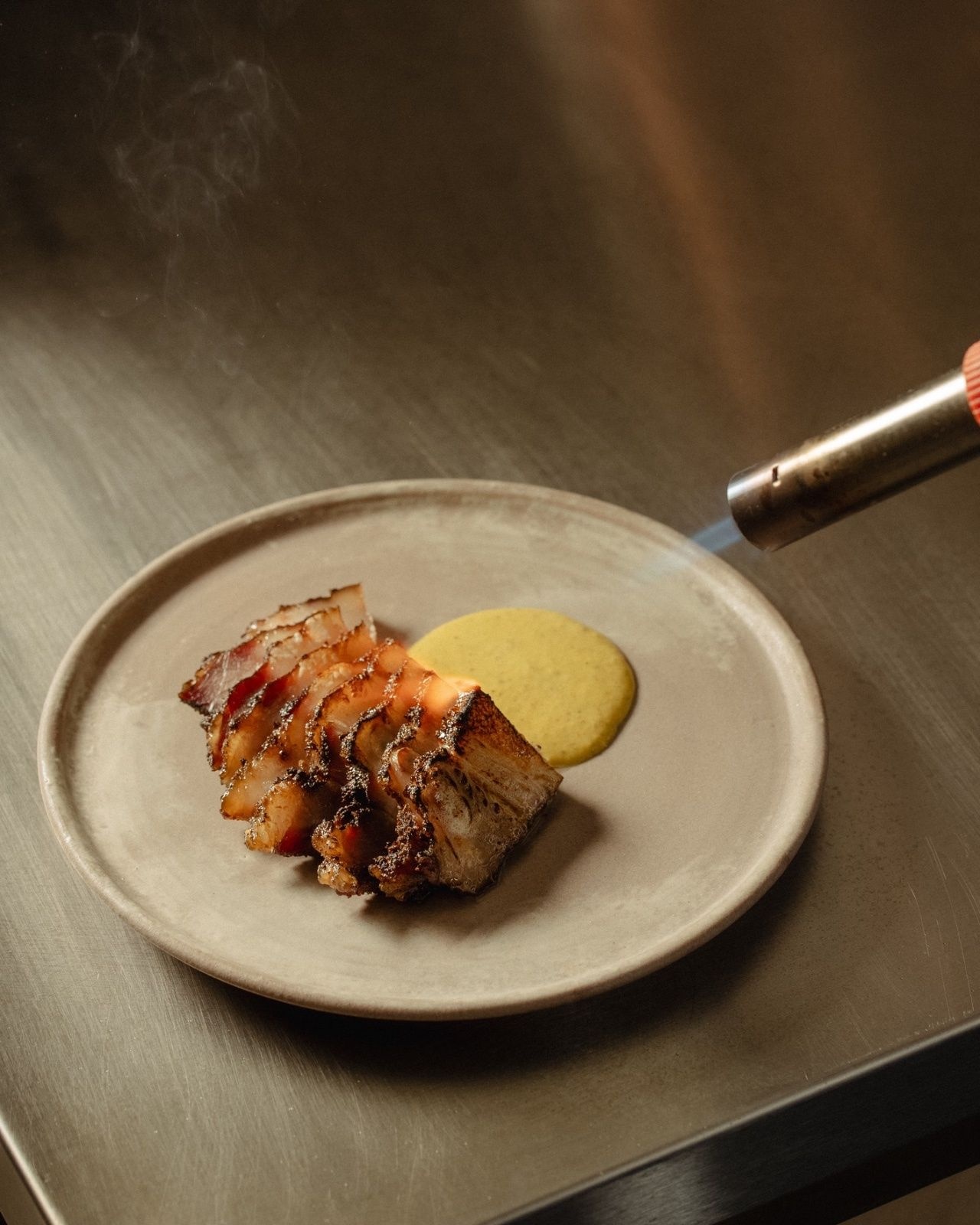
Once the classics are plated, the more innovative dishes make an entry. There’s roasted chicken (or squash) cooked with anishi and charred mustard leaves. There’s also smoked Naga pork served with turmeric butter. But the black wheat noodles are clear scene-stealers. Boiled in bamboo broth and served with a version of Chinese XO sauce made from fermented bamboo, the concoction is rich, umami, and experimental.  And just the right segue into the sweet phase of the evening. 

At this point, my friend and I were equally surprised by how satisfied and stuffed we were, a pleasure that is often rare in fancy tasting menus with pea-sized portions. In all honesty, I’m guilty of grabbing a plate of momos after the most expensive sit-down meals—rest assured, that is not a worry at Nila. By the time we arrived at the breathtaking Sichuan peppercorn ice cream with malted ragi mousse (yep, no jokes!) we were driven by gluttony, not hunger. The spicy-citrusy peppercorn numbs your tongue just as the darkness of the mousse rescues it, a delicate dance that the chef gets just right. 

When we entered, Sharma mentioned he measures a review not by what you say to him but how much you recommend a place to the people you love. A shock to no one, arriving at the last dish—a caramel Berliner, the added goodbye course and the only non-Naga serving—my plus-one and I already have a verbal list of everyone we have to bring to Nila. Mind you, the dishes here are not comfort food. It may not be a craving you have at 2 am on a random Wednesday. But it is undoubtedly the meal you remember for years to come. It’s like watching the art and science of flavour play out before and for you. It’s an all-out treat for your tastebuds. More good news? Sharma is awaiting a liquor license and soon enough the first floor will double as a wine and cocktail hang. 

Meal for two: ₹9,000 + taxes for 12 courses 

Timings: 7 pm onwards; open Tuesday to Sunday 

Address: 9-1/2, Cambridge Road, Halasuru, Bengaluru

Reservations: Book here

The Nod Newsletter

We're making your inbox interesting. Enter your email to get our best reads and exclusive insights from our editors delivered directly to you.