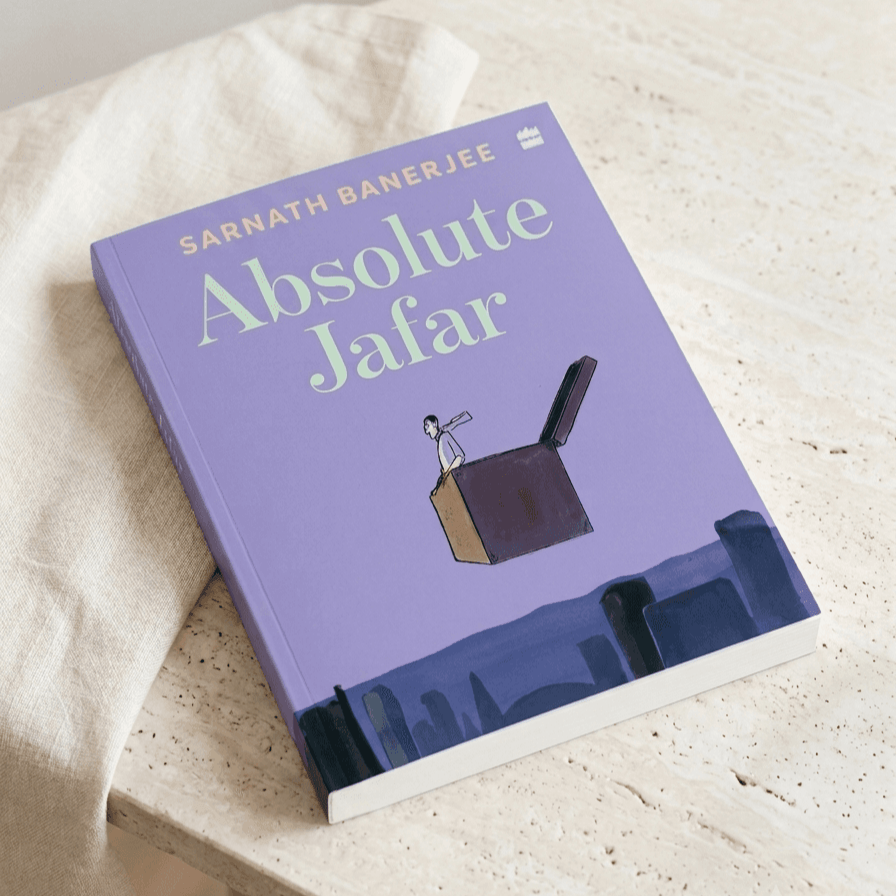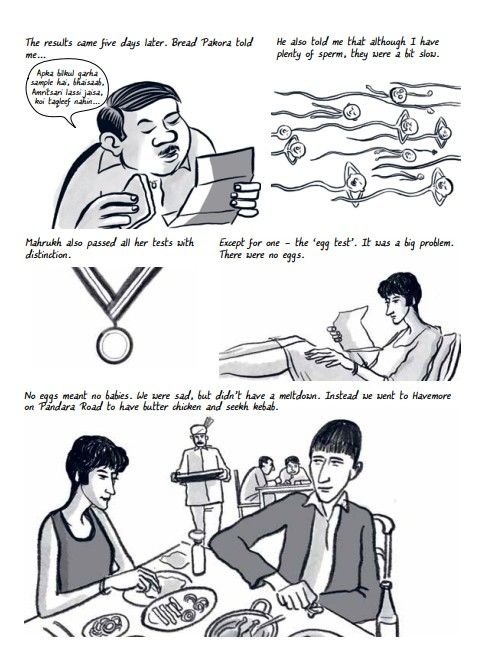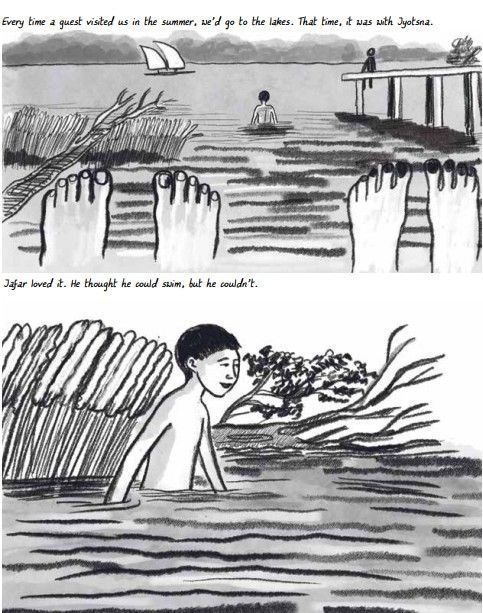




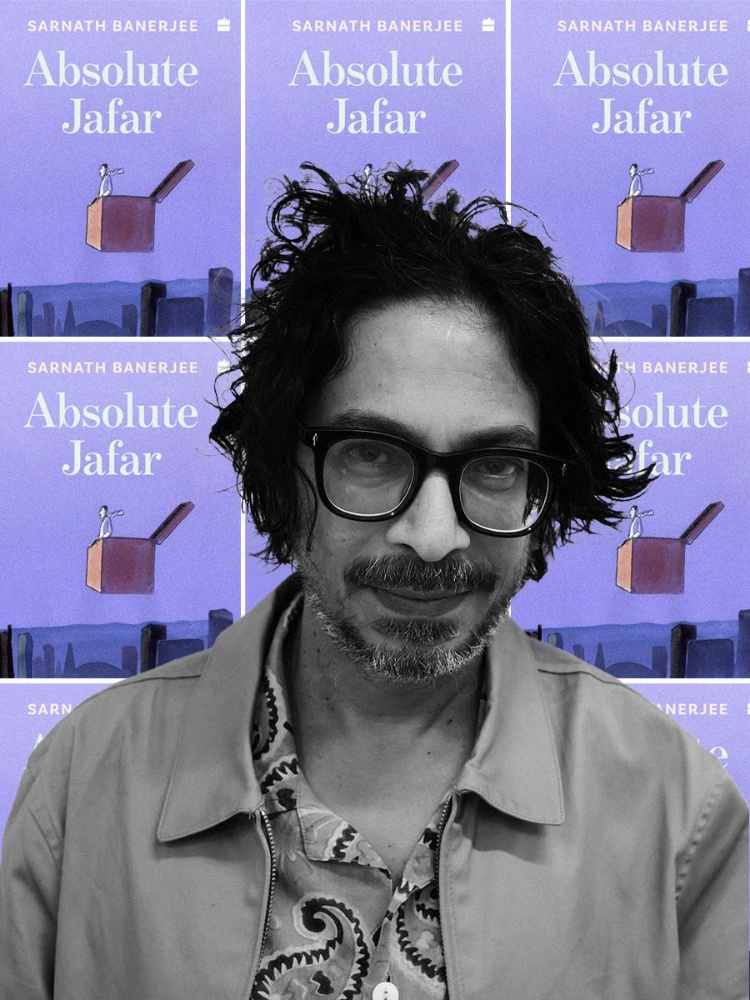

Graphic novels have always felt like the overlooked middle child of the literary world. They’re often dismissed as children’s books or treated as something less serious than a novel, when, in reality, they ask readers to slow down in a way few books do. Every page is both literature and artwork. That is especially true with Absolute Jafar, Sarnath Banerjee’s latest graphic novel. Moving between Delhi, Karachi, and Berlin, the book follows Brighu as memories, friendships and family histories blur into stories of migration, belonging, and the people who shape us. The titular Jafar, Brighu’s son, appears much later in the narrative, but his presence anchors the entire book.
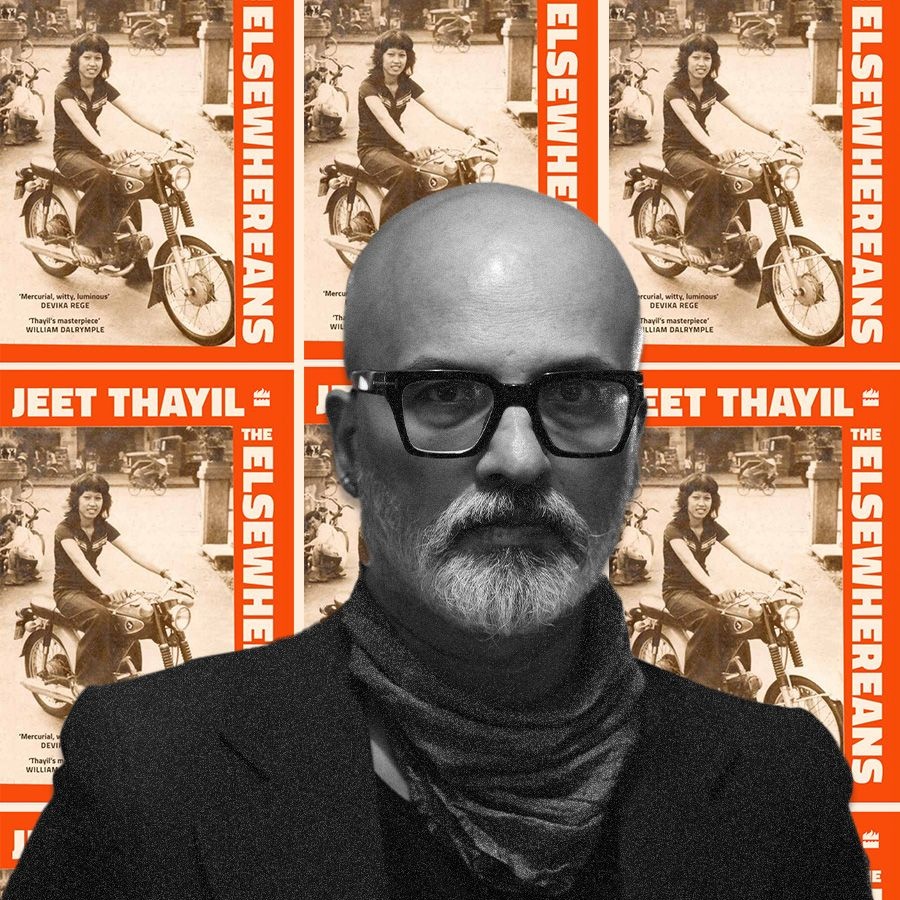
When I caught up with Banerjee over Zoom, it felt fitting that we began somewhere else entirely—me in Delhi and him in Berlin. Both of us having left Kolkata years ago, we slipped almost immediately into reminiscing about the city. From there, the conversation wandered to artist Anup Mathew Thomas’s exhibition at daadgalerie that Banerjee had attended the previous evening, where he’d run into Jeet Thayil. We found ourselves talking about Thayil’s The Elsewhereans, one of my favourite books from last year. It struck me that both The Elsewhereans and Absolute Jafar resist belonging to a single place, moving fluidly between cities, memories, and generations in search of an idea of home that always seems out of reach.
Like his peripatetic self, Banerjee barely stayed in one spot during our conversation. He wandered from the kitchen to his workspace, where giant canvases leaned casually against the walls and sketchbooks lay scattered across tables. Every few minutes he’d disappear off-screen, only to return holding another book he wanted to show me, enthusiastically flipping through pages of The Story of the Stone or one of his beloved César Aira novellas.
It wasn’t long before those stories circled back to Absolute Jafar. While the book isn’t autobiographical, its emotional centre is deeply informed by Banerjee’s relationship with his teenage son, Mir Ali Banerjee. As he spoke about co-parenting, the endless school runs that once structured his days, and the quiet rituals that now feel precious in hindsight, it became clear that his idea of home has less to do with an address than with the lives lived inside it. “When people ask me what home means,” he said, “I think less about a physical place and more about the geography my son and I shared.” Below, excerpts from the interview:
You’ve lived in Delhi, Kolkata, London, and Berlin, and you’ve spent time in so many other places. What does home mean to you now?
Home has become an increasingly confusing concept for me. There’s this phrase, “the cold dread of home”, and I’ve always found it fascinating. Home is supposed to be the place where everything is familiar, where you feel safe, where things are supposed to be alright. But that’s not always true. Home can also be the place where you’re judged, where relationships become difficult, where abuse happens. Some people even end their lives in their homes. So, this romantic idea of home has always felt too simple.
Migration complicates it even further. Imagine the building across from your childhood home gets demolished. Suddenly the tree you always looked at, or the cemetery outside your window, disappears forever. That loss can feel more devastating than moving countries.
For me, London also feels like home because that’s where I studied and became an adult. Every street there carries memories. At the same time, when I visited recently, it felt incredibly foreign. It had become prohibitively expensive, everything was optimised, digitised, streamlined.
Berlin still has communities. People meet in parks, everyone cooks, everyone brings food. One of the beautiful things about migration is that everybody learns to cook because cooking becomes survival during long winters. Every immigrant ends up becoming a fantastic cook. I’ve lived here [Berlin] for 16 years now, but ever since I moved I always imagined I would eventually leave. It’s only over the last two or three years that I’ve started feeling a little at home. My son was born here—he’s 13 now—so there’s a sense that I belong to Berlin because he’s here. His mother is here too. But home is a complicated idea.
One of the strange things about migration is that you sometimes feel more foreign in the place you’re originally from than anywhere else.
The first half of Absolute Jafar almost feels like a love letter to Delhi. When you return, what are the places you always find yourself going back to?
You have to become a tourist in your own city. That’s how cities become magical. Even your own neighbourhood can suddenly feel enchanted if you walk through it with fresh eyes. I love the older monuments, of course. Purana Qila, Feroz Shah Kotla, Lodhi Gardens. Those places always pull me back. But I don’t necessarily go there to hang out anymore.
Instead, it’s often the ordinary places that stay with me. Panchsheel became one of those places after I moved there. There’s a little round market opposite the old cinema complex. It always felt like a completely self-contained universe. There was a dhaba, people selling counterfeit sunglasses and phone covers—tiny shops that never seemed to change. I always felt like everyone there lived entirely within that little ecosystem. Delhi is full of these self-contained worlds. There’s also this elderly couple who still run a tea stall near a garage. They’ve probably worked together for decades. He makes the tea, she boils the milk, and the way they move together is almost like watching two classical musicians performing in perfect synchronisation. Those are the moments that stay with you. That’s what makes Delhi magical for me.
Which brings me to the title. Most of the novel is centred around Brighu, yet the book is called Absolute Jafar. Why?
There are many ways of answering it. One way is to think about Citizen Kane (1941). You spend the entire film wondering what “Rosebud” means. It only reveals itself at the very end, but it’s quietly organising the emotional structure of the whole film. Jafar works similarly. Interestingly, ‘absolute jaffa” is also a cricketing term. It’s an unplayable delivery. I didn’t know that until someone explained it to me, but I loved the metaphor because it suggested something mysterious, something impossible to fully grasp.
I also think novels often become deeper than their authors. Sometimes you write something that exceeds your own understanding.
One of my favourite chapters was ‘Jaisalmer House’—it was incredibly funny—but throughout the book you also move effortlessly between Bollywood, folklore, mythology, history, and pop culture. Where does all of that come from? Are these stories you grew up with, or are you simply someone who consumes everything?
I grew up in what I’d call a very Bengali childhood, where your brain becomes a warehouse of completely unnecessary information. You’re constantly absorbing things, stories, songs, little bits of history, odd facts, without ever thinking they’ll become useful. You’re just collecting them. Alongside that came friendships. Before social media, your friends were your greatest cultural recommendation engine. They told you which books to read, which music to listen to, which films to watch. Someone would insist you listen to Nick Cave, someone else would recommend an obscure writer or a forgotten record. That’s how culture travelled. More importantly, we had boredom. The biggest excitement was knowing that Doordarshan would show a particular film two weeks later. You waited for it. You imagined it before you even watched it. I think not having constant access to information made the imagination much more fertile.