



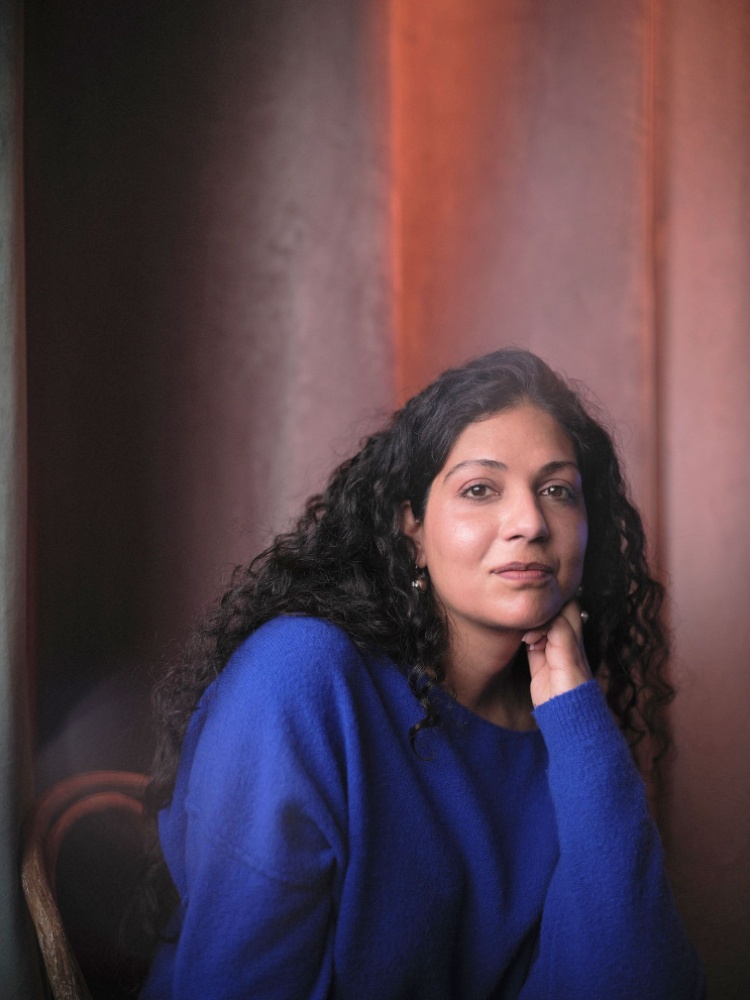

Shalini Adnani is in a rush. As she connects with me on Zoom from her London apartment for our chat, it’s six hours until her flight to Santiago in Chile, where she grew up. But before that, she has to finish prepping for the 83rd edition of the Venice Film Festival, where her debut feature, Our Share of Sand, is set to premiere. Adnani has to ensure all her cast and crew members reach there on time to mark their first major in-person celebration after filming wrapped sometime last year. She also needs to figure out her outfits for the festival, something that she appears visibly frazzled about. And she wants to ensure she gives me enough time for this interview.
In short, on our Zoom call, Adnani is a portrait of every creative on the cusp of a truly defining moment of stardom. Her film is one of the three south Asian titles (the other two being Rubaiyat Hossain’s The Difficult Bride and Anuparna Roy’s Lovers in the Blue Night) in the festival’s line-up this year. It is premiering under the competitive International Critics’ Week segment, which is devoted exclusively to films by first- or second-time feature directors. But in this moment of adrenaline-induced rush and feverish excitement, Adnani is everything her film is not.
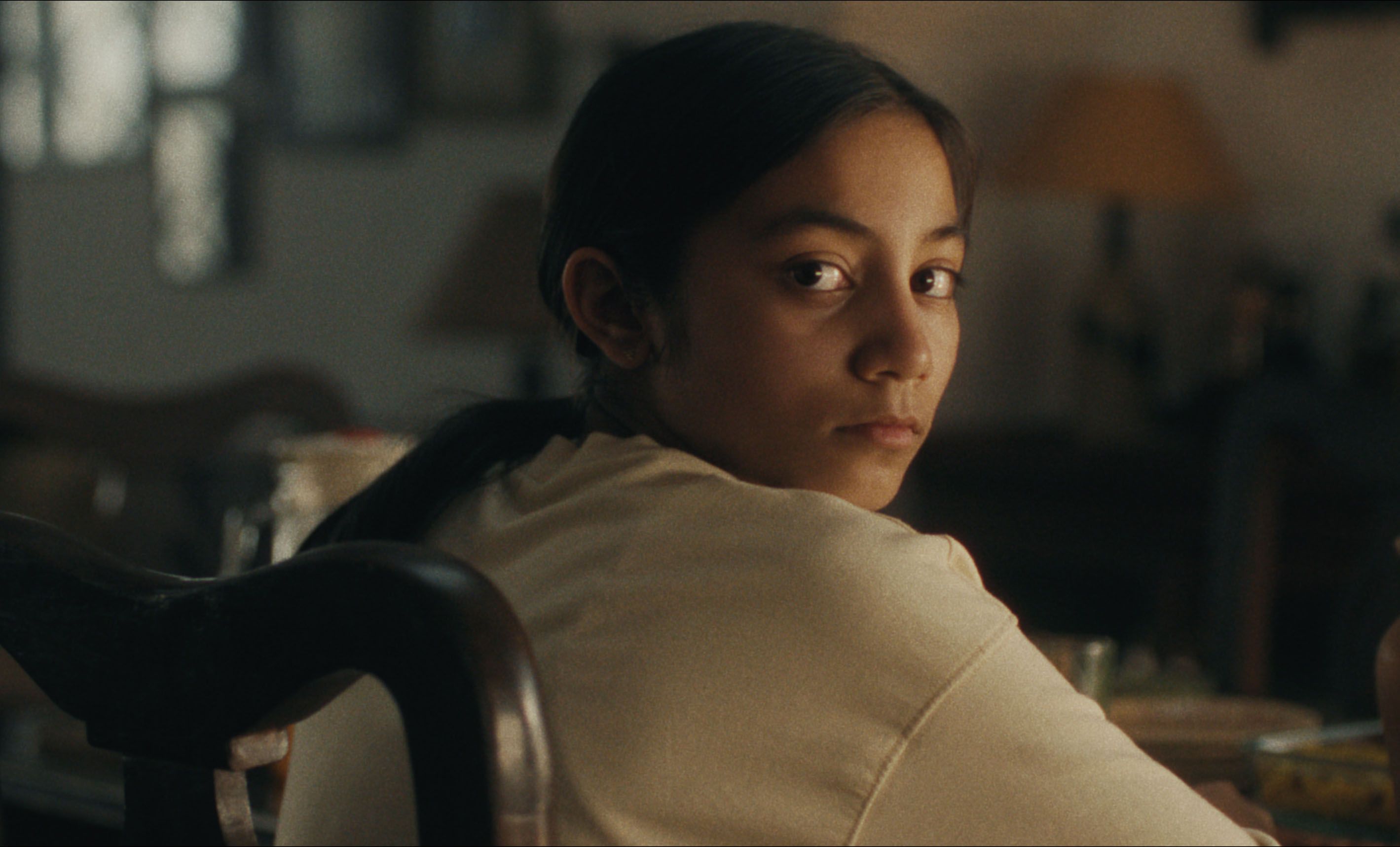
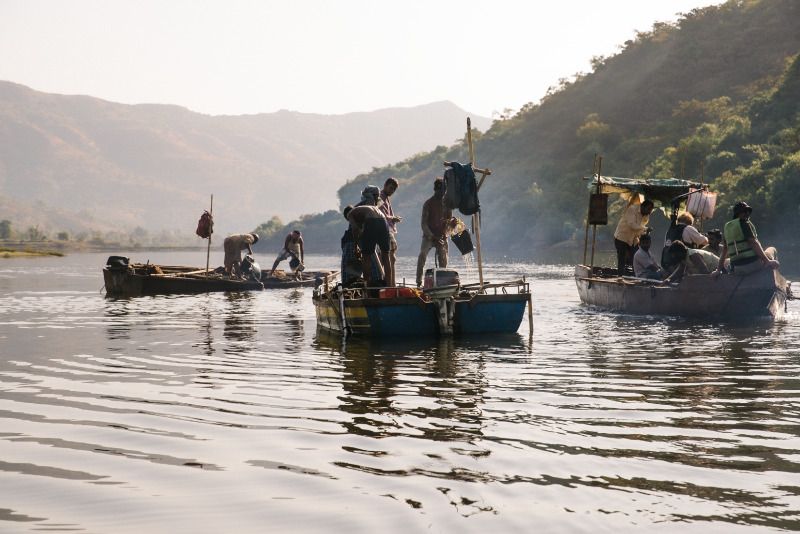
Unfolding with meditative stillness over a calibrated 90-minute edit, Our Share of Sand follows the story of London-born-and-bred Maya (played by Maya Mehta, who is the film’s biggest revelation) and her mother Priti (Ellora Torchia) as they find themselves in rural India, surrounded by their father and husband’s (played with perfect ease by Mohammed Zeeshan Ayyub) illegal sand-mining business. Narrated primarily from Maya’s POV, the film’s tone moves from wonder and fascination to suspicion and confusion following an unexpected tragedy, paving the way for a tale that, with utmost nuance, explores morality, class, privilege, and the lies that hold families together.
The film, bookended by fable-like incidents, has a dry sense of humour and absurdity running through it that is reminiscent of Marquez novels like No One Writes to the Colonel and Chronicle of a Death Foretold. Adnani has an innate lyricism to her directorial style and visual treatment that is found in abundance in her 2023 short White Ant, which followed the story of a man (played by Denzil Smith) who is summoned to his village from Mumbai to deal with a termite infestation. But in Our Share of Sand, Adnani pushes her directorial prowess further and comes into her own by deftly crafting a film that juggles multiple genres without ever losing grip over a screenplay that gets edited with the satirical precision of Bong Joon Ho.
Ahead of the Venice premiere, the London-based filmmaker sat down with The Nod to unpack everything from her childhood in Chile to her elevator pitch for this film, and everyone she is looking forward to meeting at the Lido. Excerpts from the interview:
What was the starting point for the story behind this film?
I had an early exposure to sand collection and mining during the summers I spent in India with my extended Sindhi family, which was into construction. But, like all NRI kids visiting home, I was deeply sheltered, with no autonomy to step out and explore things by myself. So, everything I knew about my heritage and about Indian society was just via what was coming in and out of the house. That was the genesis of Maya’s character and the film’s larger story. I come from a family that has undergone the trauma of Partition, so I found a way to embed that in the story as well. I was also keen on exploring the moral ambiguities in this story more than the obvious question of class divide. It was something that had stayed with me since my time in New York working with the Bard Prison Initiative. This greyness of morality was something I was very keen on exploring in my film.
Tell us a little about your childhood growing up in Santiago and your first tryst with magical realism as a genre.
I think there’s a lot of commonality between Latin American and south Asian cultures that needs to be explored through more conversations and dialogues. There are massive Asian diasporas in South America, including a huge Sindhi community in Chile. They were some of the first immigrants to arrive in the 1800s, before even the building of the Panama Canal. Having grown up in Chile amidst the Andes mountains, I am also very attached to the landscape and our relationship with them, and that has visually translated very deeply in the film.
I had an early exposure to the magical realism traditions of Latin America, which, I believe, developed as a way for people to divest from the chaos, violence, and harsh realities of their surroundings. It’s similar to the ancient fables and oral traditions of south Asia, something that has seeped Our Share of Sand as well.
What prompted you to take up filmmaking as a profession?
I studied Politics in university in New York and returned to Chile during the student movement around 2011-2012. I was fascinated with how the students were taking over the institutions and essentially asking for free education. I saw how empowering this movement was and started documenting the movement visually and writing about it. Around this time, an artsy high-school friend invited me to a weekend short film course.
Growing up in a south Asian family, I did not really have much exposure to the world of cinema, but doing this course I realised that this was everything I ever wanted to do, because it captured everything I loved about art. There was this one female art director on the course, Bernardita Baeza. I went up to her and begged her for a job and ended up working in the art department of Archivos del Cardenal, one of Chile’s first television shows about the dictatorship, researching things as minute as bullets under Soviet Russia.
Did you begin directing straight out of university?
After graduating I was working as a designer on multiple projects and really enjoying my stints, until one day I was on set and started freaking out about the colour of a pen. In the moment, I decided I was done with the art department and wanted to write and direct finally.
This is a film that blends multiple genres. What was your one-line pitch for the project?
You are right. It is a film that defies genres. It is a portrait of a marriage, a coming-of-age story, a story about class and nature, about the insider and the outsider, about Partition, and it is also an investigative drama. I wanted to collapse the boundary between the external and the personal and see how the socio-political and natural world outside can affect this nuclear family on the inside. I had always pitched the film as dealing with the complicity that we partake in as humans and families and the tension between familial loyalty and our morals. And it is the registering of this complicity that creates the shift in the story, and it moves from being a procedural to a drama.
How did you work on incorporating the Partition angle as such a crucial and moving strand into the film’s larger narrative?
I believe its incorporation adds a fable-like quality to the film because we encounter it as a story being passed down; that is perhaps the Latin American influence on my craft. I grew up hearing a lot of Partition stories, but every time I heard a story about a woman I figured that it involved jewellery, which I found incredibly empowering. How these women would gain so much autonomy through ownership of jewellery and how its possession and custodianship would give them importance in the family. At the same time, the genesis of jewellery and the extraction of gemstones as a process is a very masculine thing. It is a dichotomy that has always fascinated me and I decided to contrast the extractive sand-mining family business in the film with this story of inheritance and its associated tales of fortune.
The film’s soundscape is an addictively eerie beast of its own. Talk us through it a little bit.
You hear the santoor because I just love it as an instrument on a purely aesthetic level. It is also a strong character element for Priti, because she is an outsider, a diaspora personality through and through and has been uprooted from London and placed in the midst of this sand-mining town. No matter how hard she tries to be rooted, there is a detachment to things around her, which the santoor captures really well. Despite being such a niche symbol of her heritage and culture, it only heightens how far she actually stands from it. Other than that, everything else you hear are pebbles, leaves rustling, trees shaking, winds and rains, which we distorted to give a sense of the looming presence of nature in the film and how much capitalist greed is corroding it.
Maya Mehta, the film’s evocative child protagonist, is a revelation. How did you cast her?
We worked with Lucy Pardee, who did the casting for Aftersun (2022) and is skilled at finding non-actors. Our timeline was tight; I wanted only girls who could speak Hindi. That proved difficult to find, so we broadened and started looking for diaspora kids, even mixed-race ones, who just fit the vibe of the character I had written. We began sending out flyers and targeted swim clubs. Maya, who shares the name with the character and is half Chinese as well, found the flyer and went to her neurosurgeon parents and said she wanted to audition because the character sounded exactly like her. Initially I was sceptical about her, because we had so many more talented kids. But I was drawn to Maya because she had a quiet strength that the other kids did not have. And she could get really angry, which, funnily enough, is an emotion that does not come naturally to south Asian kids.
What were the biggest challenges you encountered through the filming process?
We were working across three languages: English, Hindi, and Marathi. Some of our Hindi-speaking crew didn’t even understand Marathi and vice versa. Getting through those layers of translation was a challenge. Given that this was a film that looked at our very exploitative relationship with nature, it was funny how climate change got to us. Everything on the river was to be shot at the end of our schedule, but because of the unprecedented heat the water levels changed so drastically that we had to reconfigure our schedule.
It is your first time going to Venice! How do you feel?
I am really looking forward to the food I am going to try. I have no idea about what I am going to wear, but I have a feeling it’s going to be magical. I am excited to see everyone together, like Zeeshan and Ellora. We all left the shoot so exhausted, it will be fun to come together and just celebrate this time. Also, Maya has grown up, which will be fun to see.