Chumki always stands out. This morning, she’s in a black-and-red checked shirt over a maroon vest, tucked into faded and fitted black tights. She is shod in slip-on fabric shoes. A black thread with a tarnished Shiva pendant hangs around her neck. Her hair is cropped short; her dark skin is greasy—but without the olive-grey tinge of those who use fairness creams. Chumki isn’t fair, and she doesn’t want to be. She’s never worn a sari, and says she never will. She can’t cook and doesn’t want to learn.
It’s her refusal to marry that fascinates the group most. “In exchange for sindoor and bangles, they hand over hard-earned money to their husbands who drink it away and beat them at night. I don’t want that life,” says the 24-year-old. “I beat up men who misbehave with me. And aunty,” she adds with a wink, “mein ladki ke saath sex karta hoon” (I have sex with a girl)—using the male pronoun in Hindi for herself.
“I watch everything on my phone.” She says she has “put internet” into her phone. She is a typical, phone-first user of fictional content, long or short. Any favourites? I ask
“Oh, many. I like everything where girls fight them back.”
Who’s ‘them’?
“Everyone who hates women but makes a big natak of loving them—mothers, mothers-in-law, boyfriends, brothers, husbands, shop- keepers …”
“You feel most people don’t love women?”
“Yes. They hate girls like me particularly.”
“Why?”
“Because I’m strong. Because I wear shirts and pants.”
Which are your favourite series?
She can’t remember names, just scenes. ‘What’s that one where they say sabka number aayega?’
“Jamtara?”
“Haan, haan, wohi.” She loved it and even tried making mock scam calls for OTPs. Her audience? The morning tanta crowd.
“Also, aunty, I like Golu. Golu ki belt dekhi hai? (Have you seen Golu’s belt?) It’s like mine,’ she says, pointing to her worn faux-leather belt that cinches her faded pants.
‘Golu from Mirzapur?’
She nods.
‘Do you want to be like Golu or Gudiya?’
‘Golu. But I like Gudiya too—the girl who marries her fraud boy-friend and becomes a bigger fraud, right?’
She shows me a video of herself dancing at home, a bottle of Coke in hand. ‘I left it on Instagram,’ she says. ‘Posting’ is not her word. Abandoned near a Mother Dairy booth in the very colony where she works, Chumki was about ten, she says. ‘I hadn’t got my periods yet,’ she adds, calculating the years. Brought to Noida by debt-ridden parents from Gangarampur in West Bengal, her mother battling breast cancer, Chumki was abandoned by the woman who her parents had trusted to give her two meagre meals in exchange for work. No real home; she would squat on a torn mattress in the veranda of the woman’s house, until the day the haraami (her word) dumped her. Sumitra, a kindly domestic worker, found her alone and terrified, and brought her home—warmth at first sight. That was fifteen years ago. Since then, Sumitra has been her mausi-ma, beloved mother figure. Chumki who refuses to be a Sarkar, Ghosh or Mondal, says her adopted family is all she needs. She adjusts her belt, sucks in her tummy, leans back.
“What else do you want to know?” she asks—not rude, but not smiling. She sits legs spread wide. “I will save your phone number as Chumki Tanta?” I say smilingly, explaining I’m writing a book and want to include her story. She looks unsure, but not resistant.
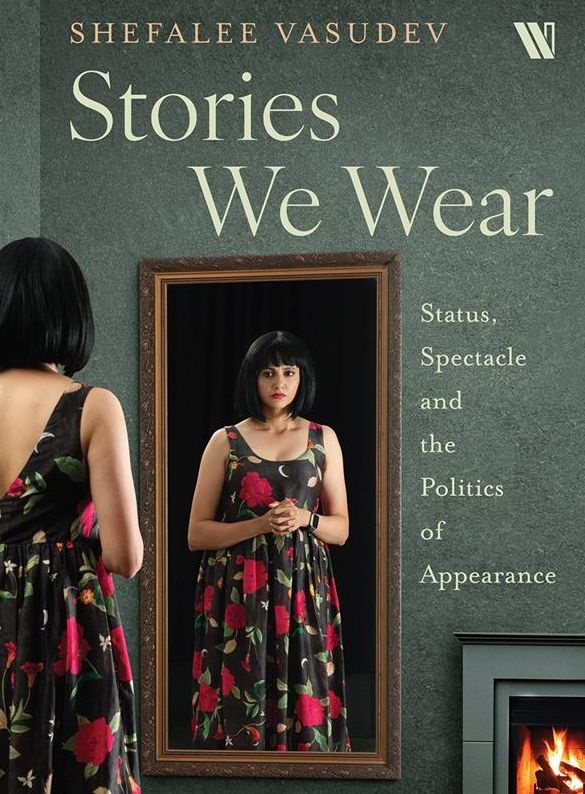
This essay is part of Shefalee Vasudev’s new book, Stories We Wear: Status, Spectacle and The Politics of Appearance, published by Westland; Rs 699