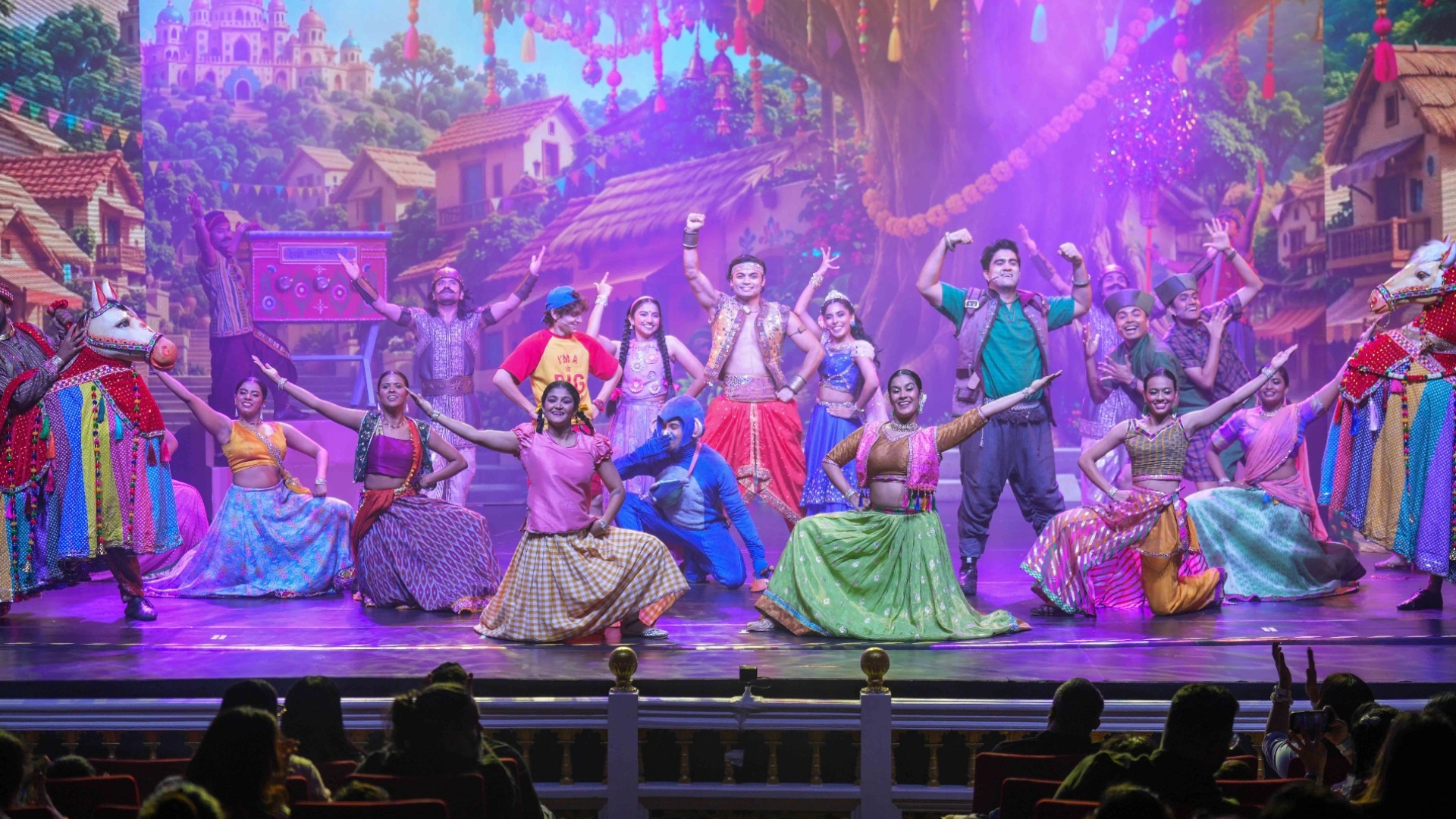
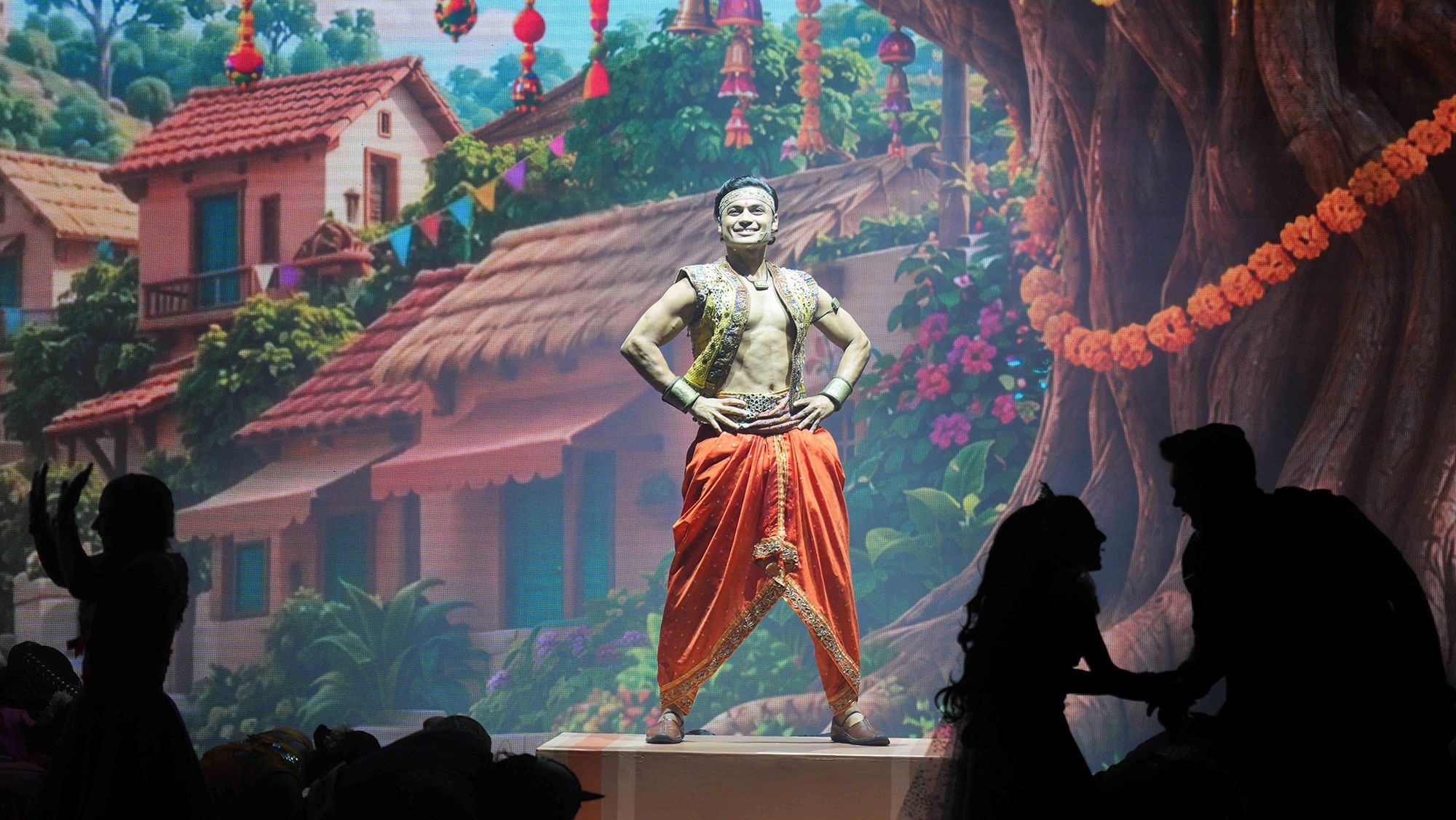
The numbers seem to support her vision. Rajadhiraaj has had over 100 shows since its debut at the NMACC a couple of years ago, which was followed by shows at Dubai Opera and the Jawaharlal Nehru Auditorium in New Delhi. Rajadhiraaj Yatra, a more compact version of the show, has had 38 shows across cities like Ahmedabad, Bengaluru, Surat, Hyderabad, and Chennai. Sardar, which focuses on the years around Independence and chronicles the political maneuverings of Sardar Vallabhai Patel that created one India from over 500 states, has had 20 shows across the country. The latest, Chhota Bheem, has five shows so far in Mumbai, and five more are lined up in the upcoming months. In 2027, they have 100 more shows slated across the country.
Through these three shows, Nathwani connects with audiences across generations, from young children to older adults. Her work celebrates the universal appeal of Indian storytelling, especially among the diaspora. The production house is also behind regional-language movies like Laalo (2025), the highest grossing Gujarati movie, hitting ₹100 crore, and Aakri Sawal (2026).
Over coffee, The Nod talks to her about her biggest production, her proudest moment, and how her children influenced her latest project. Excerpts:
Take me back to the beginning. Becoming a producer was not quite the linear path.
I grew up in Ahmedabad and moved to Mumbai 15 years ago. I started my career at Edelweiss, working in real estate financing, before moving on to my family’s rural financing arm. When Covid hit, I had just had my son [Shivaan, now 7], and then a daughter [Khrisha, 5]. With two kids under two, work life took a backseat. Three and a half years ago, Dhanraj and I launched Neem Tree. We had already launched a music album called Rajadhiraaj a few years prior, and that became a base for us to expand. I remember us talking and realising that we wanted to create something that a family could make an experience out of, bring different generations together, and create wholesome entertainment.
And so, Neem Tree Entertainment was born...
Honestly, we were clueless where to start. We turned to friends for advice and realised there was so much potential in this space. I’ve always found musicals very exciting to watch, but there was a lack of scale here [in India]. No one was investing or focusing on production, and no one was giving the right platform for the variety of stories we have as a country. We wanted to support the traditions and tales of India and also create something that can travel globally and represent our country.
I selected the name Neem Tree—the tree is so deeply embedded in the Indian landscape, both literally and figuratively, has cultural and social significance, and signifies that our productions will always be rooted in culture.
How does a show go from idea to opening night?
First, of course, we always look at it through our unique lens. Do we relate to it? I remember at one point we were going to collaborate with international artists, but then I realised I would rather give that platform to local talent who understand the nuances.
Each show has had different timelines. Two of our shows were commissioned and scripts were written by our team of writers. Chhota Bheem took three months to script and 18 months in total to get the show ready. For Rajadhiraaj, it was a larger scale, so it took over two years. In fact, I remember Dhanraj and I going to a rehearsal and realising we had to swap elements of the first and second halves, and so, halfway through, we reworked a lot of the show. Sardar was based on an existing book, Sardar – The Game Changer by Geeta Manek; we adapted it from a few chapters.
Of course, everything is plotted on paper in terms of production. Then there are table reads, rounds of edits, production design, costume design, and intense rehearsals for the last three months, with the last 15 days in full makeup and costume.
You’re three productions strong now. What’s been the biggest lesson you’ve learned?
This is a completely new direction for me. I think from a practical point of view I’ve realised in production you have to always have back-ups, to pre-empt problems, to double up, to have extra understudies. I’m trying not to repeat my mistakes.
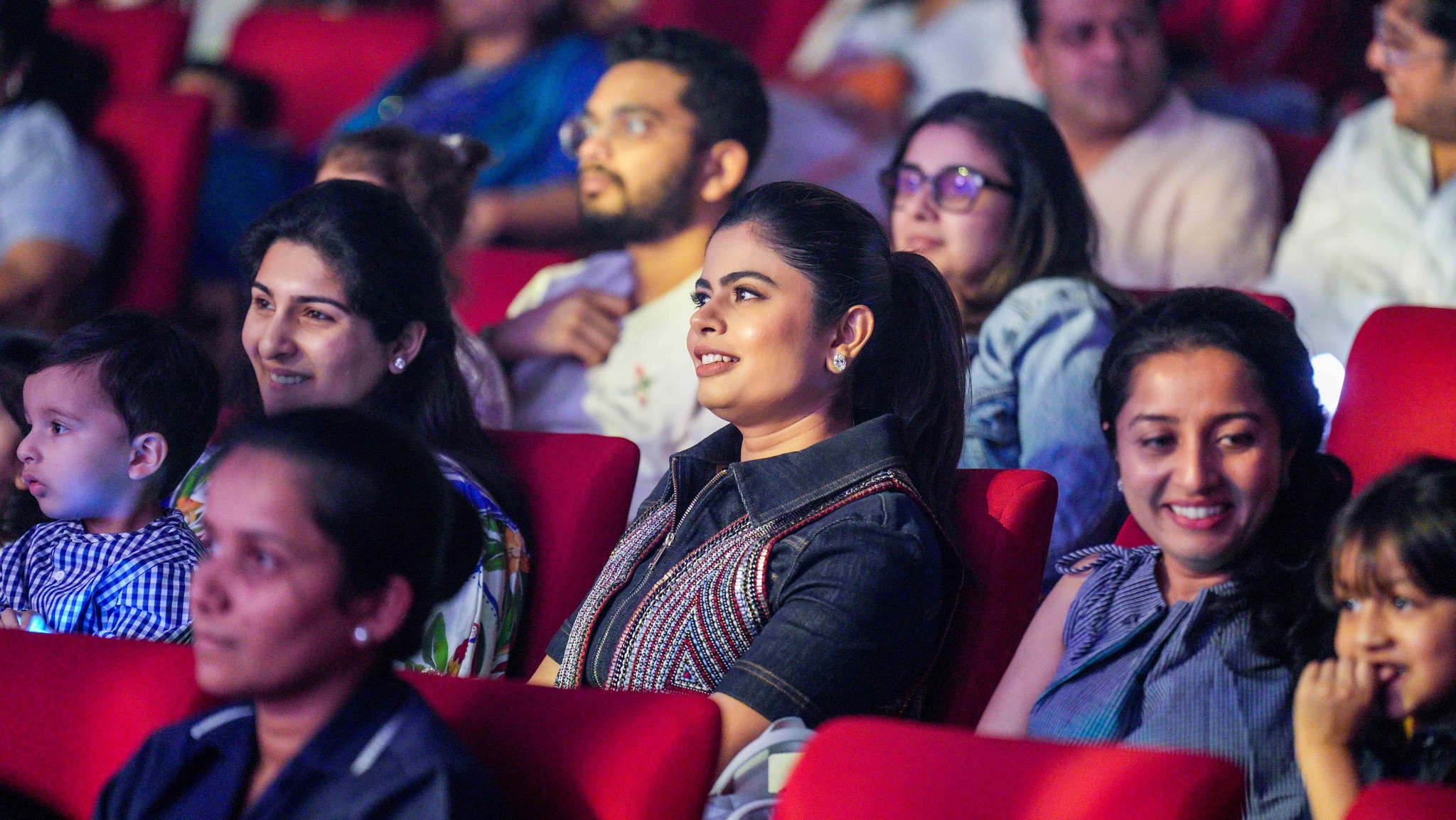
For me, it’s been the biggest learning curve. With the first two shows, I had Dhanraj guiding me, but Chhota Bheem, inspired by my children who love watching it, was one that I took from start to finish myself—my third baby, really! Seeing the excitement and my kids’ reactions made me doubly sure it was the right choice. I remember taking my kids to the first run-through and thinking, if I can impress them it’s a hit.
What’s next on your slate?
I recently watched The Festival of Lion King at Disneyland in Hong Kong and I really loved it. I was really inspired by the way they treated the costumes and the dance, the quality of production, and it’s motivating me to create spaces for those kinds of experiences in India.
I genuinely want to create immersive experiences, maybe with one of the existing plays, where there’s an element that allows the audience to fully be a part of that universe. I also want to do a part two for Rajadhiraaj, and that’s on the anvil in the next two years.
A project I’m really passionate about exploring is tentatively called Sitayan; it’s the Ramayana from a woman’s perspective. We are currently in scripting, so I’m excited to see where that goes.
We love watching movies as a family in different languages—Gujarati, Hindi, English—and we’ve actually released some movies already. Binharif is under production. We also have Amba, launching this December, which focuses on the co-existence of lions and maldharis in the forests. My father-in-law is passionate about lions and the Gir forest, and this is a story we really wanted to tell.