



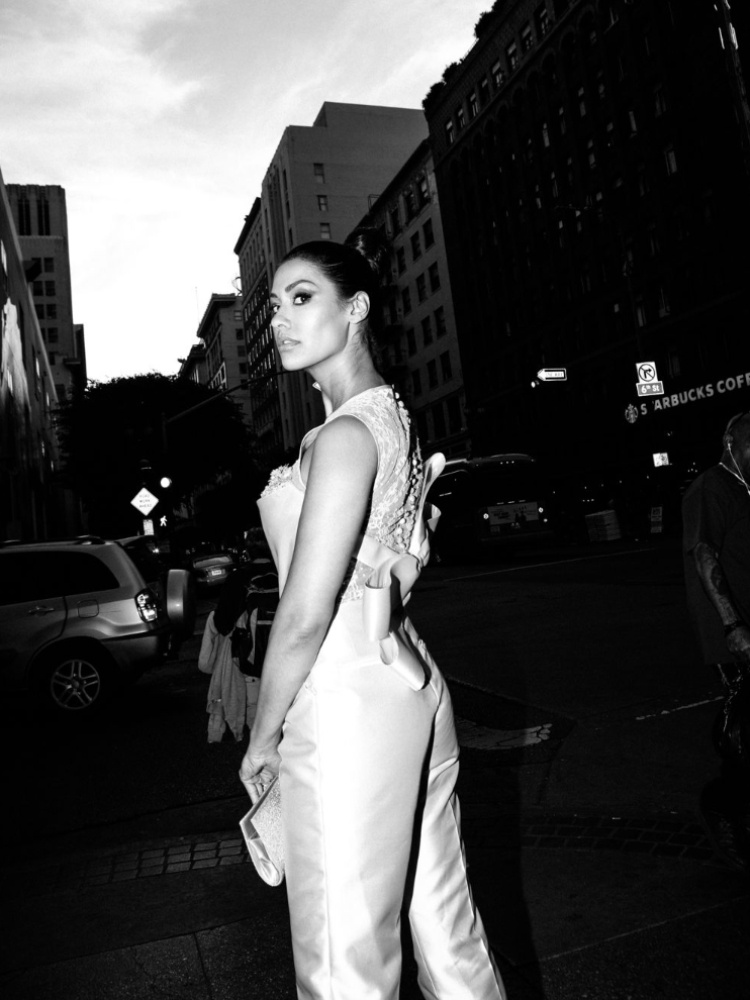

A lot can change in 25 years. Look back, and you’ll see it was a time when there was no iPhone, no YouTube...heck, not even Gmail. Janina Gavankar’s career has grown through these technological leaps: over the year, she’s been on screen, behind a microphone, even inside a video game. For the last two and a half years, the actor has been flying to London, two to four weeks at a time, every quarter of the year, where her character Anna Baas for the upcoming survival game Until Dawn 2 is taking shape at Pinewood Studios. The day we speak, she is at a recording studio in her home city, Los Angeles, recording the last leg of voiceovers for the game, which is set to go live on January 28, 2027.
On screen, you may know her as a broadcast journalist alongside Jennifer Aniston and Reese Witherspoon (in The Morning Show), a single mom and Homeland Security agent (in Sleepy Hollow) and a shapeshifter mom who can turn into a bat, a horse, a mouse, and even a housefly (in True Blood). She’s clearly enjoying this mom era right now, which is how we will see in Netflix’s latest dramedy Best of the Best, which releases today.
Gavankar plays Rekha, mother to Anjali (Priyanka Kedia), who, along with childhood bestie Maya (Maitreyi Ramakrishnan), joins UCLA’s competitive Bollywood-fusion dance team. It’s a premise rooted in the very quintessential south Asian experience of students.
Directed by Lena Khan, and with a script by Hasan Minhaj and Prashanth Venkataramanujam, Best of the Best stars Maitreyi Ramakrishnan, Lilly Singh, and even Minhaj, and seems likely to fill the hole that the conclusion of the Step Up series in 2014 left in our hearts.
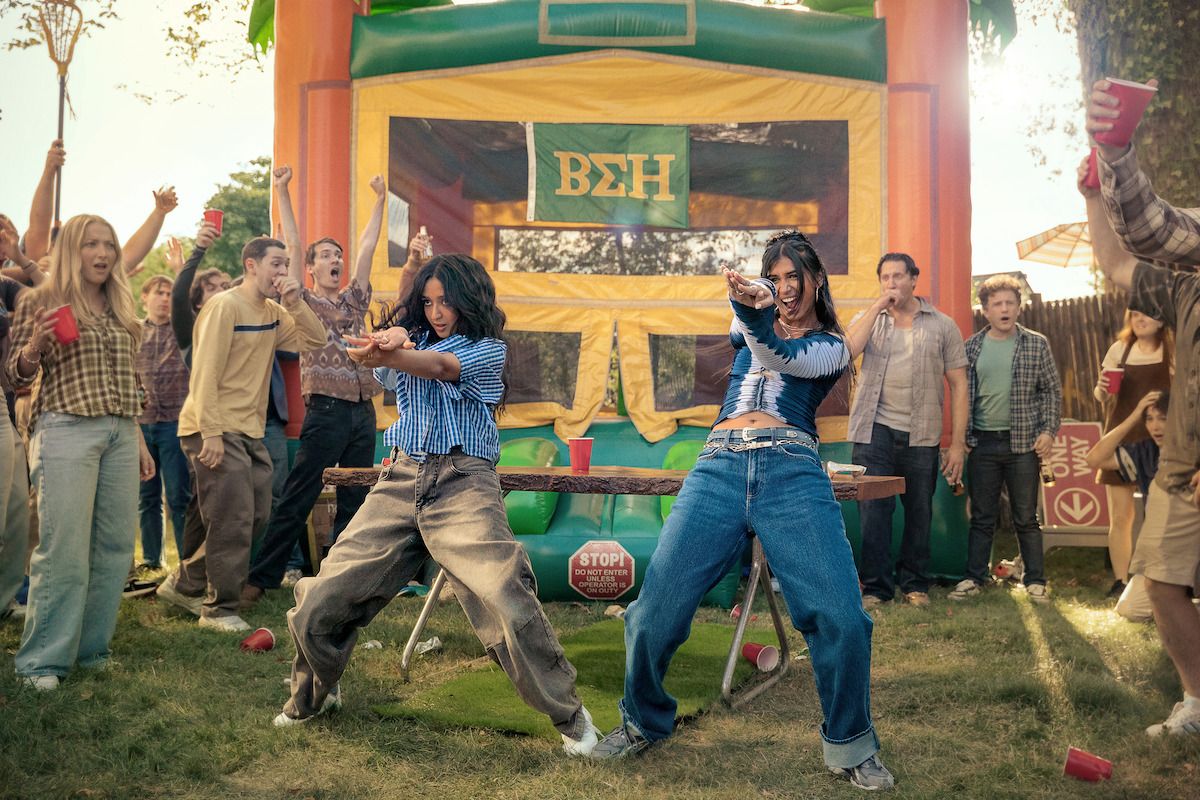
Gavankar may not have appeared in any south Asian series, but she is rooting for the movie and the south Asian community, and for stories that make room for people who have been left out. “Our people are dope,” she says over our call. Maybe Best of the Best will yet again make us believe in the simple joys, where problems can be solved by popping and locking, sometimes with a flip mid-air.
Below, excerpts from her interview, where she talks about Best of the Best, GTA 6, and more:
What’s the best thing you’ve seen on TV lately?
Furious. Next year, at the Emmys, I want them to win everything. Quincy Tyler Bernstine and Steve Way are so funny, so brilliant. And Emmy Rossum is eating the screen. And somebody should just throw statues at Elizabeth Meriwether, the creator of the show. She deserves to win all of them.
Your filmography seems to have steered clear of stereotypical south Asian roles and stories until now. What made Best of the Best a project you wanted to do?
It’s interesting that you think I have consciously stayed away from it. The fact is, Hollywood doesn’t see me as a south Asian person. In fact, right before True Blood (2008-14), I hired a south Asian publicist to try to let my community know that I was desi and proudly so. Nobody cared. I had a professor in theatre school who said something to the effect of: you’re going to do all of this training, but you won’t know where you really fit and how the world needs you for a very long time. So, here we are. I know who I am, where I come from. And I know my community.
How did you land the role of Rekha in the movie?
Prashant [Venkataramanujam] told me about the premise he and Hasan [Minhaj] had about six years ago. I was excited. I was on the plane at the time when Hasan asked me to read it. I remember, every few pages I would text him and be like, I’m rooting for this kid. I am a fan of Lena Khan’s work (the Emmy-nominated director’s credits include The Tiger Hunter and Never Have I Ever); she knows how to bring heart and warmth to the stories. I just knew it was going to be fantastic. When I knew Maitreyi Ramakrishnan was on board, I knew the movie would kill. We are both gamers and similar in some ways and got along really well on Never Have I Ever.
Best of the Best is based on a very specific collegiate experience. Is it something you have experienced in your college years?
I don’t think I am in any way a good indication of what the typical college experience is in America. I did a summer semester at Yale and then moved to another college to pursue my music and theatre interests. But I did go to see the performances, and it is one of the most badass things in America. I urge you to go on YouTube and watch the top three contenders of the last few years of Legends Dance Championship—the biggest collegiate competition in the States. They are incredible. And the thing that I have a lot of pride of in our community is that these students that are kicking so much ass on stage are also some of the most brilliant minds in America.
You’ve worked with Maitreyi Ramakrishnan in season four of Never Have I Ever. What was it like working again?
I remember the first day I went to set to just talk to hair and makeup on the day before the shoot. Maitreyi and I got yelled at, because we were chit-chatting too long and it was slowing down production. She’s insane in this film—she has only studied one year of Bharatnatyam when she was, like, six years old, but she dances so beautifully and so hard.
I loved Riz Ahmed’s Bait, and the south Asian music gems that came with it. I’m really curious to know what songs are part of this Bollywood dance movie... Tell me a little about the OST?
The soundtrack is wild. While they have remixed many songs by Indian artists, including the hit Tamil track ‘Maamadura’ from Jigarthanda DoubleX and Jai Paul’s ‘Str8 Outta Mumbai’, the finale track is an AR Rahman original. The theme of the song is great. There’s also a Hanumankind remixed track. All in all, I think this music’s going to be played at a lot of parties by a lot of DJs because it’s a mashup of so many hits. The south Asian diaspora has a very diverse set of cultures, and all of that is expressed in the music in very IYKYK bits.
You’ve lent your voice and performance to several gaming titles, including Forspoken and Afterparty. Your website says you are a consultant in the gaming industry. What exactly do you do?
Yes, that description is a bit vague. But I do a few different things. Sometimes game studios bring me in to help cast very specific roles or find creative talent outside their usual networks. For example, I once helped a studio find an African-American performance director for a game set in the south. I also help with things like shaping pitches and building creative teams. Basically, I connect studios with artists and performers they might not otherwise know.
What are your thoughts about the upcoming GTA 6, which allows players to maintain a romantic relationship between the main characters?
I don’t know if that would count as cheating, but when the GTA 6 will release the whole world’s going to shut down. Everyone has been racking up their paid time off to be able to stay home to play it. The world needs to know they’re never going to get anything done those days.
What gaming project would genuinely excite you?
It’s not so much the roles; it’s more about working with the brilliant minds within the games industry that I haven’t gotten to work with yet, like Ken Levine, Hideo Kojima, and Neil Druckmann. I’ve worked with Amy Hennig, but not for a prolonged period of time on an entire game, so I still want to do that. Extra points if I feel a little scared to do it. The second I get nervous it means I have to jump off the cliff.
Until Dawn 2 is one of the most anticipated games of 2027. How do you approach a character like Anna Baas in a game where the narrative is changing and the audience is participating in the story?
Until Dawn 2 is essentially a horror movie that is highly interactive. It’s a very choice-based kind of gameplay where the player can try to keep everybody alive or decide to just kill everyone. But for our characters, the fundamental job is the same as acting—you build your character’s backstory, throw them into the scenario put in front of you, and see what happens.
But the day on the job is very different than a day on the television or film set. In TV or film, you’re often working 12 to 16 hours a day—you start your day in the makeup chair, have crazy call times, crazy locations. In performance capture, we show up wearing very a silly-looking grey mocap suit—skin-tight with ping-pong-ball-like reflective tracking markers all over you. It’s an eight-hour day, but there is zero vanity and a lot of physicality.