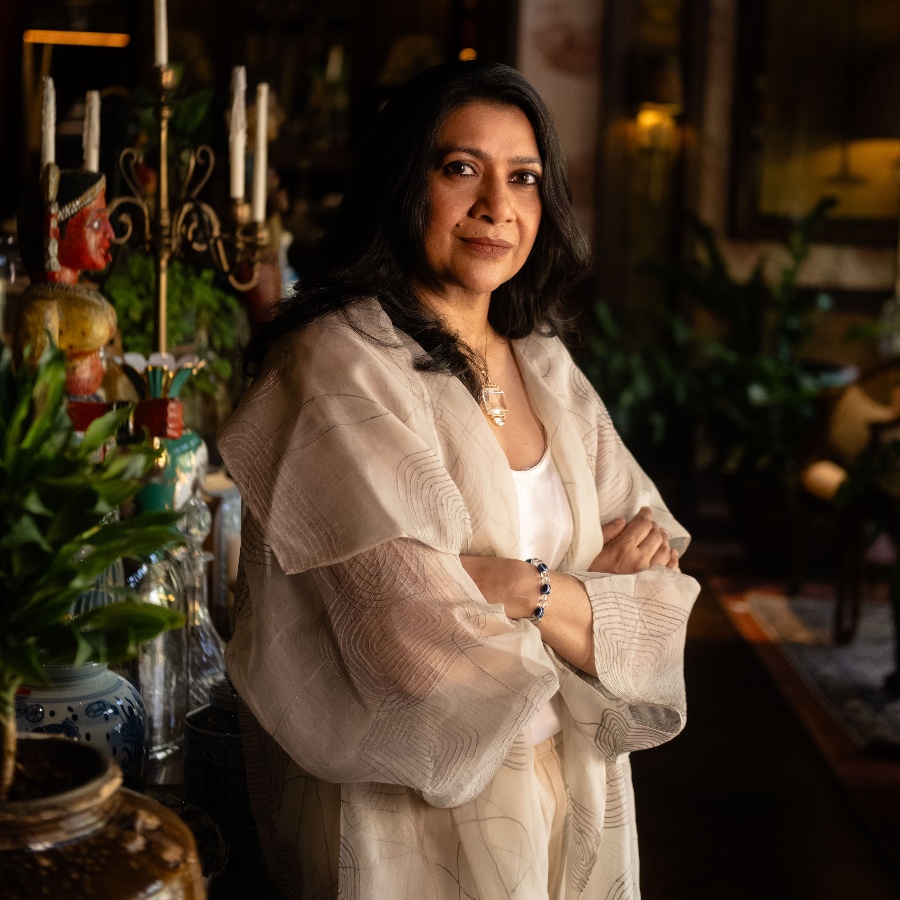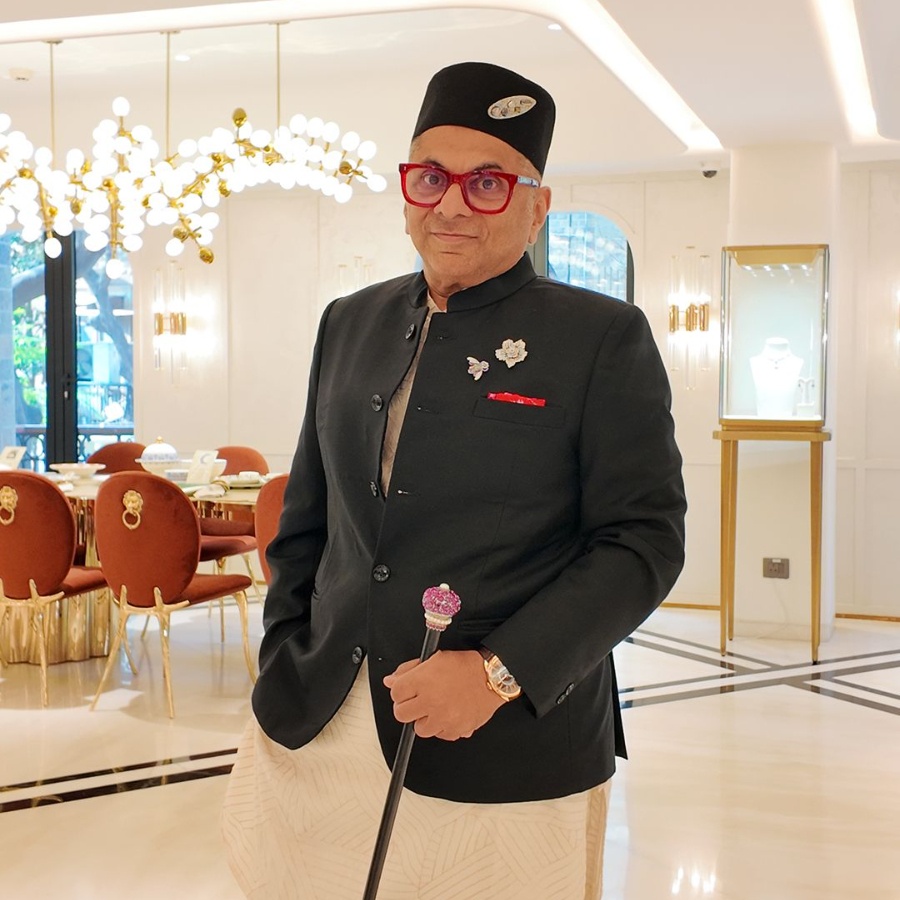




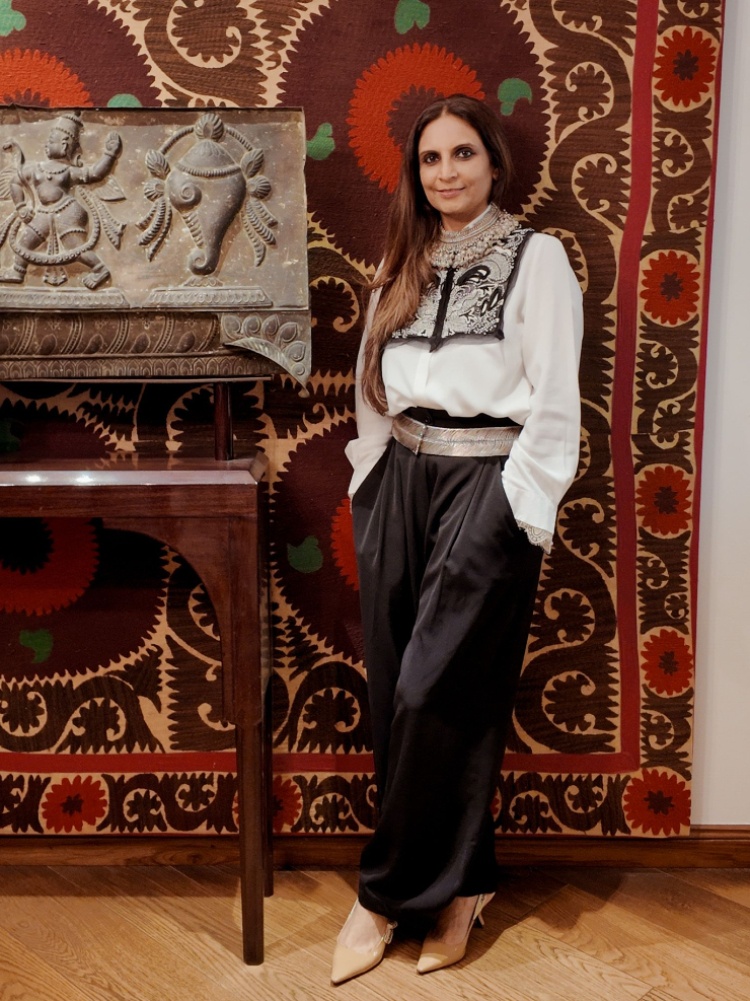

Nestled in a quiet lane off Altamount Road is the apartment Monica Shah, artistic director of Jade and founder of the Grassroot Artisans Project, has shared with Nehal Shah, director of Chanakya International, for more than two decades. We’re seated in their expansive living room, with large windows looking onto the building’s green compound below, though if you were here you won’t bother yourself with looking outside at all.
Inside, among frangipani, yucca, and money plants with braided trunks, every object is rooted in craft. There’s a pattu shawl from Barmer thrown across a couch, woven ikat from Bali on cushion covers, carpets from Morocco lining the floor, Art Deco lamps on a console, and framed kantha textiles hang on the walls. A large Madhvi Parekh artwork translated into hand embroidery by Chanakya’s artisans presides over the room. Nearby sits a bronze Nandi sculpture by Ratan Saha, covered in gold-tone flowers, acquired from Jehangir Art Gallery.
A tour with Shah quickly turns into a crash course in craft history. Shah can explain how to distinguish a Bengali kantha from one made in Gujarat, pick out the regional clues hidden in an antique that point to its provenance, or tell you why the row of supersized kadas that line her coffee table are so hefty. “I’ve tried wearing one, and if you wear it for a couple of hours it’s a killer workout,” she laughs, before going on to explain how, historically, these kadas allowed nomadic women to carry their wealth rather than store it, and how they could also be used as weapons on treacherous paths. “It served a double purpose,” she says.
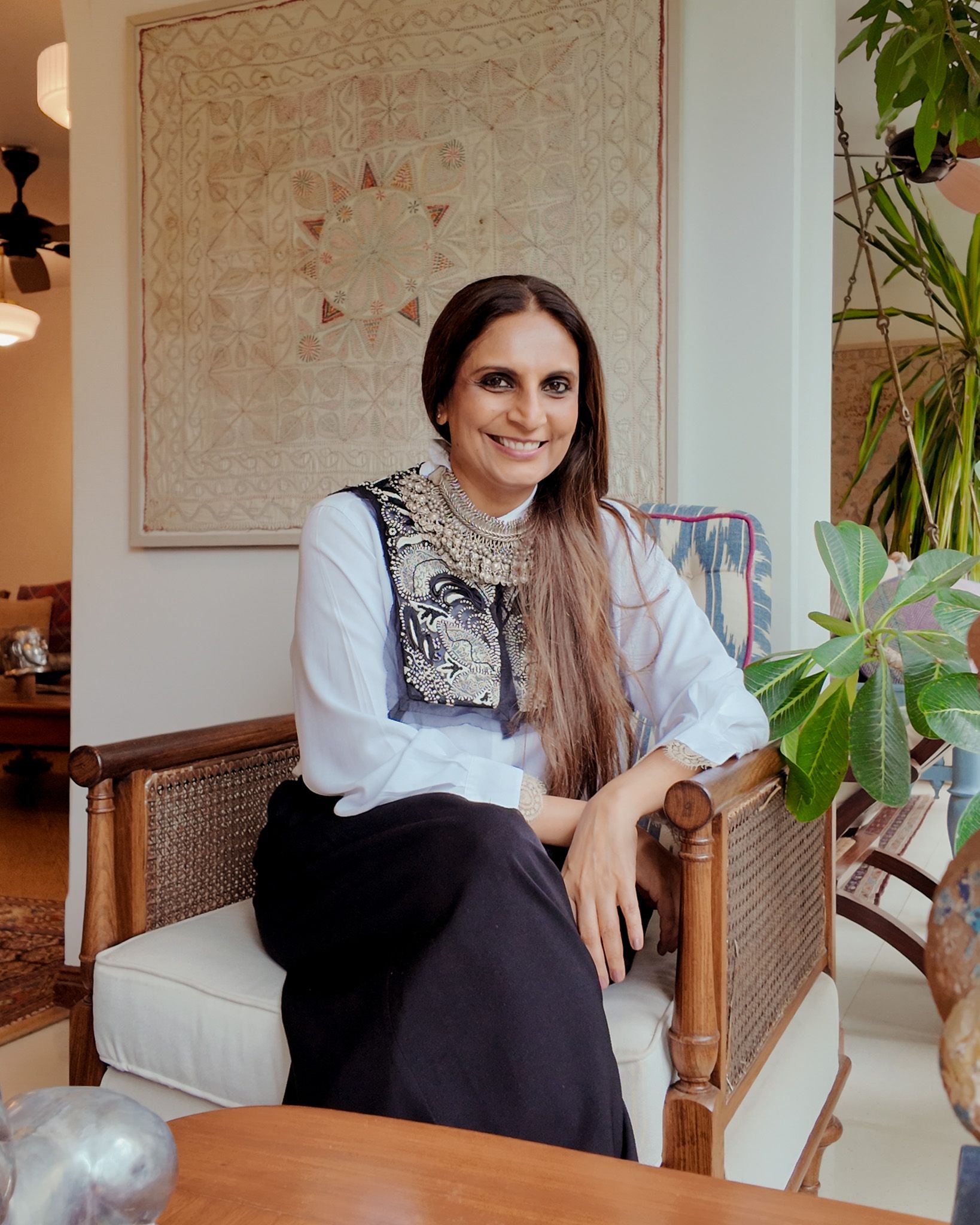
Shah has been absorbing this kind of information for most of her life. As a child, she often visited the CSMVS museum in Mumbai and grew up painting and learning Bharatnatyam. “I always knew I would do something that had to do with creativity and Indian culture,” she says. She studied interior design at Rachna Sansad, took fashion courses at Central Saint Martins, and designed furniture before co-founding Jade in 2008 with her sister-in-law Karishma Swali, although she now runs it alone.
The earliest pieces she collected were simply things she couldn’t bear to part with: a sari embroidered by her grandmother, her mother’s Kanjivarams, and the south Indian jewellery she grew up seeing her mother and grandmother wear.
Travel further fuelled her fascination with all things craft. A major part of Shah’s work at the Grassroot Artisans Project involves sojourns at craft pockets, from Bhuj in Gujarat to Pochampally in Telangana. Also, the couple holiday in places with strong cultural traditions, seeking out textiles, jewellery, and antique objects wherever they go. When I ask who has the better eye, Shah doesn’t hesitate. “Nehal,” she says. “Most times, it’s both of us liking something together. But he has a very, very keen eye,” she continues, crediting his years working closely with creative directors in fashion, as well as the time he spent in Italy, with sharpening his instinct. “I think being away from home, in a way makes, you appreciate Indian culture much more. Sometimes, because we’ve just grown up around it, we forget how beautiful our culture is.”
What is on display now in their home only a fraction of what they have collected over the years. The apartment functions like a private art gallery the couple inhabit, with artworks rotating sporadically. “Every cupboard that you see in the house is full of vintage artefacts, and we keep switching them up because we love to keep seeing the things we have collected over the years,” Shah reveals. A kalamkari piece might take the place of the phulkari on the wall, a kantha piece may be substituted with ikat or bandhani, or an object on the coffee table may be swapped for one of the many pure-silver vintage bags Shah found in Paris. What’s distinctive about her approach to styling her home is that it isn’t limited to just paintings and sculptures. “We treat all forms of craft as art. Art is not always a painting; a beautifully crafted garment or accessory is also art.”
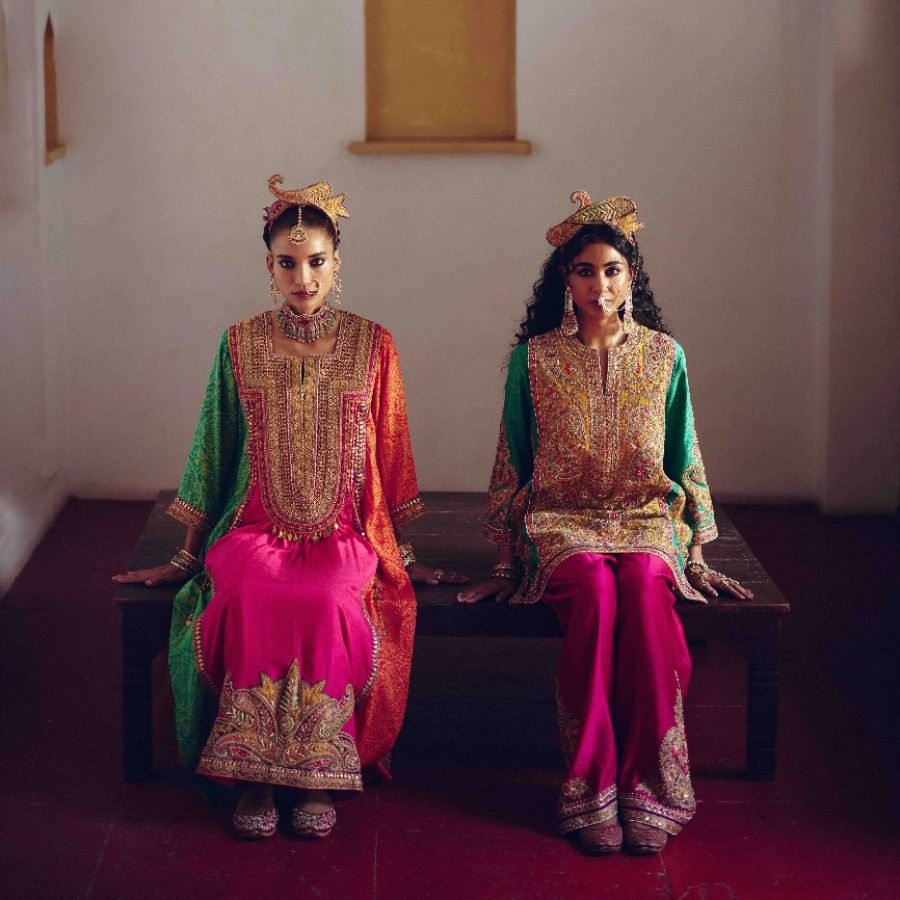
Naturally, techniques, motifs, and details found in objects she has lived with for years often find their way into collections at Jade. A moti bharat bag that belonged to Shah’s mother (pictured below), for instance, became the starting point for Jade’s autumn/winter 2026 collection, ‘Hands That Remember’. For the designer, preserving these craft forms doesn’t mean putting something behind glass. In fact, none of the textiles hung in her home are behind glass. “It’s so important to make craft part of our life,” she says. “Today, few things are handcrafted. When we make them part of our everyday lives, it becomes a lifestyle change.”
Below, Shah takes us through a small selection of the objects she treasures most:
The vintage silver belts she refuses to leave in the past
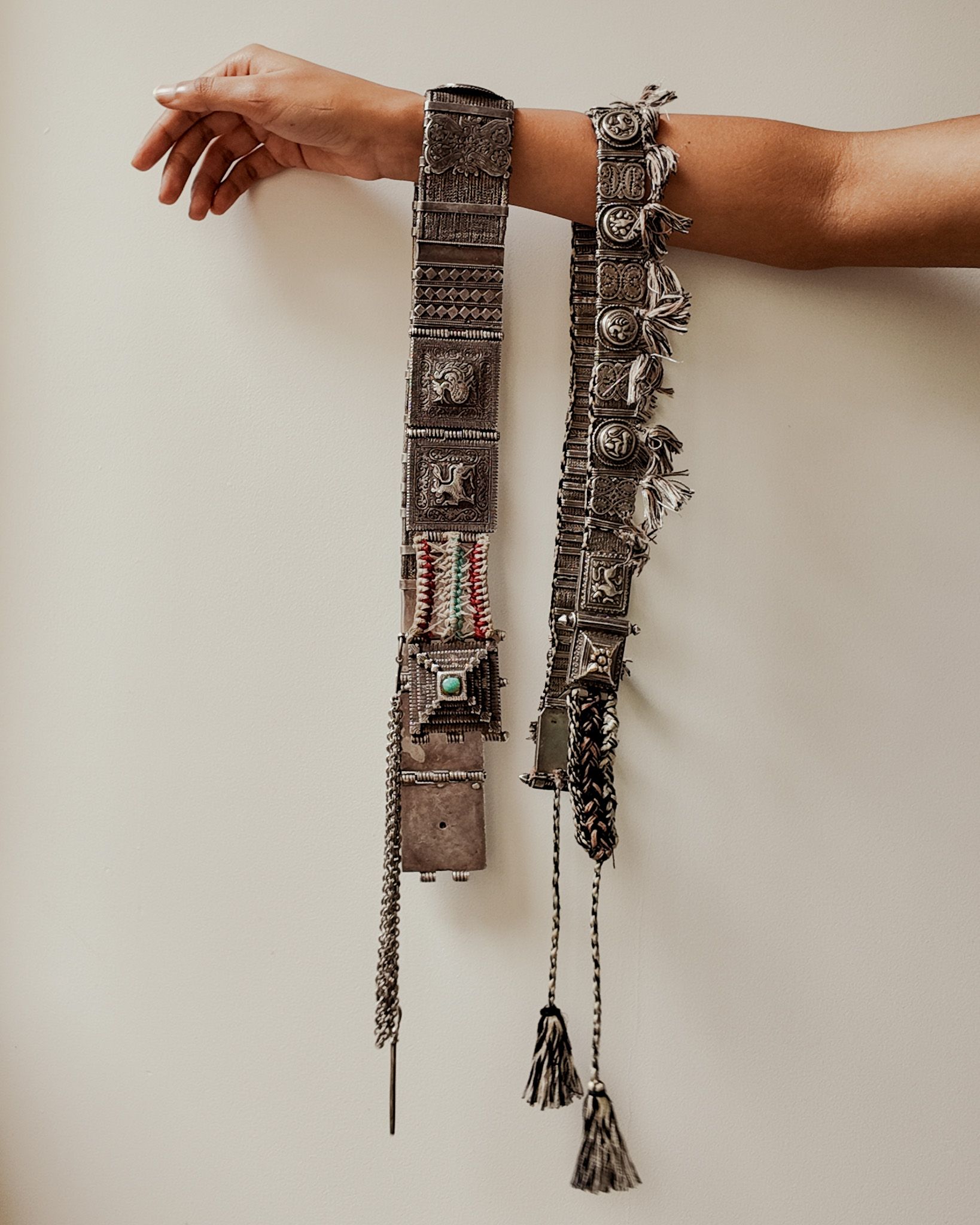
“I have been collecting vintage jewellery while travelling across India and the world over the years. These two pieces here—one is from Gujarat and one is from south India—are part of a collection of over a dozen vintage silver belts. I wear most of them, though some of them have really tiny waists that I’ve extended with embroidery. I’ve also added tassels to one of them, just to give it a little quirkiness. I love that you can have something from the past and still make it look contemporary today. I especially love pairing these belts with Western silhouettes.”
A traditional Balinese ceremonial cloth in pure gold thread
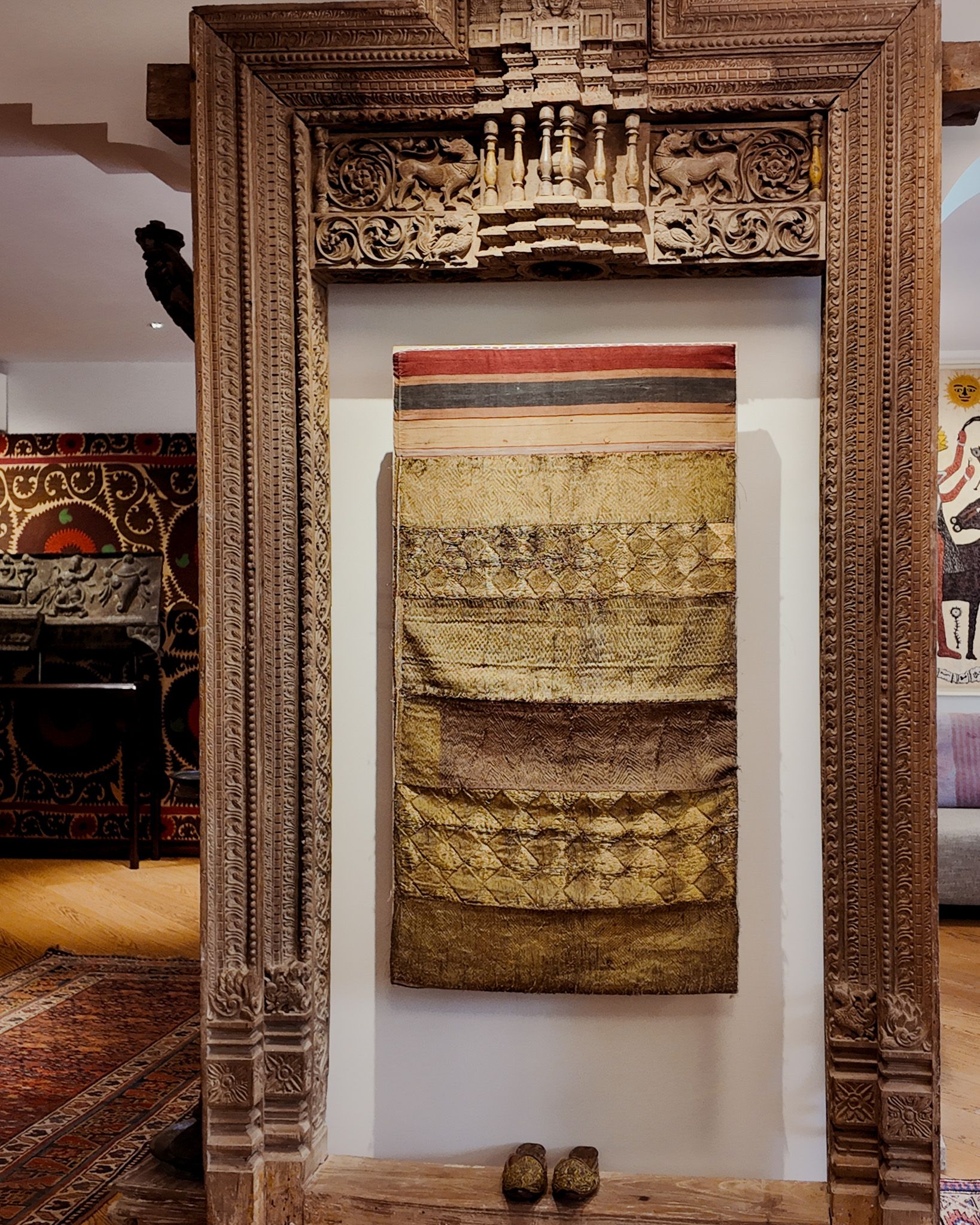
“My husband and I travel to Bali a lot, we love the peace and the culture there. This is a ceremonial cloth that men would traditionally wear for weddings. It’s made with pure gold thread, and if you look closely you can tell from the intricacy of the zardozi work how much love and care went into making it. For me, it’s a reminder of how luxury existed even centuries ago too. We’ve framed it inside a hand-carved door from an old haveli. We have a series of six or eight antique doors—some from Gujarat, some from Chettinad, where there’s a rich tradition of wood carving.”
The angel figurines that gave Jade’s artisans their name
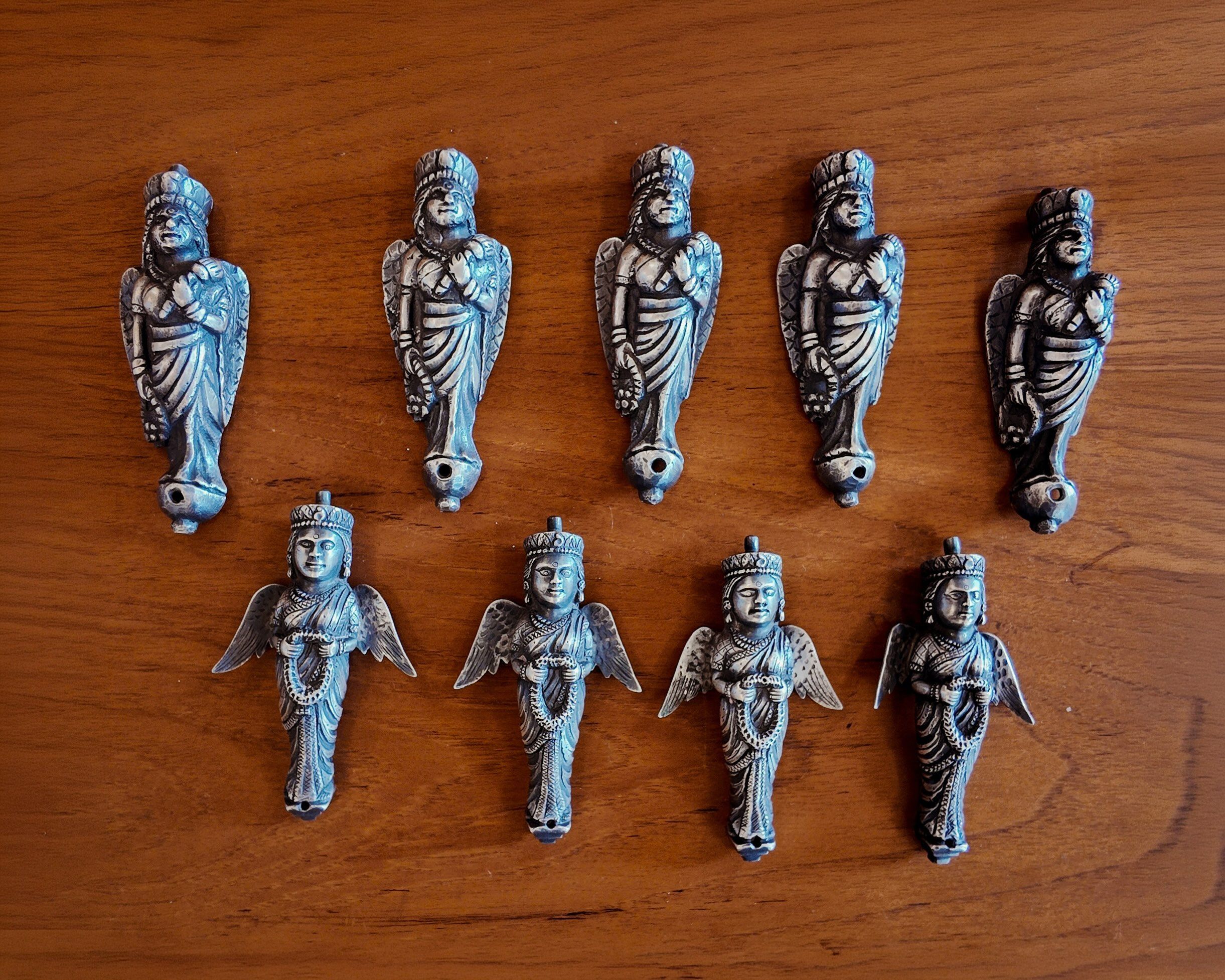
“I find this series of angels extremely fascinating, because they are dressed in these lovely saris—almost like apsaras. I believe they were once part of a temple in Gujarat. At Jade, we call our master artisans ‘angels’, inspired by this series. For centuries, craftsmen have been creating extraordinary things by hand, with so much skill and devotion, often anonymously. Calling them our angels is our way of recognising the hands behind the work.”
A vintage moti bharat purse with a sentimental connection
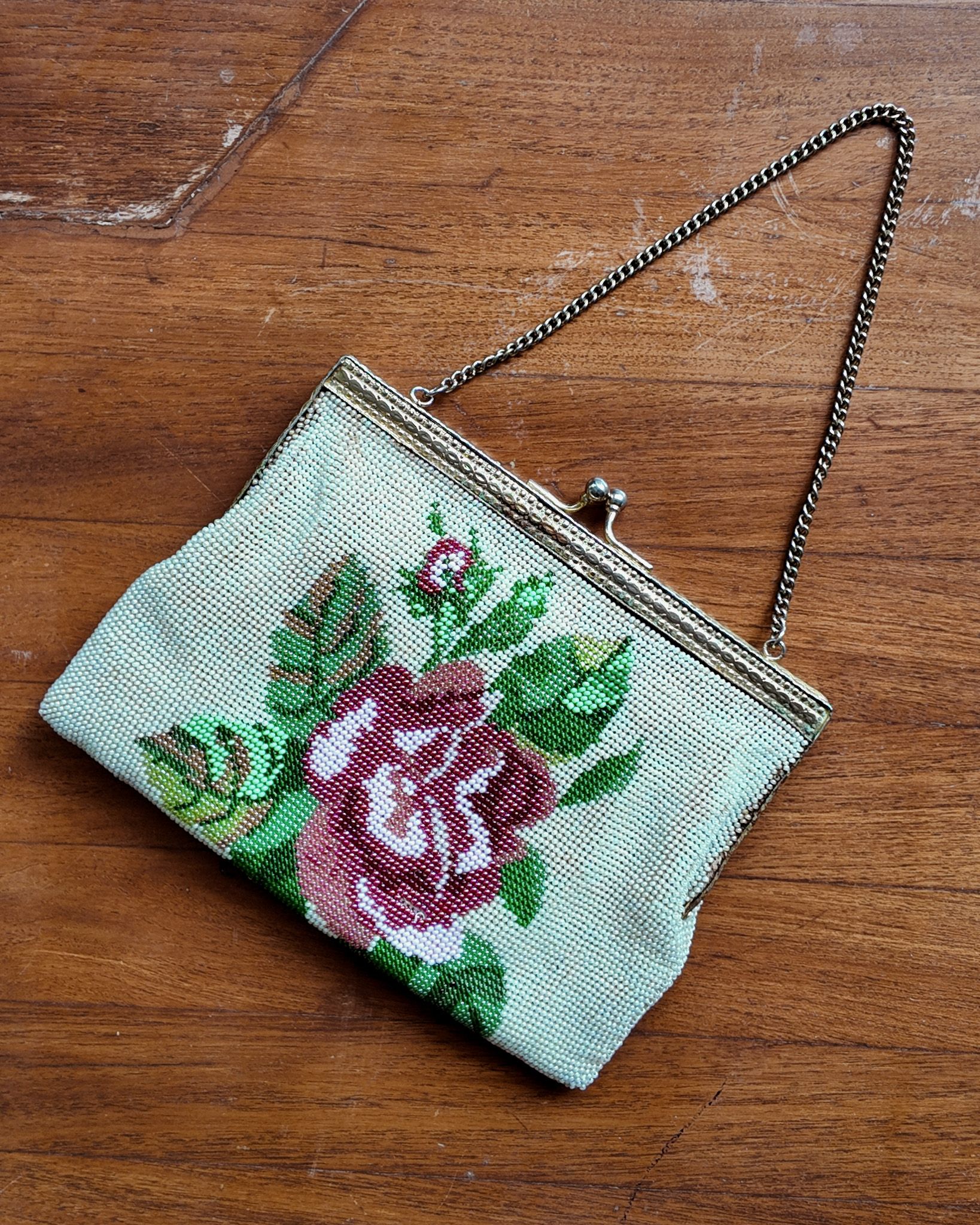
“This is the most special piece I own: a moti bharat bag that was hand-embroidered by my mom. It reminds me of my mom, of course, but it’s also a reminder of how beautiful, hand-embroidered pieces exist in households all over India. She embroidered it when she got married, I believe, so it must be at least 60 years old. At that time, it was a thing that most women did at home—some embroidered their saris, some embroidered bags. I took it from my mom before she had the chance to discard it. I have taken all her Kanjivaram sarees, old jewellery, and bags. In fact, this bag inspired our latest collection, ‘Hands That Remember’, where we’ve used a lot of moti bharat.”
An antique temple hanging embroidered in pure silver
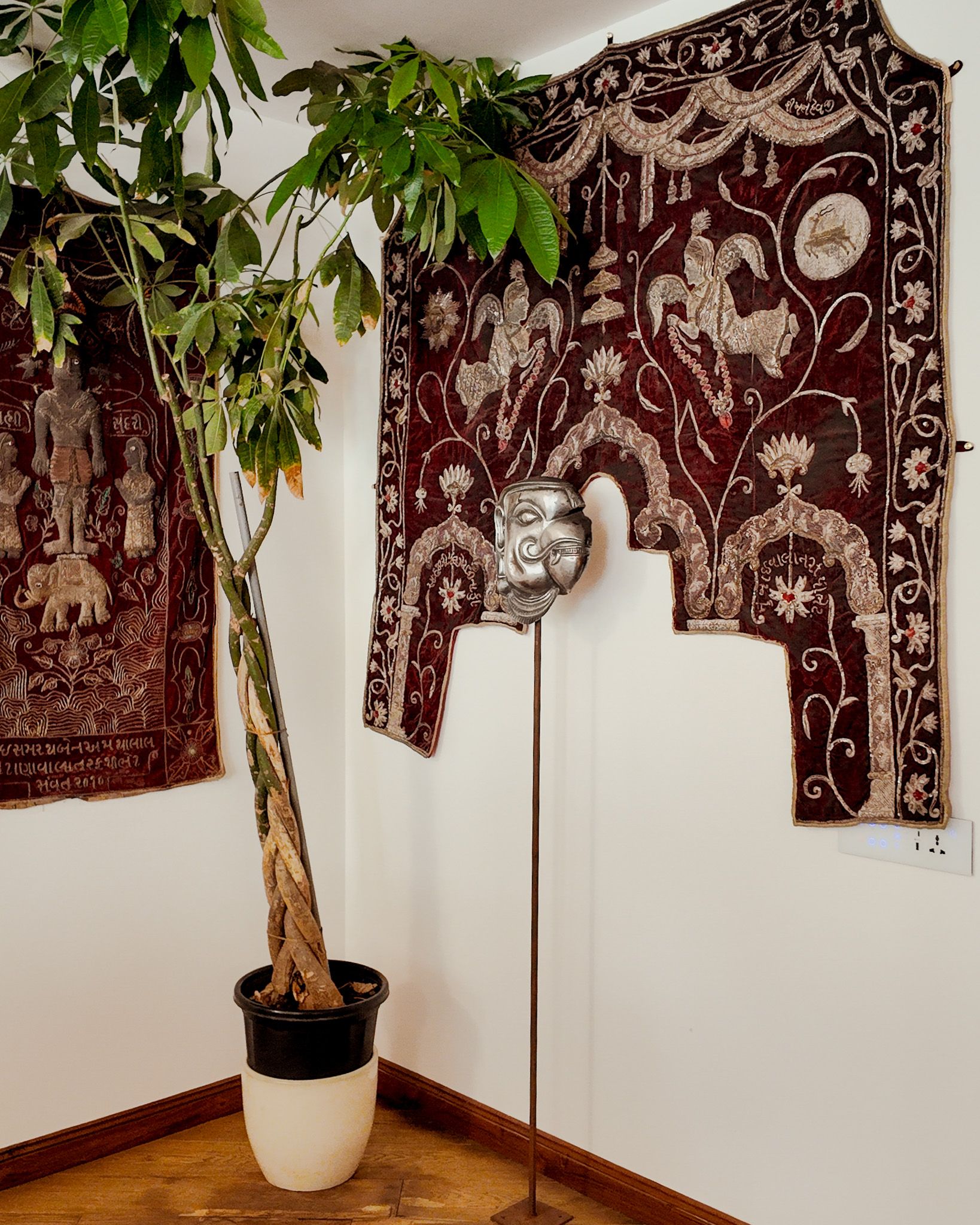
“This piece of cloth is a Jain temple hanging from Saurashtra, and the embroidery on the velvet is in pure silver. When we look at it every day, it reminds us of our roots and the spiritual connection we have. What I find so beautiful about it is that it shows how craftsmanship wasn’t created only for ornamental beauty. It could also be an act of devotion.”