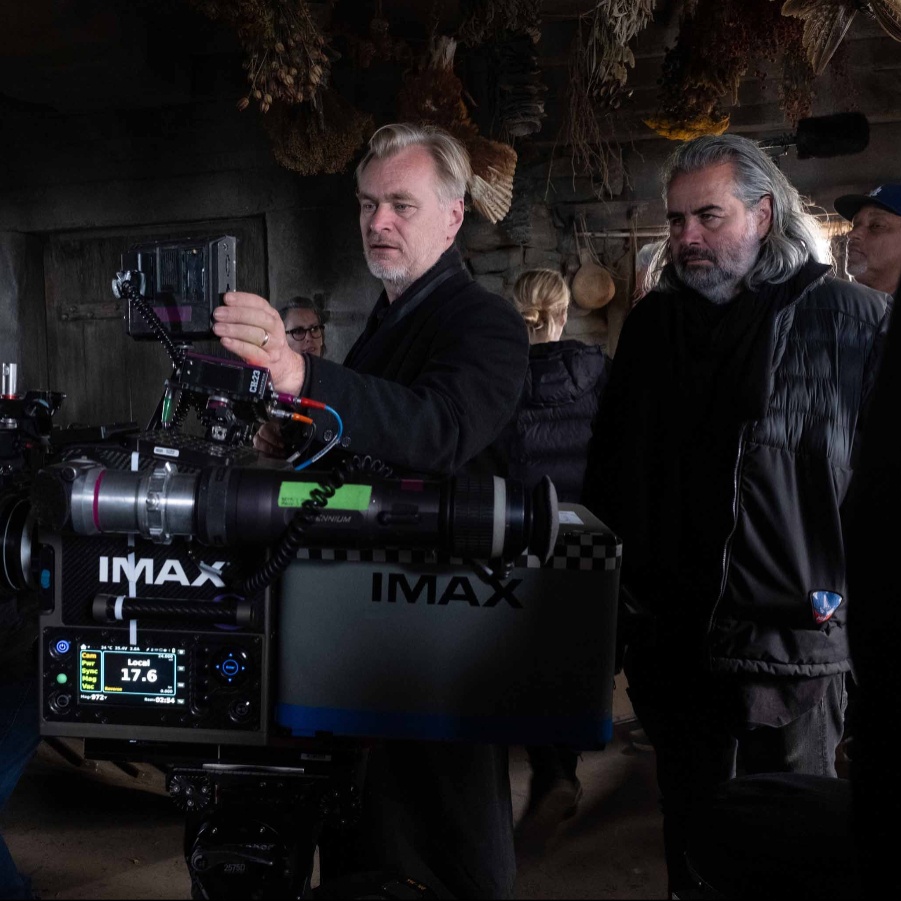




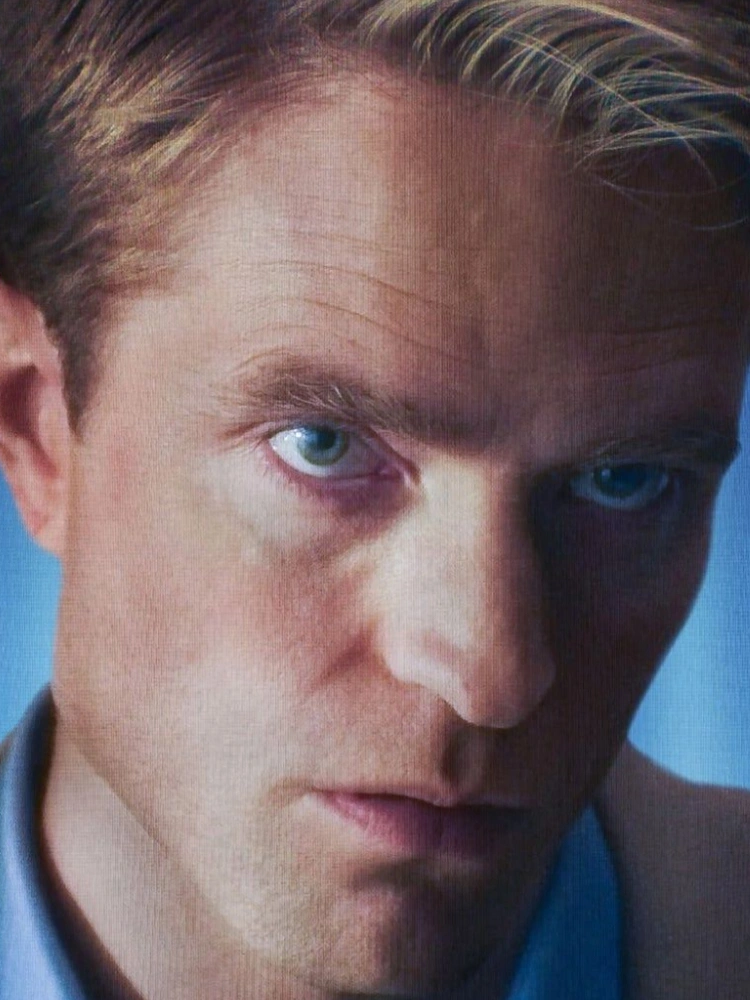

Just two weekends since the release of Primetime, Ajon Singh’s debut feature film, it seemed like every third post on my feed was a meme of the Robert Pattinson starrer. Granted, Pattinson’s performances—from Twilight to The Odyssey—have a way of being posterised for the internet like few others. But this time, it wasn’t a singular, absurd, scene-stealing Pattinson moment. The entire film was ripe with memeability, despite its subject matter.
Adapted from a 2007 article (whose headline spoils the movie’s ending), Primetime chronicles Chris Hansen, the host of To Catch a Predator—a popular 2000s series whose objective was to lure in and expose adults trying to meet teens online—on the cusp of its primetime slot. Hansen has been fairly vocal about his feelings towards Primetime, but that hasn’t stopped him from getting in on the online meme action.
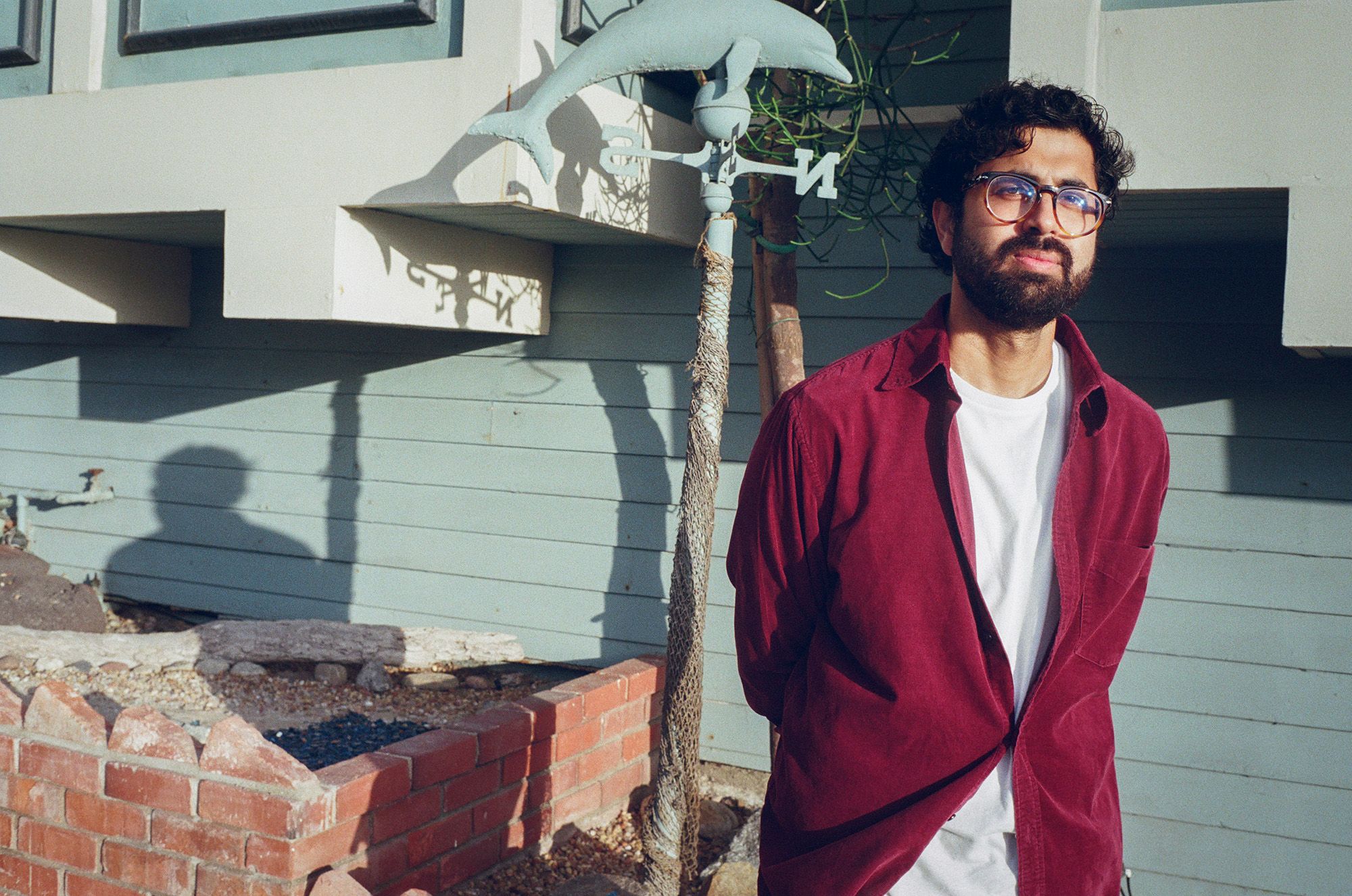
The film, Singh’s first IMDb credit, and decidedly not a Chris Hansen biopic, went from a script nobody would get behind to a Lance Oppenheim-directed, Pattinson-produced standout of the festival season so far. “I think Lance, whose specialty is docu-fantasia, put it well,” Singh tells me over Zoom from New York. “He said we almost wanted to do a biopic of the way the internet has ingested Chris Hansen.” Then, Singh interrupts himself to ask, “Are you in Mumbai, by the way?” When I confirm, he responds, “Oh cool! That’s where most of my family is from.” He continues, “I want A24 at some point to send me out so I can show love to all the people in India who’ve been reaching out.”
Below, excerpts from my conversation with the Primetime screenwriter on understanding American culture through Dateline, how he got Robert Pattinson to star in his film, and how he thinks Chris Hansen feels about Primetime.
How has the last week been?
It’s been really crazy. But honestly, I think the weeks leading up to the film were crazier. You’re out there promoting it, going to city after city doing these different premieres and meeting people. And then once it goes into theatres it’s out of your hands, you know?
That being said, it’s been amazing to watch culture ingest the film in its own way. And for it to become memed online. The internet has a mind of its own.
There’s one of Chris Hansen recreating the viral photo of Robert Pattinson in his look test for Good Time, which you reposted. How has Chris Hansen’s experience of this affected yours?
You can’t control how Chris feels. What I’ve loved most about how he’s engaged with the film is that he’s done all these different press conferences and videos, and in all of them, repeatedly, he says, “Go see the movie.” Which is great!
I think [Chris Hansen and the film’s makers’] have a mutual interest in people seeing Primetime, and I think he knows that because he bought an advertisement slot right before the film. The film gives him a renewed visibility with Gen Z.
At the end of the day, I feel like on some level we’re in some sort of working relationship, whether he likes it or not. Personally, I think he does like it.
What was your exposure to Chris Hansen and To Catch a Predator?
I come from a family of immigrants and there was a diet of American TV shows that helped us understand the culture. Those were Oprah, ABC 2020, and Dateline NBC, whose featured segment was, of course, To Catch a Predator. That was one of the shows I would constantly be sneak-watching, along with shows like Jerry Springer and Maury Povich.
I used to watch Chris Hansen, because I thought his show was so funny, not understanding what the show was actually about. Years later it sunk in for me how serious that show was. It was fiction and nonfiction. It had actors and journalist. It was this hybrid.
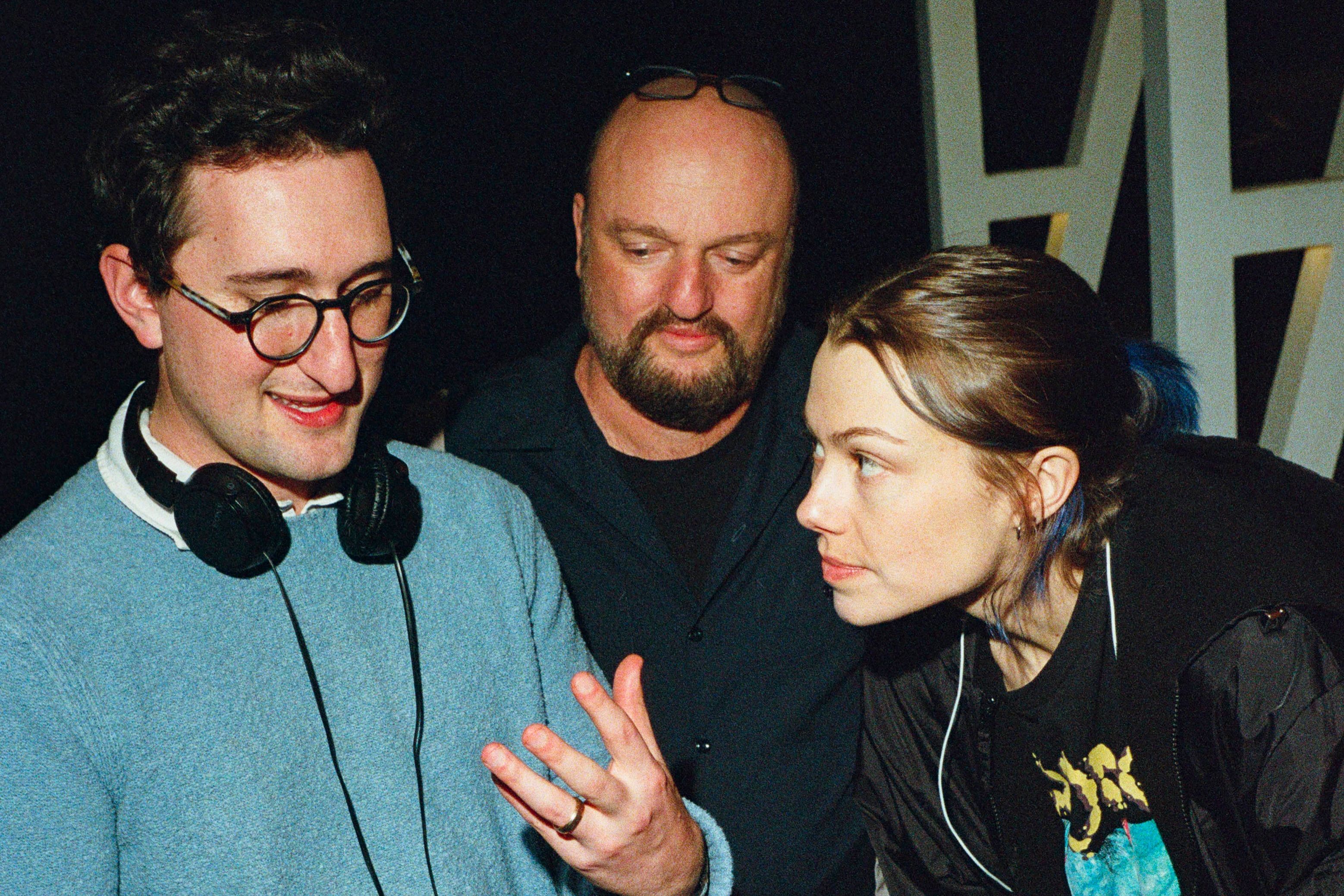
This combination of fiction and non-fiction is also what makes the film’s director, Lance Oppenheim, so well suited for it.
I’m so grateful for the way this project came together, and with such a dream team, because for the longest time I could not find a producer who liked the script for the way it is.
People often wanted me to change it drastically. Do a page-one rewrite and give them a rise-and-fall story of Chris Hansen, starting as a young, spunky journalist coming up in the business. What I was going for was more like Network, where it begins on the cusp of something. In this case, they’re on the cusp of primetime, and they’re chasing after it relentlessly. And it’s loud, and fun, but there’s this crash, and it goes silent. That was always my vision for it, and I felt very strongly about that.
This film is such a dream team of many perfect parts coming together. The way director Lance Oppenheim tells it is that his wife gifted him a Cameo from Chris Hansen, and he showed it to Robert Pattinson, who had somehow gotten his hands on your script. But how the script got to him is a bit of a mystery.
I have a theory, because many people have tried to take credit for it. But I think the person who got it to Robert [Pattinson] was this great director named Tyler Falbo—whom I love to give his flowers because he changed my life in a way. He met Rob at a party and gave him the script.
Then Rob reached out to me, and we had this amazing Zoom that I honestly couldn’t believe was happening. I wanted him to act in the movie. At the time he only wanted to produce it, which was still a huge win for me. Then Rob had a birthday party and the infamous Cameo exchange happened. Lance, apparently, left the party to go read the script. He read it in the car.
He then sent me this wonderful email and linked all of his work, and I watched it all in one sitting. And I remember I was watching his documentary Sperm World on Hulu, and two black bars came down on the side, and they were advertisements for Chris Hansen’s TruBlu Network. And I was like: “This is fated.”
How did Robert Pattinson eventually end up agreeing to act in the film?
Through the development process, the way Robert would talk about this movie and this character was almost from a mystical perspective. I think the way I had written it at first was more of a political thriller. But his was a very mystical account.
He was like, “The character of Chris Hansen, to me, is like this angel of punishment. He descends down the stairs and deals justice.” And by the third act, he wanted the character of Chris Hansen to be “like a weakened wizard”. And I loved it.
So, Lance and I put our heads together and I went off for five days and rewrote the character. By the time I brought it back Rob was like, “Oh, I can do this.”
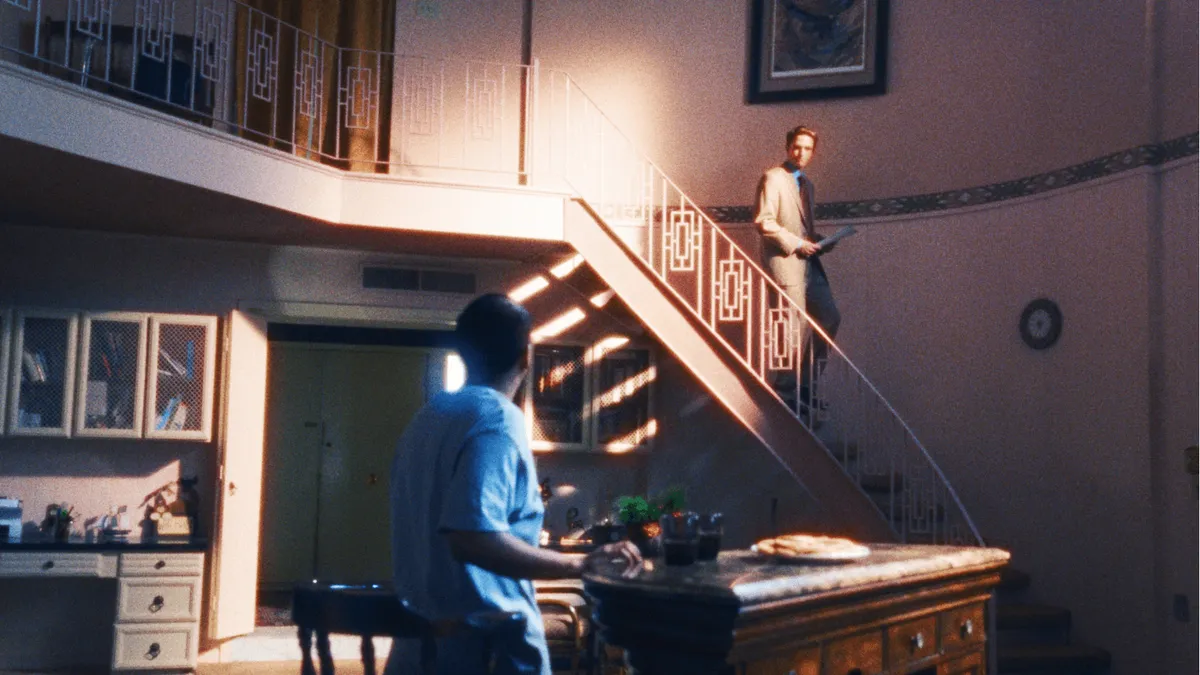
Robert Pattinson said in an interview that at one point, even after casting was complete, there were about 50 more drafts that came in.
I think some of that has to do with the process that came from Lance and his whole crew of documentary people, because they are so iterative. Lance is also always searching for ways to make the film to feel alive. So, if you ever tell him that you really like something, he’ll almost cut it out of the movie just to see what will happen without it. They try to stress-test different ideas, and I basically did the same through the editing process of writing.
Within that process of removing and adding, were there any parts that almost didn’t make it?
There is that monologue that he delivers on the plane to the character played by Creed Bratton... “There’s a man on your porch...” That was actually from a much older draft that had been cut out. But Lance would keep removing things and throwing them back in, throwing things at actors to see how they’d respond. Sometimes it didn’t work. Other times it was magic. So, I kept a Notes app of things that had been cut that I secretly wanted back in, just to have on hand.
While we were filming the plane scene, Lance asked, “What was that monologue?” from so many drafts ago, and I had it there for him. He threw it at Rob, who of course was like “What? I can’t do this.” But because he’s the best in the business, he took one look at it and off a memory of many, many drafts ago, he did it. I think it’s one of the best scenes in the movie.
After a deep stalk of your Letterboxd, it’s apparent that you have so much love for cinema. Are there any Indian films that had an effect on you or your filmmaking sensibility?
My parents would put on films like Sholay, Bobby, Don, Devdas. There are so many more. I remember being really affected by Rang De Basanti, and fixated on Dhoom, teaching myself to play the ‘Dhoom Machale’ song on piano.
It’s funny, but I think Bollywood has been a big inspiration in my writing. There’s a musicality that exists in Bollywood that I try and emulate in my writing. Not the literal singing but the dialogue. It’s very rhythmic, with so many memorable one-liners and great final lines. I think that has been so essential to the way I think in the first place.
Magic realism was so crucial to this depiction and what keeps it from being a movie about Chris Hansen, and instead a movie through Chris Hansen.
We had this challenge of trying to mythologise someone who is alive. And who, obviously, has his own opinion about all of this. What we wanted was to tell this very epic story of this man.
Part of how I approached that responsibility was through months of research. I became obsessed with the idea that Odysseus could never tell The Odyssey; it had to be Homer. So, what we wanted to create was not a photorealistic mimicry of what happened in his life. We wanted it to be emotionally truthful but to feel as if Chris was watching his own life back through a dream.
Merritt Wever’s character, Andy, on the other hand, was not based on a real person.
Yes, she was something of a composite of producers, and the friction between her and Chris drives the story in many ways. Because of their relationship, the film is almost like a divorce story. They start off so co-dependent. She’s effectively his work wife. But it’s this classic thing where if Chris is the head, she’s the neck. Then you see it fracture from his dishonesty and from the pressure. But at the end of the day, they feed on the same kind of thing, spiritually. And like any good toxic relationship, you see that bring them together in the end.
And the trifecta is rounded out by Skyler Gisondo’s character, Dan, who is our vantage point into this world. How did you craft that character?
When I first read the article about the incident [that the film is based on], what drew me in was this twenty-something struggling actor. And his “big break” was to play a 13-year-old boy luring in a predator. It was this idea of you getting this big break, this thing you had been hunting for this whole time, and then when you finally get it, it is not what you thought it was. It doesn’t feel right.
His audition scene was in every draft, because this is a kid that’s chasing a dream. In a lot of ways, I saw myself in that character.
Over the many iterations, how did this character evolve?
I think his is the character that changed the least. One thing that we did add later on, though, was the ending.
We did test screenings with our original ending, but audiences found it too bleak. We didn’t want it to be a cynical movie. Lance and Skylar had a dinner and Skylar said, “What if he gets this SAG-AFTRA card?” which is his union card that means he’s made it into the acting guild. Instead of ending on the idea that Dan’s dream is dead, we’re ending on this siren’s call. It’s calling back to him, “Are you an actor?” He looks up, you don’t know the answer.
And I think that’s a good, very satisfying question for me to ask at the end of the film.